全生命周期成本理念

Search documents
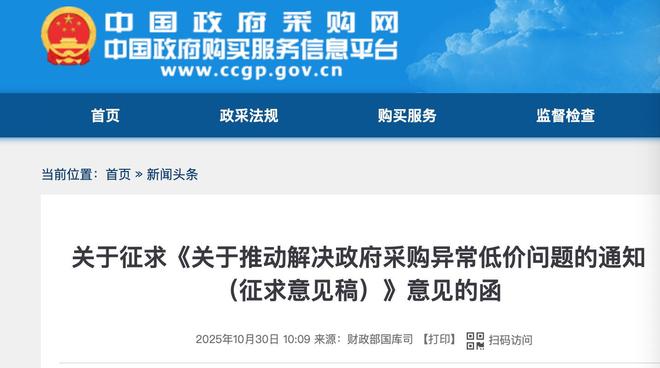
三管齐下遏制恶意低价竞争 ——解读财政部关于“政府采购异常低价”新政
仪器信息网· 2026-02-28 09:02
Core Viewpoint - The article discusses the government's efforts to combat malicious low-bidding practices in public procurement, emphasizing the need for effective measures to prevent such behaviors and ensure fair competition in the procurement process [1]. Group 1: Strengthening Government Procurement Demand Management - Government procurement demand management is fundamental to procurement activities, and establishing clear and reasonable procurement requirements is essential to prevent abnormal low bidding [2]. - The Ministry of Finance's 2021 "Government Procurement Demand Management Measures" provides guidelines for procurement entities to establish scientific procurement demands [2]. - Conducting thorough market research is crucial to formulating clear procurement requirements and setting a reasonable maximum price for projects [3]. Group 2: Setting Reasonable Procurement Packages - Properly dividing procurement packages based on professional types is necessary to attract specialized suppliers and enhance service quality [5]. - An example illustrates the risks of not separating procurement packages, leading to issues with service delivery and increased costs [5]. Group 3: Introducing Lifecycle Cost Concepts - For projects with long-term operational costs, procurement requirements should encompass the entire lifecycle, including maintenance and consumable supplies [6]. - Failure to consider lifecycle costs can lead to situations where low initial bids result in high subsequent costs, as seen in a case where a medical device was procured at a low price but incurred high consumable costs later [6][7]. Group 4: Strengthening Abnormal Low-Bid Review - The article outlines four scenarios that trigger the review of abnormal low bids, including bids significantly below the average of compliant bids and the maximum project price [8][9][10]. - The procurement entity has the discretion to adjust the thresholds for triggering reviews, with a maximum increase of 65% [11]. Group 5: Enhancing Contract Performance and Acceptance Management - Contract performance and acceptance are critical to ensuring compliance with procurement agreements, especially when low bids are involved [14]. - Procurement entities must ensure contracts reflect commitments made by suppliers regarding low bids and include punitive clauses to enforce compliance [14][15]. - Monitoring supplier performance and conducting timely acceptance checks are essential to uphold contract standards and address any non-compliance [15].


整治政府采购领域“内卷式”竞争 财政部推动解决异常低价问题
Xin Hua Wang· 2026-01-26 23:32
Group 1 - The Ministry of Finance has issued a notice to address "involution" competition in government procurement, emphasizing the need to resolve issues related to abnormally low pricing [1] - The notice requires procurement entities to establish clear and reasonable procurement demands and set maximum price limits based on work needs, considering factors like technology and cost-effectiveness [1] - It suggests the introduction of a life-cycle cost concept, requiring suppliers to quote costs for operation, maintenance, upgrades, and disposal within the procurement documents [1] Group 2 - The notice outlines specific circumstances under which the review process for abnormally low bids must be initiated, mandating documentation of the reasons and results in the evaluation report [2] - It emphasizes the importance of managing the performance and actual fulfillment of contracts by suppliers who win bids despite triggering the low-price review process [2] - For projects that can be implemented in phases, the notice mandates phased assessments, verifications, and payments to monitor supplier performance closely [2]
财政部推动解决异常低价问题
Sou Hu Cai Jing· 2026-01-26 22:37
Group 1 - The Ministry of Finance has issued a notice to address "involution" competition in government procurement, emphasizing the need to resolve issues related to abnormally low pricing [1] - Procurement entities are required to establish clear and reasonable procurement demands, set maximum price limits, and consider factors such as technology and cost-effectiveness [1] - The notice encourages the introduction of a life-cycle cost concept in procurement documents, requiring suppliers to quote costs for operation, maintenance, upgrades, and disposal within the agreed timeframe [1] Group 2 - The notice outlines specific circumstances under which the review process for abnormally low bids must be initiated, including the requirement to document reasons and results in the evaluation report [2] - It mandates that procurement entities focus on the performance and actual fulfillment of contracts by suppliers who win bids despite triggering the low-price review process [2] - For projects that can be implemented in phases, the notice stipulates phased assessments, acceptances, and payments to monitor supplier performance effectively [2]
转发:财政部《关于推动解决政府采购异常低价问题的通知》
Sou Hu Cai Jing· 2026-01-23 03:43
Core Viewpoint - The notification aims to address the issue of abnormally low pricing in government procurement, promoting a market order characterized by quality and fair competition [3] Group 1: Strengthening Demand Management - Procurement entities should establish clear and reasonable procurement demands based on actual needs, market supply, and industry development, setting a maximum price limit for supplier competition [3] - The procurement process should consider lifecycle costs, requiring suppliers to quote for operational, maintenance, and disposal costs within the contract [3] Group 2: Enhancing Abnormal Low Price Review - Procurement entities must initiate an abnormal low price review if bids are below 50% of the average bid from compliant suppliers, below 50% of the second-lowest bid, or below 45% of the maximum price [5] - Suppliers must provide written explanations and necessary documentation to justify their pricing within a reasonable timeframe during the review process [6] Group 3: Improving Contract Performance and Acceptance Management - Procurement entities are responsible for organizing contract performance acceptance, focusing on suppliers who trigger abnormal low price reviews [8] - There should be a structured approach to monitoring supplier performance, including phased assessments and payments for projects that can be implemented in stages [8]
政府采购“反内卷”定新规矩,企业投标从低价零和博弈将转向多方共赢
Mei Ri Jing Ji Xin Wen· 2026-01-22 13:02
Group 1 - The Ministry of Finance has issued a notification to address "involution" in government procurement by introducing specific quantitative indicators for abnormal low-price bids [1] - If a supplier's bid is below 50% of the average bid from all suppliers, 50% of the second-lowest bid, or 45% of the maximum project price, an abnormal low-price review process will be initiated [1] - The review process requires suppliers to justify their bids with detailed cost calculations and supporting documentation, or their bids will be deemed invalid [1] Group 2 - The new standards shift the competitive landscape from a two-player game focused solely on price to a multi-player game where companies must consider the average and second-lowest bids [2] - This change encourages companies to price closer to the actual market value, moving away from the "involution" of low pricing, allowing for better profit margins for all winning bidders [2] - The notification also incorporates a "whole life cycle cost concept," requiring suppliers to include costs related to operation, maintenance, and disposal in their bids [2][3] Group 3 - The introduction of the whole life cycle cost concept transforms the bidding process into a long-term repeated game, where companies face legal consequences for non-compliance, affecting their future bidding opportunities [3] - A successful bidding history will enhance a company's reputation, leading to more favorable outcomes in future procurements [3] - The notification aligns with recent reforms in the pharmaceutical sector, emphasizing reasonable pricing over the lowest bid, benefiting patients, companies, and healthcare systems [3]

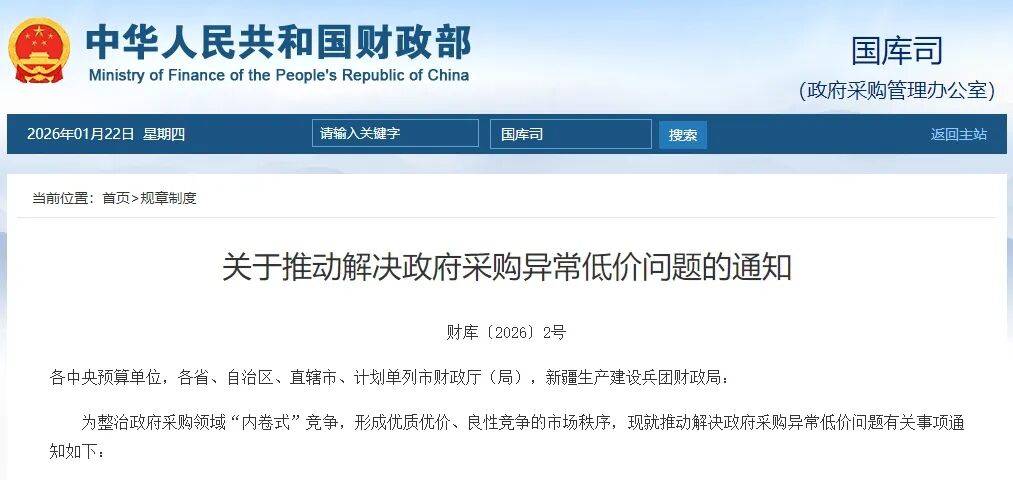
关于推动解决政府采购异常低价问题的通知
Sou Hu Cai Jing· 2026-01-22 01:51
Core Viewpoint - The notification aims to address the issue of "involution" in government procurement by establishing a market order that promotes quality and fair competition, specifically targeting the problem of abnormally low pricing in procurement processes [2][4]. Group 1: Strengthening Demand Management - Procurement entities are required to formulate clear and scientifically based procurement demands, considering market conditions and industry standards, and to set reasonable maximum prices for suppliers [2][4]. - The introduction of a life-cycle cost concept is encouraged, where suppliers must quote costs for operation, maintenance, and disposal within the procurement documents [2][4]. Group 2: Enhancing Abnormal Low Price Review - Procurement entities must initiate an abnormal low price review if bids are significantly below average or the maximum price, with specific thresholds set at 50% of the average bid or 45% of the maximum price [4][5]. - Suppliers must provide written explanations and cost breakdowns if their bids trigger the review, with a minimum response time of 30 minutes [5][6]. Group 3: Strengthening Contract Performance and Acceptance Management - Procurement entities are responsible for organizing contract performance evaluations, focusing on suppliers who win bids despite triggering low price reviews [7]. - Measures such as phased assessments and payments are recommended for projects that can be implemented in stages, ensuring timely monitoring of supplier performance [7]. Group 4: Implementation and Oversight - The notification will take effect from February 1, 2026, and emphasizes the importance of addressing low pricing issues through enhanced supervision and guidance from financial departments [8][9].
重磅!财政部发布《关于推动解决政府采购异常低价问题的通知》
Xin Lang Cai Jing· 2026-01-21 13:24
Group 1 - The core viewpoint of the article is to address the issue of "involution" competition in government procurement, aiming to establish a market order characterized by quality and fair pricing [1] - The notification emphasizes the need for procurement entities to manage demand effectively by considering market conditions, industry standards, and setting reasonable maximum prices for suppliers [1][2] - It highlights the importance of integrating lifecycle cost concepts into procurement processes, requiring suppliers to quote costs for operation, maintenance, and disposal within the contract [1] Group 2 - The article outlines the criteria for initiating an abnormal low-price bid review process, including bids that are significantly below the average of compliant bids or the maximum price [3][4] - It specifies that suppliers must provide written explanations and necessary documentation to justify their pricing if their bids trigger the low-price review [5] - The procurement entities are tasked with ensuring that evaluation committees have access to relevant market data and that the reasons for initiating low-price reviews are documented [6] Group 3 - The notification stresses the importance of contract performance verification, requiring procurement entities to monitor suppliers' compliance with contractual obligations, especially those that triggered low-price reviews [7] - It calls for enhanced organizational leadership and supervision to address low-price issues effectively, including improving procurement document standards and increasing penalties for non-compliance [7] - The new regulations will take effect on February 1, 2026, indicating a timeline for implementation [8]

财政部:推动解决政府采购异常低价问题 整治政府采购领域“内卷式”竞争
Sou Hu Cai Jing· 2026-01-21 09:24
Core Viewpoint - The Ministry of Finance has issued a notice to address the issue of "involution" competition in government procurement, aiming to establish a market order characterized by quality and reasonable pricing [1] Group 1: Procurement Guidelines - Procurement entities are required to set reasonable maximum prices based on actual needs, market supply, industry standards, and project budget amounts if no maximum price is established [1] - The notice emphasizes the importance of considering technical, cost-effectiveness, and competition factors when setting procurement packages [1] - The introduction of a life-cycle cost concept is encouraged, requiring suppliers to quote prices for operational, maintenance, and disposal costs within the procurement documents [1] Group 2: Evaluation Criteria - For projects using a comprehensive scoring method, it is essential to scientifically determine the scores and weights for price, technical, and business factors according to relevant regulations [1]
政府采购剑指设备异常低价乱象
21世纪经济报道· 2025-11-04 12:31
Core Viewpoint - The Ministry of Finance has issued a notice to address the issue of abnormally low bids in government procurement, marking a significant shift from a focus on low prices to an emphasis on quality and effectiveness in the medical equipment market [4][7]. Group 1: Government Procurement Reforms - The new regulations aim to combat the persistent issue of low-price bidding in the medical equipment sector, which has been detrimental to product quality and patient safety [9][10]. - The notice introduces a closed-loop system focusing on "source control, process review, and post-responsibility," addressing previous challenges in identifying and managing low-price bids [10][12]. Group 2: Impact on Medical Equipment Market - The introduction of a full lifecycle cost concept in procurement will require consideration of ongoing maintenance and consumable costs, thereby preventing the common practice of low initial bids followed by high consumable prices [12][13]. - The new rules will enhance scrutiny of low-price bids, with specific criteria established to identify and reject bids that are excessively low compared to market averages [12][13]. Group 3: Industry Dynamics and Competition - The reforms are expected to shift the competitive landscape, pushing domestic companies to transition from a price-based strategy to one focused on value [14]. - Foreign brands may benefit from the new emphasis on quality and service, as their technological advantages can be better recognized under the new evaluation criteria [14][15]. Group 4: Innovation and Market Growth - The reduction of low-price competition is anticipated to lead to increased investment in research and development, fostering innovation within the industry [15]. - With a projected budget of 19.6 billion for medical equipment updates, the new policies are expected to direct funds towards high-quality products and services, enhancing the efficiency of public healthcare resource allocation [15].

政府采购剑指设备异常低价:医疗市场生态或迎重构
2 1 Shi Ji Jing Ji Bao Dao· 2025-11-04 09:39
Core Viewpoint - The Ministry of Finance has issued a notice to address the issue of abnormally low bids in government procurement, signaling a shift from a focus on low prices to quality and effectiveness in the medical equipment market [1][3]. Government Procurement Reform - The new draft aims to create a systematic governance framework to tackle the persistent issue of low-price bidding in government procurement, particularly in the medical sector [3][5]. - Pilot programs have been initiated in various free trade zones and cities to address the problem of abnormal low-price bids [3]. Abnormal Low-Price Bidding Issues - The medical equipment sector has seen extreme price reductions, with bids often significantly below market rates, raising concerns about quality and safety [4][5]. - Examples include a bid of 1,000 yuan for a 3 million yuan project, highlighting the risks associated with such low bids [4]. Impact on Industry Competition - Abnormal low-price bidding has led to a decline in the quality of medical equipment and services, affecting patient safety and healthcare outcomes [5]. - The competition has forced some manufacturers to shift focus from R&D to lower-end products, hindering the advancement of domestic brands [5]. New Procurement Guidelines - The draft emphasizes a full lifecycle cost approach, requiring that ongoing maintenance and consumable costs be considered in bid evaluations [6]. - It introduces a two-stage evaluation process for complex equipment, ensuring that quality is prioritized over price [6]. Monitoring and Accountability - The draft outlines clear criteria for identifying abnormal low-price bids, aiming to prevent extreme cases from occurring [7]. - Suppliers will be required to provide cost breakdowns, and the evaluation committee will verify prices against market standards [7]. Market Restructuring - The new regulations are expected to shift market dynamics, concentrating resources on high-quality companies and altering the competitive landscape between domestic and foreign brands [8][9]. - Domestic companies must transition from competing on price to emphasizing value, or risk losing market share [9]. Opportunities for Foreign Brands - Foreign brands may benefit from the new focus on quality and lifecycle costs, allowing them to leverage their technological advantages in the market [10][11]. - The policy changes will require foreign companies to adapt their pricing strategies and enhance local services to maximize their market potential [11]. Innovation and Development - The new policies are anticipated to foster innovation within the industry, encouraging companies to invest in R&D and focus on developing innovative medical devices [11]. - With a significant budget for medical equipment updates, the new regulations will direct funds towards high-quality products and services, promoting a transition to high-quality development in the industry [11].