
政治操弄

Search documents
中国科协发布声明
第一财经· 2026-03-27 02:33
Core Viewpoint - The China Association for Science and Technology (CAST) announced that it will stop accepting funding applications for the NeurIPS conference starting March 27, 2026, and will redirect applications to domestic academic conferences or international conferences that respect Chinese scholars' rights and adhere to principles of open cooperation and academic ethics [1][3]. Group 1 - Starting from March 27, 2026, CAST will cease to accept applications for funding to attend the NeurIPS conference, redirecting all related applications to domestic academic conferences or international conferences that align with its principles [1]. - Papers accepted at the current NeurIPS conference will not be recognized as representative achievements for any CAST projects, although academic influence granted by national societies based on academic norms will be acknowledged [1]. - CAST firmly opposes the use of international academic exchanges as a tool for political manipulation [3].


摩擦升级!无视外交部门召见,美大使被法国强硬反制
Huan Qiu Shi Bao· 2026-02-25 22:49
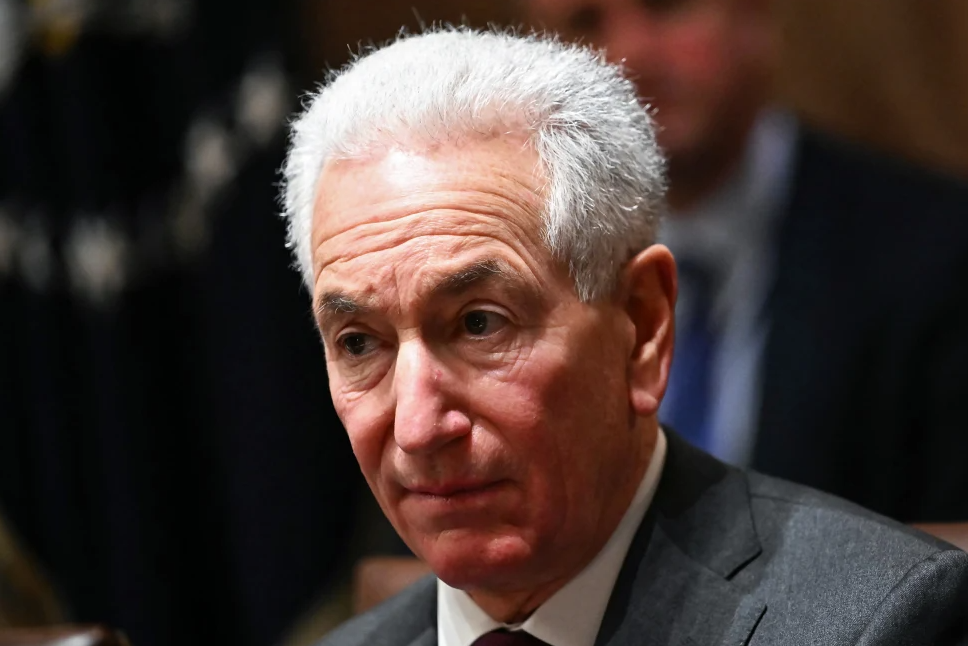
Group 1 - The core issue of the diplomatic friction between France and the United States stems from the murder of far-right activist Drouin, which has heightened political tensions in France [3] - The U.S. State Department's statement regarding the incident was perceived by the French government as political manipulation and interference in domestic affairs, leading to a strong backlash [3][4] - U.S. Ambassador to France, Charles Kushner, failed to attend a summons from the French Foreign Ministry, which further escalated tensions and resulted in restrictions on his interactions with French government officials [4] Group 2 - The French government has taken measures to assert its sovereignty by limiting Kushner's direct contact with high-level officials until a satisfactory explanation is provided [4] - This incident is not the first conflict involving Kushner and the French government, as he previously faced similar diplomatic issues in 2025 [4] - Kushner's background as a real estate developer and his controversial past, including a prison sentence and subsequent pardon, have contributed to the scrutiny surrounding his role as U.S. Ambassador to France [4]
美方称中国应停止向俄罗斯出口物项,并停止购买石油,中方:敦促美方停止转移矛盾,停止甩锅推责,停止在世界各地制造冲突与战争
Zhong Guo Ji Jin Bao· 2026-02-25 01:51
Group 1 - The U.S. has accused China of continuing to export items to Russia and purchasing oil, prompting a strong rebuttal from China's UN representative, Fu Cong, who labeled these accusations as political manipulation aimed at creating division and confrontation [1] - Fu Cong urged the U.S. to stop shifting blame and creating conflicts and wars around the world, emphasizing that the U.S. has been using various platforms to attack and smear China with fabricated excuses and lies [1] Group 2 - The semiconductor industry is experiencing positive momentum, leading to significant gains among major companies [2] - However, a leading stock in the storage sector has faced unexpected challenges, described as a "sudden attack" [2]
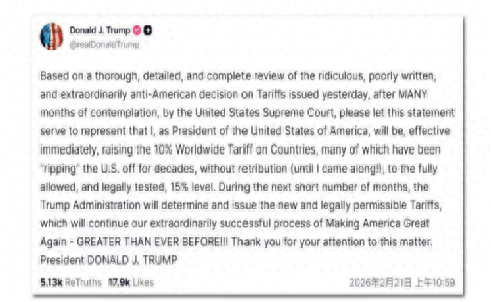
最高法院判特朗普违法,他却反手把关税拉满!
Xin Lang Cai Jing· 2026-02-22 12:47
Core Viewpoint - The article discusses the recent escalation of global tariffs initiated by former President Trump following a Supreme Court ruling that deemed his previous tariffs illegal, highlighting the political motivations behind these actions and their implications for the global trade system [1][2][14]. Group 1: Legal and Political Context - The U.S. Supreme Court ruled on February 20 that Trump's large-scale tariffs imposed under the International Emergency Economic Powers Act were illegal, prompting him to sign an executive order to terminate these tariffs [1]. - Trump then invoked the Trade Act of 1974, Section 122, to impose a 10% global tariff for 150 days, which he later increased to 15%, utilizing a legal loophole to bypass the Supreme Court's ruling [2][3][4]. - The legal framework allows for a maximum temporary tariff of 15% when there is a trade imbalance, but this measure requires Congressional approval for extension beyond 150 days [3]. Group 2: Political Implications - Trump's actions are characterized as a political performance rather than a serious trade policy adjustment, aimed at reinforcing his image as a protector of American workers and a challenger to the political establishment [10][12]. - The increase in tariffs serves to shift domestic economic frustrations onto foreign entities, portraying them as the cause of America's economic issues, thus rallying public support [10][12]. - The article argues that Trump's approach to tariffs reflects a broader trend of U.S. unilateralism and a departure from established multilateral trade norms, indicating a shift from "rules-based" to "might-based" hegemony [14][15]. Group 3: Economic Consequences - The article suggests that the tariffs will ultimately burden American consumers rather than foreign exporters, contradicting Trump's claims of protecting American workers [12][13]. - The increase in tariffs is expected to exacerbate inflationary pressures in the U.S., further complicating the economic landscape [13]. - The long-term implications of such tariff policies could undermine the credibility of the U.S. in the global trade system, as reliance on tariffs may lead to increased isolation and economic challenges [15][16].
克林顿、希拉里,公开喊话
Xin Lang Cai Jing· 2026-02-07 16:41
Group 1 - Former President Bill Clinton calls for the full disclosure of federal investigation documents related to deceased sex offender Jeffrey Epstein, insisting that he should testify in a public hearing rather than a closed session [1] - Clinton emphasizes that the current arrangement of a closed hearing serves partisan interests rather than the victims of Epstein, who deserve justice and the public's right to know the truth [1] - Clinton's spokesperson previously stated that he flew on Epstein's private plane four times in 2002 and 2003 for work related to the Clinton Foundation, but he denies visiting Epstein's private island and claims to have had no contact with him since Epstein's first prosecution for sex crimes [1] Group 2 - Hillary Clinton echoed her husband's statement, accusing the Republican chairman of the House Oversight Committee, Comer, of playing "political games" by demanding testimony from the Clintons while insisting on a closed hearing [2] - Hillary Clinton advocates for transparency, stating that the most transparent approach would be an open hearing with full camera access [2]
马科斯可能被弹劾?菲总统府回应
Xin Lang Cai Jing· 2026-01-13 04:20
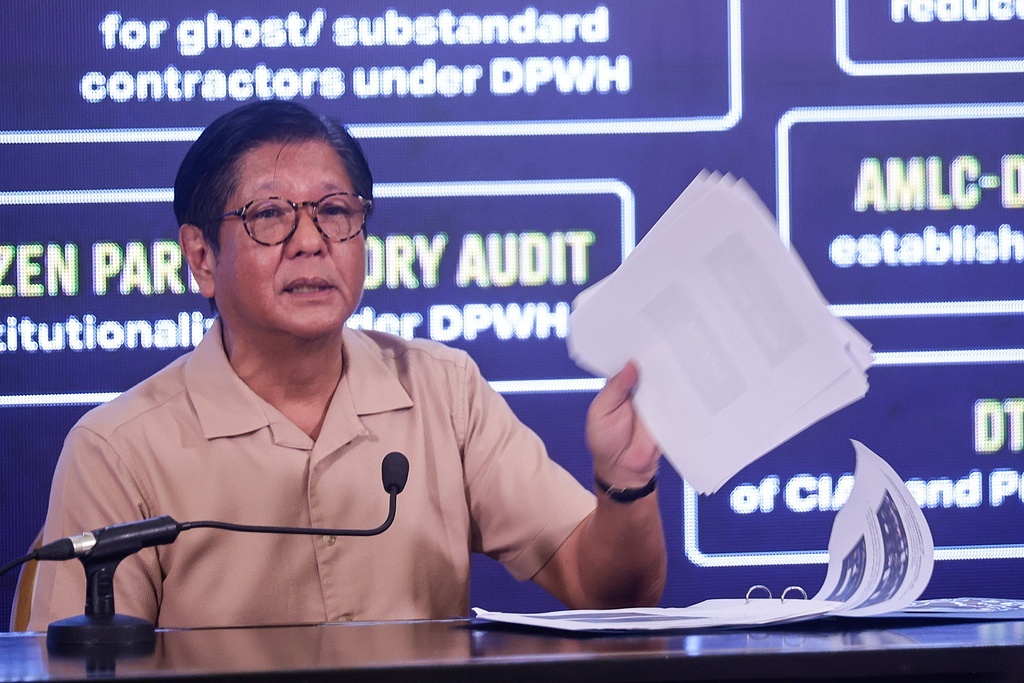
Group 1 - The Philippine presidential palace responded to rumors of potential impeachment of President Marcos, stating that he is confident in the government's work and prepared for any political situation [1] - The presidential spokesperson, Castro, indicated that the impeachment movement appears to be politically motivated rather than based on substantial allegations [1] - Castro denied accusations against Marcos regarding "betrayal of public trust," particularly concerning the signing of the 2025 General Appropriations Act, asserting that the president respects the constitution and has initiated investigations into alleged violations [1] Group 2 - Congressman Edgar Erice mentioned that leaders from various groups contacted him to "invite" him to support the impeachment of Marcos, citing "betrayal of public trust" as a constitutional basis for impeachment [2] - Castro characterized the impeachment discussions as unverified statements allegedly coming from supporters of a certain politician [2]
马科斯可能被弹劾?菲律宾总统府回应
Huan Qiu Shi Bao· 2026-01-12 22:48
Group 1 - The Philippine presidential palace responded to rumors of potential impeachment of President Marcos, stating that the president is confident in government operations and prepared to handle any political situation [1] - Presidential spokesperson Castro indicated that the impeachment movement appears to be politically motivated rather than based on substantial allegations, mentioning that certain political supporters have contacted a congressman regarding impeachment [3] - Castro denied accusations against Marcos of "betraying public trust," particularly concerning the signing of the 2025 General Appropriations Bill, asserting that the president respects the constitution and has initiated investigations into alleged violations [3][4] Group 2 - Congressman Edgar Erice reported that leaders from various groups have approached him to support the impeachment of Marcos, citing "betrayal of public trust" as a constitutional basis for impeachment [4] - Castro characterized the impeachment discussions as unverified statements allegedly originating from supporters of a certain politician [4]
国台办回应台当局封禁小红书:民进党倒行逆施阻挡不了台湾民意潮流
Xin Hua She· 2025-12-10 07:51
Core Viewpoint - The article discusses the Taiwanese government's decision to temporarily ban the social media platform Xiaohongshu for one year, highlighting the negative implications of this action on the youth and public sentiment in Taiwan towards mainland China [1][2]. Group 1: Government Actions and Reactions - The Taiwanese government, led by the Democratic Progressive Party (DPP), has announced a one-year ban on Xiaohongshu, citing concerns over cybersecurity and fraud [1]. - Chen Binhua, a spokesperson for the Taiwan Affairs Office, criticized the DPP for its actions, stating that the government is acting against the interests of the Taiwanese people, particularly the youth [1][2]. - The DPP's rationale for the ban has been described as politically motivated, aiming to suppress the flow of information and interaction between Taiwanese youth and mainland Chinese users [2]. Group 2: Public Sentiment and Platform Impact - Xiaohongshu is recognized as a popular platform among Taiwanese youth for its diverse content and community engagement, allowing users to understand the realities of mainland China [2]. - The ban is seen as a violation of democratic principles and an infringement on the rights of Taiwanese citizens to access information and use social media freely [2][3]. - There is significant opposition within Taiwan against the DPP's decision, with various media and public figures criticizing the ban as a politically charged maneuver [2]. Group 3: Broader Implications - The spokesperson emphasized the importance of maintaining open communication and shared opportunities between Taiwan and mainland China, advocating for the rights of Taiwanese citizens to access mainland internet services [3]. - The DPP's actions are viewed as detrimental to the livelihoods of those in Taiwan who benefit from platforms like Xiaohongshu, which contribute to their income [2]. - The article also touches on broader cultural and national identity issues, asserting that both sides of the Taiwan Strait share a common heritage and identity [3].
台当局禁小红书 国台办:民进党已成“民禁挡”
Zhong Guo Xin Wen Wang· 2025-12-10 07:26
Core Viewpoint - The Taiwanese government's ban on the social media platform Xiaohongshu is seen as a political maneuver against the interests of the Taiwanese youth and public, reflecting the ruling party's fear of losing control over information and communication with mainland China [1][2]. Group 1: Ban on Xiaohongshu - The Taiwanese authorities have banned Xiaohongshu citing multiple security concerns and fraud issues, which has been criticized as a tactic to suppress democratic freedoms and the public's right to information [1][2]. - Xiaohongshu has over 3 million users in Taiwan, with 70% being post-90s generation, indicating its popularity among the youth [1]. - The ban is perceived as an attempt to maintain an "information bubble" and prevent Taiwanese citizens from engaging with mainland Chinese perspectives [1]. Group 2: Political Implications - The spokesperson from the State Council Taiwan Affairs Office criticized the ban as a reflection of the ruling party's antagonism towards the public, labeling it as "民禁挡" (blocking the people's access) [1][2]. - Reports indicate that the number of fraud cases on Facebook in Taiwan far exceeds those attributed to Xiaohongshu, suggesting that the government's anti-fraud rationale is inconsistent and politically motivated [2]. - The ban has faced widespread opposition within Taiwan, with various sectors condemning the government's actions as politically motivated rather than genuinely concerned about public safety [2]. Group 3: Cross-Strait Relations - The spokesperson noted that the communication mechanism between the Association for Relations Across the Taiwan Straits and the Taiwan Strait Exchange Foundation has been stalled due to the Taiwanese government's refusal to acknowledge the "1992 Consensus" [3]. - There is an expressed desire for Taiwanese citizens to share in the opportunities presented by the development of the mainland's internet, highlighting a potential for increased mutual understanding between the two sides [3].
外交部:中方不接受日方所谓交涉,已当场驳回
第一财经· 2025-12-07 15:31
Group 1 - The article discusses a recent incident involving China's naval aircraft and Japan's Self-Defense Forces, where Japan accused a Chinese aircraft of "radar illumination" [1] - Japan's Defense Minister Koizumi Shinjiro stated that the Chinese aircraft conducted this action twice on December 6, which he deemed a dangerous behavior exceeding the necessary safety range for aircraft [1] - China firmly rejected Japan's claims, asserting that Japan's frequent reconnaissance activities pose a greater risk to maritime and aerial safety [1] Group 2 - The Chinese government has expressed strong opposition to Japan's allegations, calling them a distortion of facts and an attempt to mislead the international community [1] - China has urged Japan to cease its disruptive activities against China's normal military training and to stop irresponsible political manipulation [1]
