救灾救济

Search documents
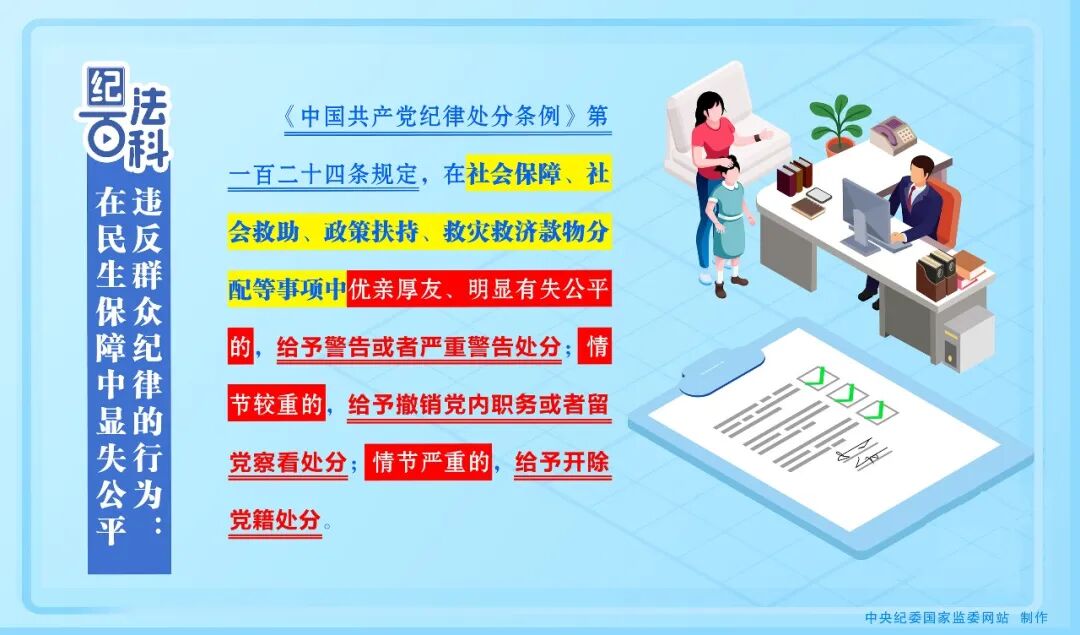
违反群众纪律的行为:在民生保障中显失公平
Xin Lang Cai Jing· 2026-01-04 12:25
Core Points - The article emphasizes the importance of fairness in the distribution of social security, social assistance, policy support, and disaster relief funds, as outlined in the Disciplinary Regulations of the Communist Party of China [2][10] - It highlights that unfair practices, such as favoritism and significant deviations from policy execution, undermine public trust and the effectiveness of welfare policies [4][11] Group 1: Definitions and Importance - Social security includes a series of laws and measures aimed at ensuring the basic survival and living needs of social members, contributing to social stability, fair distribution, and economic development [3][10] - Social assistance refers to the support provided to citizens facing life difficulties, ensuring their minimum living needs [4][10] - Policy support involves financial and social benefits provided by the state to assist specific groups or encourage certain initiatives [4][10] - Disaster relief is the assistance given to those affected by disasters or other hardships, crucial for the basic living conditions of vulnerable populations [4][10] Group 2: Regulations and Issues - The Rural Grassroots Cadres' Integrity Regulations prohibit the abuse of power and favoritism in public service and social assistance distribution [5][12] - There are reported cases of party members and officials distributing aid unfairly, prioritizing friends and relatives over those in genuine need, which damages the credibility of welfare policies [6][13] Group 3: Case Studies and Warnings - Numerous cases of misconduct have been reported, such as officials favoring relatives in disaster fund distributions and manipulating poverty assistance programs for personal gain [7][14] - The article stresses the necessity for party members and officials to adhere strictly to policies and maintain fairness in their dealings to ensure the effective implementation of welfare policies [6][14]