
社会保障

Search documents
Understanding the Impact of Working After Retirement on Social Security
Yahoo Finance· 2026-03-08 12:46
Group 1 - 80% of American homes with aged adults struggled financially in 2024, highlighting a significant issue for this demographic [1] - The National Council on Aging suggests maximizing Social Security benefits as a potential solution, though it may require continued employment [1] Group 2 - Social Security benefits are earned through taxes paid during a working life, requiring at least 40 credits or 10 years of work for eligibility [2] - Benefits can increase if the individual postpones claiming Social Security, with the option to retire and collect starting at age 62, albeit at a reduced rate [3] Group 3 - Working while collecting Social Security is possible, but various rules apply that can affect benefit amounts based on earnings [4][6] - The Social Security Administration withholds benefits based on earnings if the individual has not reached full retirement age, specifically $1 for every $2 earned over $24,480 in 2026 [5] Group 4 - The penalty for working before reaching full retirement age is less severe if the individual turns 67 during the year, with a withholding of $1 for every $3 earned up to $65,160 until the birthday month [7] - Full retirement age varies based on the year of birth, set at 67 for those born on or after January 2, 1960 [8]
中国青年报:超半数受访者期待落实好职工带薪年休假
Xin Lang Cai Jing· 2026-02-25 23:03
Group 1 - The core focus of the upcoming National Two Sessions is on employment, entrepreneurship, and income increase, with a significant portion of respondents expressing interest in these topics [3][4] - 52.0% of respondents expect the implementation of paid annual leave for employees, highlighting a strong demand for labor rights protection [5] - 45.2% of respondents wish to improve the service guarantee system for vulnerable groups such as empty-nest elderly, children in difficulties, and disabled individuals [6] Group 2 - There is a notable concern regarding the regulation of AI technology, with 47.5% of respondents wanting to address the misuse of deepfake technology [5] - 41.5% of respondents advocate for increased support for employment and entrepreneurship, indicating a need for policies that foster job creation [6] - The survey indicates a strong desire for improved medical insurance coverage, with respondents seeking better financial protection for significant medical expenses [7]

临平:以民生温度绘就人社服务新图景
Hang Zhou Ri Bao· 2026-02-09 03:27
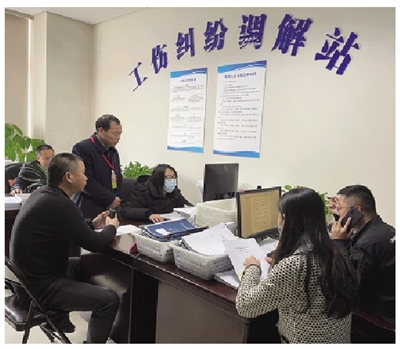
Core Insights - The article emphasizes the importance of integrating social welfare and regional development in Linping District, highlighting various initiatives aimed at improving the quality of life and economic growth [5][6][10]. Group 1: Talent Development and Employment - Linping District has successfully established two entrepreneurial parks, "Linping Talent Square" and "Linping Yishang Space," which have attracted over 80 entrepreneurial companies and created more than 1,000 jobs since their opening in September 2024 [6]. - The district has introduced a "30-minute vocational skills training circle" to enhance local skill development, resulting in an increase of 38,300 skilled workers since 2021, with a total of over 225,000 skilled workers currently [6][9]. - Linping has been actively attracting young talent, with an annual average of over 20,000 new graduates under 35 years old since 2021, bringing the total talent pool to over 280,000 [9]. Group 2: Employment Services - The district has implemented a series of employment services, including monthly job fairs that attract nearly 1,000 participants each, resulting in an average of over 200 employment intentions per event [10]. - Since 2021, Linping has hosted over 440 recruitment events, leading to the creation of more than 134,000 new urban jobs while maintaining a registered unemployment rate below 5% [10]. Group 3: Social Security and Welfare - By the end of 2025, Linping aims to have 650,600 people enrolled in various pension schemes, with 576,200 in workers' compensation and 419,300 in unemployment insurance, achieving a pension insurance coverage rate of 99.45% among the resident population [11]. - The district has shifted its social security services from passive responses to proactive engagement, enhancing accessibility and efficiency in service delivery [11]. Group 4: Labor Rights Protection - Linping has established a comprehensive system for handling work-related injury disputes, including a three-stage regulatory service model that addresses issues before, during, and after disputes [12]. - Since the implementation of the new employment form labor injury protection pilot program in July 2025, Linping has confirmed 237 cases of work-related injuries and paid out 298,000 yuan in benefits [12]. - The district has developed a governance system to prevent wage arrears, focusing on high-risk sectors like construction, and has conducted over 120 training sessions annually to raise awareness about wage rights [13].
让养老更普惠,让“打工人”权益更有保障|解码议案提案
Chang Sha Wan Bao· 2026-02-05 23:57
Core Viewpoint - The discussion at the Hunan Two Sessions focuses on promoting high-quality and sustainable development of social security, addressing the needs of special groups, enhancing pension services, and protecting the rights of new employment forms [1] Group 1: Special Group Insurance - There is a proposal to prioritize special groups such as security guards, sanitation workers, and cleaners for participation in work injury insurance due to their significant role in community services and the challenges they face in claiming rights after occupational injuries [2] - Over 60% of older workers in the security and cleaning industries in Hunan are excluded from work injury insurance due to age and insurance payment duration issues, leading to difficulties in rights protection and legal risks for employers [2] - A suggestion has been made to establish a "special group work injury insurance plan" that allows employers to pay separately without bundling with other insurance types, with payment bases determined by minimum wage or actual income [2] Group 2: Flexible Employment Rights - New employment groups, such as delivery riders and couriers, are essential for urban operations, with approximately 127,800 delivery workers projected in Hunan by December 2025, facing long working hours and insufficient rights protection [4] - There is a call for a collaborative approach to enhance the rights of new employment groups, including optimizing insurance services, improving policy transparency, and creating a social insurance mechanism that accommodates flexible employment characteristics [4][5] - Establishing a combined online and offline consultation service platform is recommended to better protect the rights of new employment form workers, with a focus on creating normative documents for labor rights protection [4] Group 3: Pension Services - The emphasis is on making pension services more inclusive and intelligent, with a vision for improved social security coverage for the elderly and flexible employment groups by 2025 [6][7] - Recommendations include enhancing the quality of pension services at the grassroots level, increasing investment in elderly care facilities, and improving the training of elderly care personnel to elevate service quality [7] - A proposal to create a unified smart elderly care data center and business collaboration platform aims to address the practical difficulties faced by the elderly, such as complex application processes and access to services, while incorporating user-friendly technology [7]
民生观察丨申领“应急钱”不会扣“养老钱”
Xin Hua Wang· 2026-02-05 07:05
Core Viewpoint - The rumor that receiving unemployment insurance will deduct from pension benefits is false and contradicts the original intent of social security policies, as clarified by the Ministry of Human Resources and Social Security [1][2][5] Group 1: Social Security System - China's social insurance system covers basic pension, medical, work injury, unemployment, and maternity insurance, with clear functions and responsibilities for each type [2][3] - Unemployment insurance serves as an emergency fund to provide basic living support for unemployed individuals during their job transition period [2][3] - The calculation of pension benefits is independent of unemployment insurance claims, based on factors such as contribution base, contribution rate, and years of contribution [2][3] Group 2: Unemployment Insurance Details - Eligibility for unemployment insurance requires at least one year of contributions, involuntary job loss, and registration for job seeking [2][3] - The duration of unemployment benefits is linked to the length of contribution: up to 12 months for 1-5 years, 18 months for 5-10 years, and 24 months for over 10 years [3] - Unemployed individuals can continue to pay into their pension insurance while receiving unemployment benefits, ensuring no impact on their pension accounts [3] Group 3: Public Misunderstanding and Policy Communication - The spread of misinformation regarding social security policies undermines public trust and hinders the effective implementation of welfare policies [5][6] - There is a need for clearer communication and understanding of policies to prevent negative impacts on their effectiveness [6] - Authorities and media are encouraged to provide accurate information and promote public awareness to combat misinformation [6][7] Group 4: Social Security Fund Performance - By the end of 2025, the number of participants in basic pension, unemployment, and work injury insurance is projected to reach 1.076 billion, 249 million, and 305 million respectively, showing an increase from the previous year [6] - The total income of the three social insurance funds is expected to be 9.1 trillion yuan, with total expenditures of 8.1 trillion yuan, resulting in a surplus of 1 trillion yuan [6]
代表审查“十五五”规划纲要草案等 着力提高城市能级 更好赋能全局发展
Jie Fang Ri Bao· 2026-02-05 01:52
Group 1 - The representatives at the Shanghai People's Congress are reviewing the draft of the 15th Five-Year Plan, acknowledging past achievements and providing suggestions for future work [1] - Lin Zhongqin emphasized the need to develop advantageous industries and new productive forces, aiming to enhance the city's international economic status and global influence [1] - Yang Zhijian highlighted the importance of the shipping industry in the next five years, advocating for digitalization and green transformation, including the supply of clean fuels like LNG and methanol [1] Group 2 - Representatives are focusing on livelihood issues, with Zhang Tingting suggesting the need for precise planning of elderly care facilities based on demand during the 15th Five-Year Plan [1] - Liu Ke proposed enhancing Shanghai's cultural soft power by developing the "Suhang Red Industrial Memory Corridor" and promoting new business formats along the riverside [2] - Wu Zuqiang noted the importance of improving the quality of school meals and suggested establishing a traceability mechanism for student lunches [2] Group 3 - Wang Hong expressed hope for increased funding for social security to improve the quality of life for citizens, despite a tight fiscal balance [3]
Here’s How Much You Need To Retire With a Modest $50K Lifestyle
Yahoo Finance· 2026-02-02 12:07
Core Insights - The article discusses the financial requirements for retirement, emphasizing the need to save over $1 million to maintain a comfortable lifestyle, specifically a $50,000 annual budget [1][4]. Group 1: Retirement Lifestyle - A $50,000 retirement lifestyle represents annual spending rather than a salary, influenced by factors such as cost of living and mortgage status [2]. - Living in affordable areas and being mortgage-free can enhance the $50,000 budget, allowing for more leisure activities like travel [3]. Group 2: Financial Planning - The 4% rule suggests that to sustain a $50,000 lifestyle, retirees should aim for at least $1.25 million in savings, assuming a retirement duration of 25 to 30 years [4][5]. - For a more conservative approach, a 3.5% withdrawal rate would necessitate up to $1.5 million in retirement savings [5]. Group 3: Social Security Considerations - Social Security can significantly impact retirement savings needs; for instance, if retirees expect $20,000 annually from Social Security, they would only need to cover $30,000 from savings, reducing the required portfolio from $1.25 million to $750,000 [6].
网友关心交通管理城市建设
Xin Lang Cai Jing· 2026-02-01 22:24
Core Viewpoint - The establishment of the "Sichuan NPC and CPPCC Online Workstation" aims to enhance interaction between the public and representatives, focusing on addressing key concerns in various sectors such as urban construction, education, and public services [1] Group 1: Public Concerns - The online platform has received nearly 160 messages from the public, with major concerns in urban construction, education, transportation, public services, and rural revitalization [1] - The top five areas of public concern include traffic management (13.29%), urban construction and management (12.65%), public services (10.12%), education management (10.12%), and social security (9.49%) [1] Group 2: Suggestions and Recommendations - Suggestions from the public include reforms in the education system, such as changing certain subjects to graduation assessment criteria and adjusting the difficulty of physical education exams [1] - There are calls for increased attention to labor market issues, including illegal employment practices and the need for stronger labor rights protection [1] - Recommendations also highlight the importance of technological innovation, urban-rural development, and the construction of a modern industrial system, with specific calls for more job opportunities in the new energy sector [1] Group 3: Representative Actions - Representatives have committed to addressing valuable public feedback in their proposals for the upcoming provincial meetings, particularly focusing on rural infrastructure and education reforms [1] - Specific suggestions include increasing investment in remote rural areas for infrastructure improvements and enhancing the training and evaluation mechanisms for innovative talent [1]
民生为大 内蒙古百姓生活更暖了
Xin Lang Cai Jing· 2026-02-01 19:21
Core Viewpoint - Inner Mongolia is committed to improving and safeguarding people's livelihoods by implementing various initiatives aimed at enhancing employment, social security, healthcare, and elderly and child care services by 2025 [1][2][3][5][6][7][8] Employment and Economic Development - Inner Mongolia plans to implement an "employment +" service model, hosting 3,960 job fairs and providing 1,604,900 job opportunities by 2025 [2] - The region aims to create 209,000 new urban jobs and reduce the average annual unemployment rate to its lowest level in five years [2] - A total of 67,400 training sessions will be conducted for urgently needed skills across various industries [2] Social Security and Welfare - By 2025, the number of participants in basic pension insurance, work injury insurance, and unemployment insurance will reach 17.75 million, 3.77 million, and 3.41 million respectively, exceeding target goals [2] - Basic medical insurance coverage will expand to 21.78 million, with a financial subsidy for urban residents increasing from 550 yuan in 2020 to 700 yuan by 2025 [2] Healthcare Improvements - Inner Mongolia is enhancing its healthcare system by investing 180 million yuan in building 39 specialized regional medical centers and 4 national regional medical centers [3] - The region has seen a significant increase in medical resources, improving public health services and patient care [3] Elderly and Child Care Services - By 2025, Inner Mongolia will complete renovations for 5,000 rural mutual aid elderly care facilities and establish 93 regional elderly service centers [5] - The region will implement subsidies for childcare services, benefiting 74,000 infants and increasing the number of childcare spots to 46.4 per 1,000 children under three years old [5][6] Infrastructure and Consumer Support - Inner Mongolia plans to renovate 895 urban old residential communities, improving living conditions for 179,000 households [6] - The region has introduced 24 specific measures to promote consumption and industry upgrades, with a total of 6.18 billion yuan allocated for consumer subsidies, stimulating 64 billion yuan in consumption [7]
孙拥辉:切实织密扎牢社会保障网
Xin Lang Cai Jing· 2026-01-31 22:37
Group 1 - The core viewpoint emphasizes the establishment of a comprehensive, layered, and efficient social assistance system in Guizhou, focusing on ensuring basic living security for vulnerable groups [1] - During the "14th Five-Year Plan" period, Guizhou's civil affairs work has significantly improved, particularly in safeguarding the basic living standards of low-income populations, orphans, children in difficult situations, and people with disabilities [1] - The implementation of a dynamic monitoring and early warning platform has integrated data from 10 departments, covering over 2.7 million low-income individuals for real-time monitoring [1] Group 2 - Over the past five years, more than 100 children from welfare institutions have been admitted to universities, with continuous improvements in living security standards for orphans and children without guardians, increasing by 25% and 43% respectively [2] - The civil affairs department has provided assistance to 62,000 homeless individuals and over 40,000 people with mental disabilities, while also enhancing support for over 15,000 disabled individuals through various aids [2] - The "15th Five-Year Plan" aims to expand and improve elderly care services, enhance social assistance efficiency, and ensure social welfare is warm and detailed, with a focus on community governance [3]