教育共同体建设

Search documents
教育观察:“浙里优学”如何铺就山区海岛学生幸福路?
Zhong Guo Xin Wen Wang· 2025-12-08 06:41
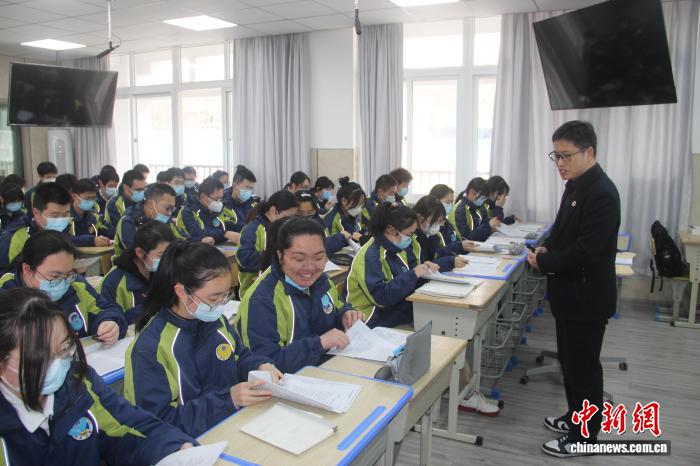
Core Viewpoint - The article highlights the efforts of Zhejiang province in China to enhance educational equity for students in mountainous and island areas through the "Zheli Youxue" initiative, which focuses on resource allocation, teacher mobility, and comprehensive support for student well-being [1][6]. Group 1: Teacher Mobility and Resource Sharing - The initiative promotes the concept of "shared teachers," allowing urban educators to teach in rural schools, thereby directly delivering quality educational resources to underserved areas [2][3]. - By 2025, the program aims to innovate a three-dimensional system of "full-time teaching + part-time teaching + team teaching" to enhance educational community development [2]. Group 2: School Pairing and Support - Zhejiang has implemented a "County Middle School Rise" action plan, establishing one-on-one support relationships between high-quality urban high schools and rural schools, focusing on comprehensive support in management, curriculum, and teacher training [5]. - Over 5,200 joint research sessions and 7,500 collective lesson preparations have been conducted among paired schools, demonstrating the effectiveness of this collaborative approach [5]. Group 3: Comprehensive Student Care - The province has initiated the "nap lying down" project, providing 1.04 million sets of nap equipment to over 1 million students in 1,723 schools, enhancing the quality of student rest [6]. - A psychological health service system has been established to support students, particularly those from vulnerable backgrounds, through a collaborative effort among various community sectors [7]. Group 4: Unique Educational Development - Schools are encouraged to adopt unique development paths based on local culture and resources, such as integrating traditional arts and marine education into their curricula [9]. - This approach aims to alleviate the pressure of homogenized competition among schools and unlock the diverse potential of students [9].

吴桂英:毫不松懈巩固拓展脱贫攻坚成果 不断提升有效衔接的质量和成色
Chang Sha Wan Bao· 2025-07-02 02:02
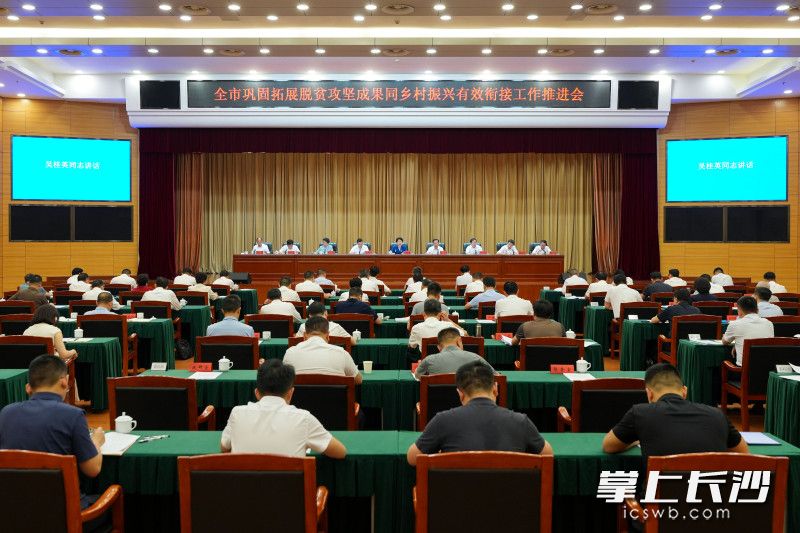
Core Points - The meeting held on July 1 focused on consolidating and expanding the achievements of poverty alleviation and effectively connecting them with rural revitalization [1][3] - The emphasis was placed on implementing Xi Jinping's important discourse on "agriculture, rural areas, and farmers," ensuring no large-scale return to poverty occurs, and providing solid support for high-quality development in Changsha [1][2] Summary by Sections Meeting Overview - The meeting aimed to promote the effective connection between poverty alleviation and rural revitalization, with a strong commitment to maintaining the achievements made [1][3] Leadership Insights - Wu Guiying highlighted the need for all levels of government to enhance their political stance and responsibility in ensuring effective connections between poverty alleviation and rural revitalization [2][4] - The importance of a correct view of performance and precise assistance strategies was emphasized, along with the need for continuous improvement based on actual work results [2] Action Plans - The implementation of the "Four No Drop" requirements and the "Five Ones" action plan was stressed to improve the quality of effective connections [4] - A systematic approach involving problem rectification, monitoring, and dynamic management was proposed to ensure that assistance policies reach every household and individual [4] Development Strategies - The focus on enhancing the internal driving force through the development of characteristic industries and employment support channels for the impoverished population was outlined [4] - Continuous reforms in healthcare and education were mentioned as essential for ensuring timely and accurate delivery of agricultural subsidies [4] Governance and Accountability - Strengthening party leadership and accountability in rural revitalization efforts was emphasized, along with the need to combat corruption and improper practices in this field [4]