数字化慈善

Search documents
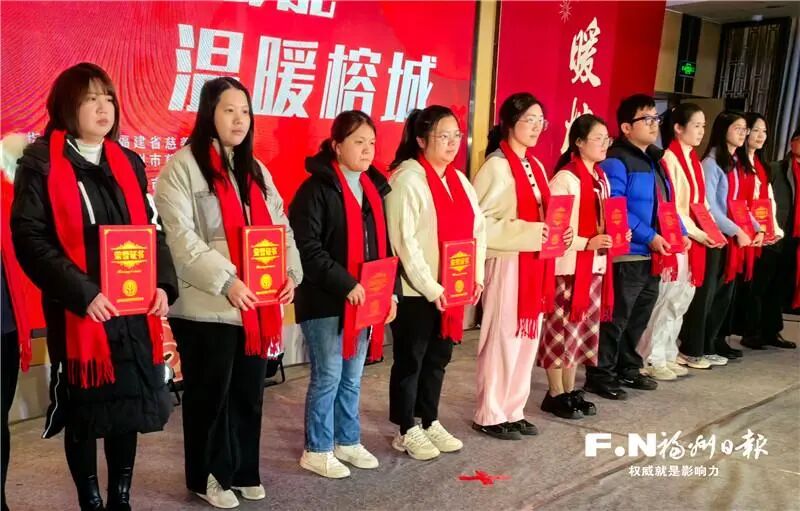
福州首批社区慈善专员受聘
Xin Lang Cai Jing· 2026-01-24 04:13
Core Viewpoint - The establishment of community charity commissioners in Fuzhou's Gulou District aims to create a grassroots charity service network, enhancing the "Shan Nuan Min Du" charity support brand at the community level [1][4]. Group 1: Community Charity Commissioners - A total of 26 community charity commissioners have been appointed, covering 26 communities in Gulou, with plans for full coverage of 69 communities [1][3]. - The commissioners will be responsible for policy promotion, needs assessment, resource connection, and event organization, focusing on the implementation of the community happiness public welfare fund [3]. Group 2: Community Happiness Public Welfare Fund - The fund will be established with a dedicated account for each community, allowing donors to contribute via a mini-program or QR code, ensuring real-time fund allocation to community sub-accounts through AI technology [3]. - The fund will address urgent community needs, enhance public service facilities, support public welfare activities, and promote community cultural development [3]. Group 3: Digital Charity and Community Engagement - The initiative aims to integrate charity into daily life, fostering a culture where "everyone can participate in charity at any time" [4]. - Innovative concepts like "charity streets" are being explored to encourage small donations during everyday transactions, making charity a part of regular consumer behavior [3][4].

中国公益慈善迈向“善治”新阶段|2025中国经济年报
Sou Hu Cai Jing· 2025-12-26 11:22
Core Viewpoint - The article discusses the significant advancements and challenges in China's public welfare and charity sector during the "14th Five-Year Plan" period, emphasizing a shift from quantity growth to quality improvement in charity initiatives [2][3]. Group 1: Growth and Achievements - During the "14th Five-Year Plan," the number of registered charity organizations in China increased by 70% from the end of 2020, reaching over 16,000, while the number of registered charity trusts grew nearly fourfold [2]. - The total annual charitable donations exceeded 200 billion yuan, highlighting the increasing role of public welfare in areas such as third distribution and social security [2]. - The charity sector has seen a significant increase in the establishment of technology-related social organizations, with 24,000 active in the field of technological innovation [4]. Group 2: Legal and Regulatory Framework - The legal framework for charity in China has seen substantial improvements, with the recent amendment to the Charity Law providing stronger legal guarantees for the healthy and orderly development of the sector [3]. - A series of supporting policies, including the "Charity Organization Recognition Measures" and "Charity Organization Public Fundraising Management Measures," have been introduced to create a more comprehensive regulatory system [3]. Group 3: Quality Development and Governance - The transition from quantity growth to high-quality development is characterized by enhanced regulatory requirements for charity organizations regarding governance structure, transparency, and compliance [4]. - The "Sunshine Charity" initiative has been implemented to improve the credibility and transparency of the charity sector through a comprehensive governance framework involving government oversight, industry self-regulation, social supervision, and internal controls [4]. Group 4: Technological and Community Innovations - The dual drive of technological charity and community charity has emerged as a key highlight of innovation in the public welfare sector, with digital tools significantly enhancing operational efficiency [5]. - Internet fundraising platforms have raised over 160 billion yuan, supporting rural revitalization and poverty alleviation efforts [5]. - Community charity has gained unprecedented attention, becoming an essential part of grassroots governance, with various local models being explored [5]. Group 5: Challenges and Future Directions - Despite notable achievements, the charity sector faces challenges in balancing regulation and promotion, as well as maintaining vitality amidst a slowdown in the growth of social organizations [7]. - The digital divide poses a risk, as smaller organizations may become marginalized due to disparities in resources and capabilities [8]. - The sector's talent structure is improving, but issues such as low compensation for professionals and grassroots workers remain barriers to attracting and retaining talent [9]. Group 6: Strategic Outlook - The future of China's charity sector is expected to focus on balancing order and vitality, with an emphasis on promoting and regulating charity development [9]. - The sector is anticipated to play a significant role in job creation and third distribution during the "15th Five-Year Plan," necessitating a collaborative effort to enhance policy incentives and address development bottlenecks [10]. - The establishment of a modern charity system that is both orderly and vibrant, capable of serving national strategies and meeting public needs, is a critical goal for the upcoming period [10].