社区慈善

Search documents
一餐饭温暖一群人
Xin Lang Cai Jing· 2026-02-17 19:44
Core Insights - The establishment of the "Food Station" in Changzhou aims to provide support to low-income families by distributing surplus food from local supermarkets and donations from businesses [1][2][4] - The initiative has successfully distributed nearly 700 portions of food, serving over 300 individuals in just one week since its launch [1] - The project is a collaborative effort involving community organizations, local businesses, and volunteers to ensure food safety and efficient distribution [2][3][5] Group 1 - The "Food Station" consists of two refrigerated cabinets that operate 24/7, primarily serving 104 low-income households in the area [1] - Daily operations include prioritizing food distribution to needy families, with any remaining food being offered to delivery riders after 9 PM [1] - The initiative has garnered significant community support, with 18 local businesses contributing food donations regularly [4] Group 2 - The project was developed after three years of discussions and community feedback regarding the need for a sustainable food distribution solution [2] - Each food item is traceable, ensuring safety and quality through a systematic process of sorting and verification [3] - The "Food Station" is managed by a team of community leaders, social workers, volunteers, and suppliers, fostering a sense of trust and collaboration within the community [5]
支出1.35亿元,惠及25.83万人次 2025年镇江慈善交出暖心答卷
Zhen Jiang Ri Bao· 2026-02-04 23:42
Core Insights - The charity system in the city has achieved significant results in 2025, with total funding income of 1.62 billion yuan and public welfare expenditure of 1.35 billion yuan, benefiting 258,300 people in need [1] Group 1: Charity Projects and Impact - The charity system focuses on urgent needs of disadvantaged groups, implementing various assistance projects, such as housing renovations benefiting 664 families and poverty alleviation projects aiding 13,000 families [2] - The "Charity Photovoltaic Lighting" initiative has installed solar devices for 100 families and 4 village collectives, providing stable annual income of 1,500 to 3,000 yuan per household [2] - A green channel for urgent assistance has been established, benefiting 771 families facing major illnesses or accidents [2] Group 2: Fundraising Strategies - The charity system has diversified fundraising methods, maintaining traditional donation channels while also leveraging online platforms like "Tencent Charity" to raise 30.35 million yuan through 19 projects and engaging 159,700 participants [2] - A new fundraising model combining online and offline efforts has been established, enhancing community participation [2] Group 3: Community Engagement and Branding - The charity system has developed community-based services, achieving full coverage of organized charity services, and contributing to a 75% coverage rate of community charity workstations in the province [3] - The "Home Charity" service project has been recognized nationally, becoming a model for community charity [3] Group 4: Cultural Promotion and Awareness - Comprehensive charity promotion efforts have been made, with initiatives like "Good Deeds Reward" winning awards and the establishment of a charity exhibition hall as a cultural landmark [3] - The charity system has published 180 articles in major media to amplify positive charity energy [3] Group 5: Leadership and Future Plans - The charity system emphasizes political construction and has initiated extensive training programs to enhance professionalism and transparency [4] - Plans for 2026 include implementing over 50 charity projects with an estimated expenditure of 33 million yuan, aiming to benefit over 60,000 people [4]
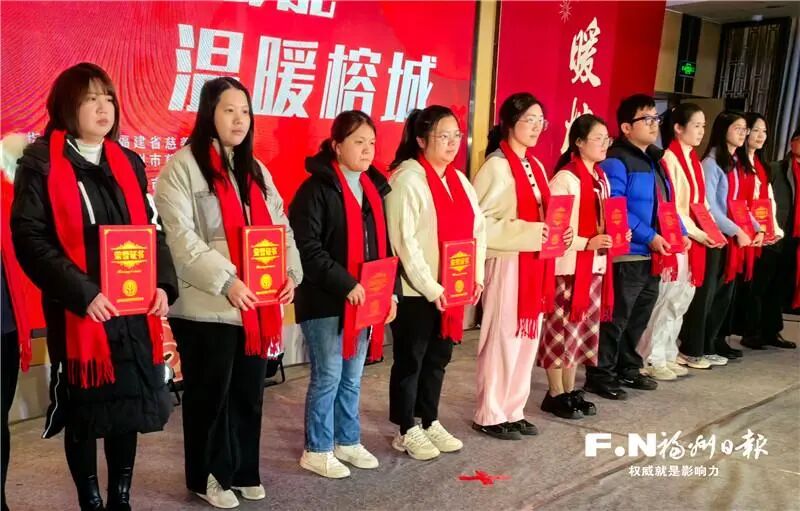
福州首批社区慈善专员受聘
Xin Lang Cai Jing· 2026-01-24 04:13
Core Viewpoint - The establishment of community charity commissioners in Fuzhou's Gulou District aims to create a grassroots charity service network, enhancing the "Shan Nuan Min Du" charity support brand at the community level [1][4]. Group 1: Community Charity Commissioners - A total of 26 community charity commissioners have been appointed, covering 26 communities in Gulou, with plans for full coverage of 69 communities [1][3]. - The commissioners will be responsible for policy promotion, needs assessment, resource connection, and event organization, focusing on the implementation of the community happiness public welfare fund [3]. Group 2: Community Happiness Public Welfare Fund - The fund will be established with a dedicated account for each community, allowing donors to contribute via a mini-program or QR code, ensuring real-time fund allocation to community sub-accounts through AI technology [3]. - The fund will address urgent community needs, enhance public service facilities, support public welfare activities, and promote community cultural development [3]. Group 3: Digital Charity and Community Engagement - The initiative aims to integrate charity into daily life, fostering a culture where "everyone can participate in charity at any time" [4]. - Innovative concepts like "charity streets" are being explored to encourage small donations during everyday transactions, making charity a part of regular consumer behavior [3][4].

2028年底前建成五级慈善工作体系
Xin Lang Cai Jing· 2026-01-06 21:35
Core Viewpoint - The provincial government aims to establish a comprehensive five-level charity work system by the end of 2028, enhancing community charity initiatives and improving public trust and satisfaction in charitable activities [1][2]. Group 1: Charity Work System - The plan includes building a charity work system that spans from the provincial level down to villages and communities, focusing on the development of community charity funds, organizations, and specialized talent [1]. - The initiative emphasizes the importance of political leadership in community charity, integrating it into community governance and involving various stakeholders such as enterprises, social organizations, and volunteers [1][2]. Group 2: Operational Mechanisms - Community charity organizations can be established to manage and operate charity activities, linking resources and providing targeted services to communities [2]. - The operational framework includes setting up community charity service stations in various public spaces to facilitate charity activities [2]. Group 3: Project Development - Charity projects will be designed based on the actual needs of community residents, creating a project list to address urgent community issues [2]. - The initiative encourages the exploration of "charity + business" fundraising models, including community charity supermarkets and markets to support funding and resource mobilization [2]. Group 4: Implementation Measures - The plan outlines four key measures: strengthening the integration of party leadership with community charity, cultivating community charity entities, promoting collaborative development, and enhancing charity oversight [2].
让慈善力量融入邻里日常
Xin Lang Cai Jing· 2025-12-31 16:58
Core Viewpoint - The article emphasizes the importance of charity as a hallmark of social civilization and grassroots governance, highlighting the efforts of the Tongxin Community in Juxian County, Shandong Province, to integrate charity into daily life and enhance community welfare through a structured charity service system [1] Group 1: Charity Support Mechanisms - The community focuses on addressing the urgent needs of vulnerable groups by transitioning from "blood transfusion" aid to "blood production" empowerment, ensuring that assistance is both precise and warm [1] - A regular donation mechanism has been established to support low-income households, elderly individuals, and disabled persons, with over 1,000 items of aid distributed to 43 struggling families throughout the year [2] - The community has implemented innovative "one-on-one" and "multiple-to-one" support models, forming 120 pairs of helpers to provide regular health monitoring and assistance to isolated elderly residents [2] Group 2: Expanding Charity Services - The community has created a "Charity Space" that serves as a service station for residents, integrating convenient services with charity support to address significant community needs [3] - A "Tongxin·Hui" service station has been established to offer low-cost services such as haircuts and clothing repairs, benefiting over 5,000 residents in the past year [3] - Initiatives like "Warm Porridge Delivery" for outdoor workers and seasonal care activities for new employment groups have been launched to extend care to a broader audience [3] Group 3: Community Engagement and Fund Management - The community has adopted a three-dimensional model of "funds + activities + volunteers" to promote inclusive participation in charity, moving from one-way donations to a shared community effort [4] - A dedicated charity fund has been established, adhering to strict management protocols to ensure transparency and effective use of donations, with regular updates provided to the community [4] - Over 100 charity events have been organized, fostering a culture of volunteerism and community support, with more than 120 volunteers recruited [4] Group 4: Long-term Empowerment Strategies - The community is focused on sustainable development by extending charity efforts from immediate relief to long-term empowerment through skills training and educational programs [5] - More than 80 practical skills training sessions have been conducted, helping many women achieve employment or entrepreneurship, thereby improving their economic conditions [5] - The community has also provided free tutoring and interest-based courses for over 200 children from disadvantaged families, enhancing educational support [5]
中国公益慈善迈向“善治”新阶段
Xin Lang Cai Jing· 2025-12-26 12:21
Core Insights - The core viewpoint of the articles emphasizes the transformation of China's public welfare and charity sector from quantity growth to quality improvement during the "14th Five-Year Plan" period, highlighting the importance of legal frameworks and digital transformation as key drivers [2][3][4]. Group 1: Growth and Development - During the "14th Five-Year Plan," the number of registered charity organizations in China increased by 70% compared to the end of 2020, reaching over 16,000, while the number of registered charitable trusts grew nearly fourfold [2][3]. - The total annual charitable donations exceeded 200 billion yuan, showcasing the increasing role of public welfare in areas such as third distribution and social security [2][3]. - The Ministry of Civil Affairs reported that charitable organizations spent 150 billion yuan annually, focusing on key areas like elderly care, child welfare, education, and healthcare [4][15]. Group 2: Legal and Regulatory Framework - The legal framework for charity in China has seen significant advancements, with the amendment of the Charity Law providing stronger legal support for emergency charity systems and improved supervision [3][4]. - A series of supporting policies, including the "Charity Organization Recognition Measures" and "Charity Organization Public Fundraising Management Measures," have been introduced to create a more comprehensive regulatory system [3][4]. Group 3: Digital and Community Charity - The dual drive of technology charity and community charity has emerged as a significant highlight in the innovation and development of public welfare during the "14th Five-Year Plan" [5][16]. - Internet fundraising platforms designated by the Ministry of Civil Affairs raised over 160 billion yuan, significantly supporting rural revitalization and poverty alleviation efforts [5][16]. - Community charity initiatives have gained unprecedented attention, becoming an essential part of grassroots governance, with various cities exploring innovative community charity models [5][16]. Group 4: Challenges and Future Directions - Despite notable achievements, the charity sector faces challenges in balancing regulation and promotion, as well as maintaining vitality while ensuring order [8][18]. - The growth rate of social organizations has slowed, partly due to difficulties in registration and a tendency to prioritize regulation over promotion [8][18]. - The digital divide poses challenges, as smaller organizations may become marginalized due to a lack of resources compared to larger entities [19][20]. Group 5: Talent and Structural Issues - The charity sector is experiencing a dual challenge of optimizing talent structure while facing salary competitiveness issues, which affects the attraction of skilled professionals [19][20]. - The integration of diverse talents, including technology and management professionals, is injecting new vitality into the sector, but low salaries for grassroots workers remain a significant barrier [19][20]. Group 6: Vision for the Future - Looking ahead to the "15th Five-Year Plan," balancing order and vitality, and enhancing the functions of the charity sector will be crucial [9][21]. - The emphasis on high-quality development and the promotion of charity will guide the sector's future direction, with a focus on transparency, community charity, and the application of artificial intelligence [9][21].

中国公益慈善迈向“善治”新阶段|2025中国经济年报
Sou Hu Cai Jing· 2025-12-26 11:22
Core Viewpoint - The article discusses the significant advancements and challenges in China's public welfare and charity sector during the "14th Five-Year Plan" period, emphasizing a shift from quantity growth to quality improvement in charity initiatives [2][3]. Group 1: Growth and Achievements - During the "14th Five-Year Plan," the number of registered charity organizations in China increased by 70% from the end of 2020, reaching over 16,000, while the number of registered charity trusts grew nearly fourfold [2]. - The total annual charitable donations exceeded 200 billion yuan, highlighting the increasing role of public welfare in areas such as third distribution and social security [2]. - The charity sector has seen a significant increase in the establishment of technology-related social organizations, with 24,000 active in the field of technological innovation [4]. Group 2: Legal and Regulatory Framework - The legal framework for charity in China has seen substantial improvements, with the recent amendment to the Charity Law providing stronger legal guarantees for the healthy and orderly development of the sector [3]. - A series of supporting policies, including the "Charity Organization Recognition Measures" and "Charity Organization Public Fundraising Management Measures," have been introduced to create a more comprehensive regulatory system [3]. Group 3: Quality Development and Governance - The transition from quantity growth to high-quality development is characterized by enhanced regulatory requirements for charity organizations regarding governance structure, transparency, and compliance [4]. - The "Sunshine Charity" initiative has been implemented to improve the credibility and transparency of the charity sector through a comprehensive governance framework involving government oversight, industry self-regulation, social supervision, and internal controls [4]. Group 4: Technological and Community Innovations - The dual drive of technological charity and community charity has emerged as a key highlight of innovation in the public welfare sector, with digital tools significantly enhancing operational efficiency [5]. - Internet fundraising platforms have raised over 160 billion yuan, supporting rural revitalization and poverty alleviation efforts [5]. - Community charity has gained unprecedented attention, becoming an essential part of grassroots governance, with various local models being explored [5]. Group 5: Challenges and Future Directions - Despite notable achievements, the charity sector faces challenges in balancing regulation and promotion, as well as maintaining vitality amidst a slowdown in the growth of social organizations [7]. - The digital divide poses a risk, as smaller organizations may become marginalized due to disparities in resources and capabilities [8]. - The sector's talent structure is improving, but issues such as low compensation for professionals and grassroots workers remain barriers to attracting and retaining talent [9]. Group 6: Strategic Outlook - The future of China's charity sector is expected to focus on balancing order and vitality, with an emphasis on promoting and regulating charity development [9]. - The sector is anticipated to play a significant role in job creation and third distribution during the "15th Five-Year Plan," necessitating a collaborative effort to enhance policy incentives and address development bottlenecks [10]. - The establishment of a modern charity system that is both orderly and vibrant, capable of serving national strategies and meeting public needs, is a critical goal for the upcoming period [10].

贵州五部门联合印发《关于大力发展社区慈善的指导意见》
Xin Lang Cai Jing· 2025-12-26 09:51
Core Viewpoint - The Guizhou Provincial Civil Affairs Department, along with other governmental bodies, has issued guidelines to significantly develop community charity by the end of 2028, focusing on the establishment of community charity funds, organizations, and projects, while enhancing regulatory frameworks and public trust in charity [1] Group 1: Community Charity Work Mechanism - The community charity work mechanism emphasizes the political leadership of the Party and integrates community charity into governance, with various organizations and volunteers participating in charity projects [2] - Community charity service platforms will be established in locations such as community service centers and activity centers for different demographics, providing public spaces for charity activities [2] Group 2: Charity Resource Development - The initiative aims to explore "charity + business" fundraising models, including community charity supermarkets and markets, to provide financial and material support for community charity activities [3] Group 3: Key Measures - The first measure focuses on strengthening the charity system by establishing a five-level charity work framework to connect resources, needs, and supplies effectively [4] - The second measure involves nurturing community charity entities through funding and support from various departments, particularly for organizations serving vulnerable groups [4] - The third measure promotes the integration of community resources and the development of specialized funds, encouraging innovative fundraising methods [4] - The fourth measure emphasizes the importance of regulatory oversight in community charity, ensuring proper management and auditing of charity organizations [4]
奔赴田野 触摸基层
Zhong Guo Qing Nian Bao· 2025-09-30 18:31
Core Insights - The article discusses a practical research initiative by a multidisciplinary team from Beijing Normal University, focusing on community charity and grassroots governance in rural China [1][10] - The team conducted field investigations in Chengdu and Jiuquan, aiming to understand the real needs of local communities and enhance social governance through charity [2][8] Group 1: Research Methodology - The team divided into five specialized groups to explore community charity activities, coverage, and resident satisfaction, engaging with over 100 households and distributing 150 questionnaires [2][4] - The research involved in-depth interviews with local authorities, community leaders, and social organizations to gain a comprehensive view of community charity development [3][4] Group 2: Community Engagement - The team faced language barriers, prompting the recruitment of local youth to assist in communication, which led to the creation of the "Youth Mutual Assistance Plan" [5][6] - The initiative included organizing experience-sharing sessions for local youth, enhancing their educational aspirations and community involvement [7][9] Group 3: Findings and Recommendations - The research revealed challenges such as an aging volunteer demographic and insufficient mobilization of community service, leading to suggestions for mutual assistance among different age groups [8][9] - The team identified unique cultural traits in Jiuquan that could be leveraged to enhance community charity efforts, emphasizing the importance of local characteristics in charity development [9][10] Group 4: Impact and Future Collaboration - The initiative received positive feedback from local government and residents, highlighting the value of integrating academic insights with grassroots practice [9][10] - The project is seen as a model for future collaborations between universities and local communities, aiming to foster sustainable charity practices [9][10]