
数字化重塑

Search documents
便利店新竞赛:看懂5大进化方向
3 6 Ke· 2025-12-16 11:47
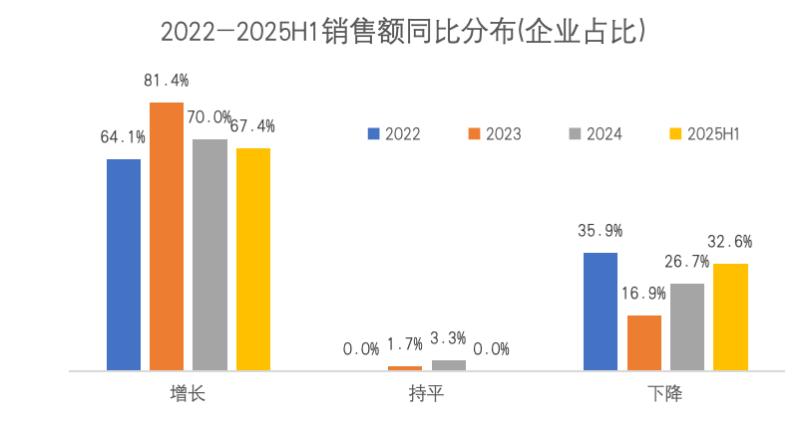
Core Insights - The convenience store industry is undergoing a significant transformation from scale expansion to value reconstruction, driven by changing consumer behaviors and competitive pressures [1][7]. Group 1: Market Growth and Competition - Convenience stores have become a vital growth segment in retail, with a 6% year-on-year increase in sales, outperforming other retail formats [1]. - The number of convenience stores continues to grow, with over 67.4% of surveyed companies reporting sales growth, and a net increase of 4,093 stores expected by mid-2025 [1][3]. - Major players like Meiyijia have rapidly expanded from over 30,000 to more than 40,000 stores in less than three years, achieving an annual sales figure of 558 billion yuan [3]. Group 2: Competitive Landscape - Local brands are aggressively expanding, with Tianfu and Furong Xingsheng also increasing their market presence [5]. - Foreign brands like 7-Eleven and Lawson are adapting by accelerating store openings and localizing their offerings, with 7-Eleven adding 733 stores in 2024 [5][6]. - New business models, such as instant retail platforms and snack discount stores, are increasingly diverting customers from traditional convenience stores [6][7]. Group 3: Evolution Strategies - Convenience stores are focusing on five key evolution directions to remain competitive: 1. **Product Differentiation**: Emphasizing fresh food and private label products to combat homogenization [10][14]. 2. **Instant Retail Integration**: Adopting instant retail as a standard offering, with a 60% year-on-year increase in instant retail orders [15][17]. 3. **Community Engagement**: Transforming stores into community hubs by offering additional services like package collection and entertainment [18]. 4. **Digital Transformation**: Implementing digital supply chain solutions to enhance operational efficiency and responsiveness [19][20]. 5. **Market Penetration**: Targeting lower-tier cities and exploring international expansion as new growth avenues [23][25]. Group 4: Future Outlook - The competition in the convenience store sector is evolving beyond mere location acquisition to encompass supply chain efficiency, product strength, digital capabilities, and customer experience [26].

从购车到养车全省心:金融壹账通车生态平台以智能闭环提升车主体验
Zhong Guo Zhi Liang Xin Wen Wang· 2025-12-11 09:09
Core Viewpoint - The automotive industry is undergoing a transformation from traditional vehicles to data-driven cars, necessitating a complete overhaul of automotive finance, insurance, and services [1] Group 1: Platform Overview - Financial One Account has launched the "Car Ecosystem Platform," which integrates services for car owners, insurance, loans, and post-sale services into a one-stop intelligent ecosystem [2] - The platform aims to redefine the industry's technology stack, enabling automated loan approvals, precise insurance underwriting and pricing, and fully online services for car maintenance, charging, and more [2][3] Group 2: Systematic Design - The "Car Ecosystem Platform" focuses on a comprehensive system design that includes online car marketplaces, loan approvals, insurance underwriting, claims processing, and various owner services [3] - The platform combines technology and operational experience from Ping An Group in automotive finance and insurance services [3] Group 3: Technological Empowerment - The platform's intelligent modules are based on years of practical experience, including localized risk control, automated underwriting, smart pricing, and real-time vehicle monitoring [4] - Automation is applied across the entire process, from contract signing to customer service, enhancing operational efficiency [4] Group 4: International Expansion - The platform's international rollout is progressing faster than expected, with a recent partnership in Vietnam to implement the Car Ecosystem Platform [5] - The collaboration with Tasco Group in Vietnam highlights the platform's ability to fill gaps in intelligent infrastructure for automotive services and finance [5] Group 5: Sustainability and Replicability - The long-term strategy focuses on standardizing intelligent risk control, modularizing insurance technology, and ensuring the platform's replicability and sustainability across regions [6] - Financial One Account aims to leverage Chinese experiences to drive global automotive ecosystems towards a more intelligent and sustainable future [6]