数字就业

Search documents
甘肃环县:“数字引擎”链动全域经济
Sou Hu Cai Jing· 2025-10-24 04:54
Core Viewpoint - The article highlights the significant advancements in e-commerce and logistics in Huan County, Gansu Province, which have revitalized the rural economy and improved the efficiency of agricultural product distribution [1][3][6]. E-commerce Development - Over the past five years, Huan County has established a new economic development model that integrates e-commerce with logistics, enhancing employment and industry efficiency [3][6]. - The county has built a comprehensive e-commerce ecosystem, including a county-level logistics center, 20 township service stations, and 251 village service points, creating a three-tier logistics system [5][10]. Logistics Improvement - The county has focused on solving the "last mile" logistics problem, allowing for direct delivery of packages to villages, which has significantly improved convenience for residents [4][6]. - The implementation of a unified warehouse and distribution model has reduced operational costs for courier companies and increased the efficiency of local agricultural product distribution [6][10]. Agricultural Product Marketing - Huan County has successfully connected local agricultural products with the market through an innovative model that combines e-commerce, enterprises, and local farmers [9][10]. - The county has seen a rise in the variety and quantity of local products sold online, including specialty grains, lamb, and apples, contributing to a positive cycle of e-commerce and logistics [6][10]. Employment and Training Initiatives - The county has developed a training platform to cultivate digital talents, focusing on various groups such as returning youth and local entrepreneurs, enhancing their e-commerce skills [12][13]. - Initiatives like the "Ant Group Service Star Station" project have created job opportunities, with 1,517 people employed in digital roles, supporting the local economy [13][14]. Economic Performance - In the first nine months of 2025, Huan County's e-commerce transaction volume reached 1.75 billion yuan, a year-on-year increase of 9.52%, indicating a steady growth trend in the e-commerce sector [14].


【文明润心·声入万家】满城区电商促就业 为求职者带来“数字机遇”
Sou Hu Cai Jing· 2025-10-11 09:31
Core Viewpoint - The event aims to enhance employment services by bringing them closer to the community, facilitating job opportunities for residents through a specialized recruitment fair [1] Group 1: Event Overview - The recruitment fair titled "Digital Employment into Community and Golden Autumn Recruitment Month" was held on October 11 in Shangdong Community, organized by the Mancheng District Human Resources and Social Security Bureau [1] - The event attracted numerous residents and companies, creating a bridge for employment services right at their doorstep [1] Group 2: Job Opportunities - The recruitment activity focused on the e-commerce industry chain, offering over 300 job positions and distributing more than 200 promotional flyers [3] - Initial employment intentions were established with over 80 individuals during the event [3] - The "E-commerce Live Recruitment" segment allowed real-time interaction, addressing job seekers' questions and engaging a large number of young participants [3] Group 3: Future Plans - The district's human resources bureau plans to continue public employment service initiatives, focusing on the development needs of the e-commerce sector [5] - The goal is to create more quality employment service platforms to support talent acquisition for companies and ensure job placements for individuals, contributing to the high-quality development of the local e-commerce industry [5]

产业数字化就业调研报告:全国产业数字化就业总量约6千万,集中于小微市场主体
3 6 Ke· 2025-09-17 10:05
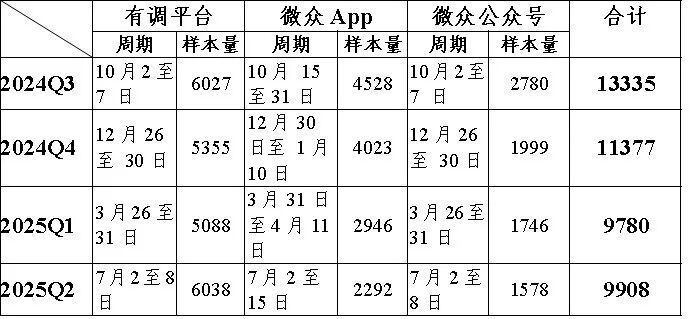
Core Insights - The article discusses the employment landscape in China's digital economy, highlighting the distinction between digital industrialization and industrial digitalization [2][22] - As of the end of 2024, the total number of jobs created through industrial digitalization reached 61.95 million, accounting for 8.4% of the national employment [14][22] - By the second quarter of 2025, this number decreased to 60.09 million, with a notable decline in individual business contributions [14][22] Employment Statistics - By the end of 2024, the total number of jobs in industrial digitalization was 61.95 million, with 20.83 million jobs created by enterprises and 39.17 million by individual businesses [14][22] - In the second quarter of 2025, enterprise-created digital jobs increased by 10.7% to 20.83 million, while individual business jobs decreased by 6.1% to 39.17 million [14][22] - The wholesale and retail industry accounted for the largest share of digital jobs, with 25.14 million positions, representing 41.1% of the total [16][22] Industry Insights - The cultural and entertainment industry had the highest digital employment penetration rate at 29.8%, while the manufacturing sector had a low penetration rate of 4.6% [16][23] - The majority of digital employment is concentrated in small market entities, with individual businesses consistently creating over 60% of digital jobs [23][22] - E-commerce platforms are identified as the primary drivers of industrial digitalization employment, particularly in the wholesale and retail sector [23][22] Regional Distribution - Digital jobs created by enterprises are predominantly located in eastern coastal provinces, with Guangdong, Jiangsu, and Zhejiang leading in job creation [19][22] - In the second quarter of 2025, 15 provinces saw an increase in enterprise-created digital jobs, while 16 experienced a decline, indicating a relatively balanced distribution [19][22] Research Methodology - The employment estimates were derived from a comprehensive survey conducted by Tencent Research Institute, Penguin YouDiao, and WeBank, utilizing a multi-channel approach to ensure representativeness [3][4] - The survey targeted business owners and individual entrepreneurs, focusing on online job creation and avoiding duplication in job counts across platforms [4][6]