
数字币财库公司

Search documents
币圈遭血洗后 “给币加杠杆”的“数字币财库公司”崩了
Hua Er Jie Jian Wen· 2025-11-10 02:24
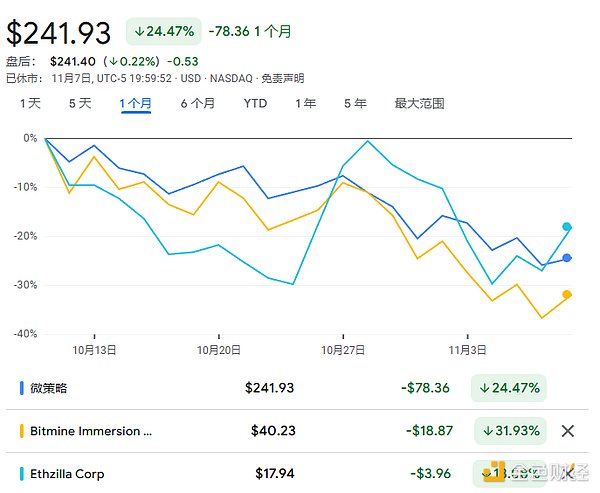
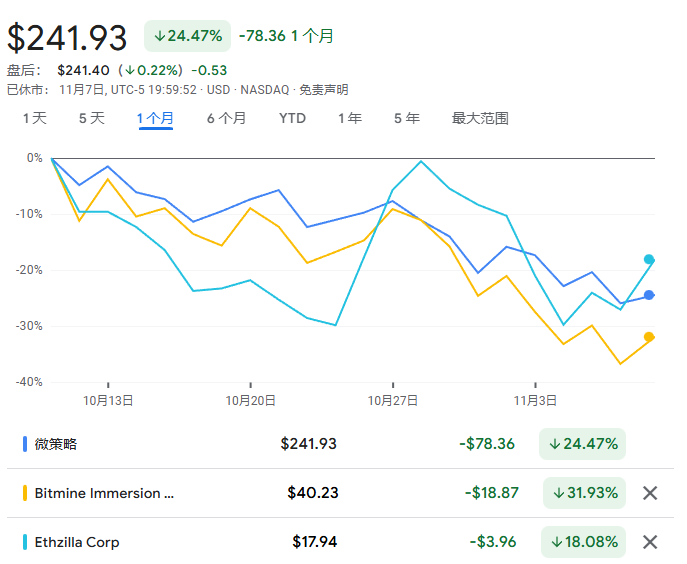
Core Insights - A cryptocurrency sell-off that began in October is negatively impacting popular investment strategies on Wall Street, particularly those involving "digital asset treasury companies" that leverage debt or fundraising to invest in cryptocurrencies like Bitcoin and Ethereum [1] - The model pioneered by Michael Saylor in 2020 transformed MicroStrategy into a major Bitcoin holder, but its market value has dropped from a peak of approximately $128 billion to around $70 billion, with a 25% decline in stock price over the past month compared to a 15% drop in Bitcoin [1] - The total market capitalization of cryptocurrencies has fallen about 20% from a historical high of nearly $4.4 trillion on October 6, erasing most of the gains made in the first ten months of the year [3] Group 1: Market Dynamics - The core issue with digital asset treasury companies is that investors are paying a premium significantly above the net asset value of the cryptocurrencies held [4] - Brent Donnelly, president of Spectra Markets, criticized the concept, suggesting that it is akin to buying a $1 bill for $2, indicating that such premiums will eventually compress [4] - Jim Chanos, a well-known short-seller, has been shorting MicroStrategy while buying Bitcoin, arguing that there is no justification for the premium investors are paying for Saylor's company [4] Group 2: Investment Strategies and Risks - The unique value proposition of digital asset treasury companies has been weakened by the introduction of cryptocurrency exchange-traded funds (ETFs) that provide similar investment opportunities for institutional investors [5] - Digital asset treasury companies are essentially leveraged crypto assets, leading to greater declines when cryptocurrencies fall; for instance, the MSTU ETF, which aims to provide double the returns of MicroStrategy, plummeted 50% in the past month [6] - Many treasury companies are facing difficulties as they struggle to sell new shares to purchase more cryptocurrencies, which could exert downward pressure on crypto prices and raise questions about their business models [6] Group 3: Investor Sentiment - Despite the downturn, some investors are increasing their positions; for example, a Seattle-based investor has been buying more shares of BitMine despite a loss, citing confidence in Ethereum's growing popularity [7] - Saylor maintains an optimistic outlook, claiming that Bitcoin is currently available at a "discount" [7]

币圈连遭血洗,“给币加杠杆”的“数字币财库公司”崩了
Hua Er Jie Jian Wen· 2025-11-10 00:13
Core Insights - A cryptocurrency sell-off that began in October last year is significantly impacting Wall Street's hottest investment strategies, particularly those involving "digital asset treasury companies" that leverage debt or fundraising to invest in cryptocurrencies like Bitcoin and Ethereum [1][4] - The market capitalization of cryptocurrencies has plummeted approximately 20% from a peak of nearly $4.4 trillion on October 6, erasing most of the gains made in the first ten months of the year [3] Group 1: Market Performance - MicroStrategy, a company transformed into a Bitcoin whale by Michael Saylor, saw its market value drop from a peak of about $128 billion in July last year to around $70 billion, with its stock price falling 25% in the past month compared to a 15% decline in Bitcoin [1] - Other treasury companies, such as BitMine Immersion Technologies and ETHZilla, have also experienced significant stock price declines of over 30% and 23% respectively in the past month [1] Group 2: Investment Strategy Concerns - The premium trading logic of digital asset treasury companies is being questioned, as investors are effectively paying much more than the net asset value of the cryptocurrencies held by these companies [4] - Notable short-seller Jim Chanos has been shorting MicroStrategy while buying Bitcoin, arguing that there is no justification for the premium investors are paying for Saylor's company [4][5] Group 3: Leverage and Risk - Digital asset treasury companies are essentially leveraged crypto assets, leading to greater declines when cryptocurrencies fall [6] - The MSTU ETF, which aims to provide double the returns of MicroStrategy, has seen a 50% drop in the past month, illustrating the leverage effect [6] Group 4: Investor Sentiment - Despite the downturn, some investors are still increasing their positions, citing confidence in the underlying blockchain technology and influential figures in the industry [7] - Michael Saylor maintains an optimistic view, suggesting that Bitcoin is currently "on sale" [8]
亚洲证交所开始“抵制”数字币财库公司,报道称港交所已拒至少5家
Hua Er Jie Jian Wen· 2025-10-22 05:50
Core Viewpoint - A previously popular business strategy involving significant investments in cryptocurrencies is facing collective resistance from major Asian stock exchanges, including Hong Kong, India, and Australia, which are rejecting or limiting listings of companies focused on this model [1][2]. Group 1: Regulatory Actions - The Hong Kong Stock Exchange has rejected at least five listing applications from companies aiming to become Digital Asset Treasury (DAT) firms, citing rules against "cash companies" that primarily hold liquid assets [1][2]. - The Bombay Stock Exchange in India has also denied a listing application from a company planning to invest in cryptocurrencies, reflecting a cautious regulatory stance [2]. - Australia's ASX prohibits companies from allocating more than half of their balance sheet to cash-like assets, including cryptocurrencies, making the DAT business model nearly impossible [1][2]. Group 2: Market Impact - The market performance of DAT companies has significantly declined, with many stocks falling below their net asset value (NAV) amid a recent downturn in the cryptocurrency market, raising questions about the sustainability of their business models [1]. - The tightening of regulations has led to a reassessment of the DAT model, which was previously seen as a driver for cryptocurrency market growth [3]. Group 3: Japan's Position - Japan remains an exception in Asia, with its exchanges being open to the concept of DAT companies, provided they ensure proper information disclosure [3]. - Japan has the highest number of publicly listed Bitcoin-holding companies in Asia, totaling 14, including Metaplanet, the fourth-largest Bitcoin treasury company globally [3]. Group 4: Emerging Risks - MSCI, a major index provider, is proposing to exclude large DAT companies holding over 50% of their assets in cryptocurrencies from its indices, which could cut off passive investment flows and negatively impact their stock prices [3]. - The sentiment in the market is turning pessimistic, with industry insiders suggesting that the bubble surrounding DAT companies may have burst, as evidenced by plummeting stock prices and increasing regulatory hurdles [3].