
加密货币

Search documents
资本市场周报(2026年第2期):市场定价由“通胀”初步切换至“衰退”逻辑-20260330
Yin He Zheng Quan· 2026-03-30 08:55
Group 1 - The market is transitioning from an "inflation" pricing logic to a "recession" pricing logic, influenced by geopolitical tensions and economic indicators [5][10] - The U.S. stock indices have shown significant declines, with the Dow Jones Industrial Average down 0.9%, S&P 500 down 2.12%, and Nasdaq Composite down 3.23% [5][9] - Chinese assets have performed relatively better, with the CSI 300 index down 1.41% and the 10-year government bond yield slightly decreasing from 1.83% to 1.82% [5][9] Group 2 - The global capital market is currently dominated by geopolitical conflicts, with major stock indices experiencing declines, particularly in South Korea and Europe due to their reliance on energy imports [9][36] - The U.S. 10-year Treasury yield has risen to 4.44%, marking a 12-month high, while the dollar index has strengthened, putting pressure on non-U.S. currencies [9][39] - The report highlights the performance of various sectors in the A-share market, with the energy sector showing resilience while technology and consumer sectors faced declines [31][34] Group 3 - The report discusses significant policy developments, including the introduction of standards for "light asset, high R&D" companies to facilitate financing, aligning with national strategic goals [43][45] - The People's Bank of China is focusing on enhancing financial stability through technology empowerment and regulatory reforms, particularly in high-frequency trading and derivatives [43][44] - The digital RMB wallet upgrade is expected to promote the internationalization of the RMB, enhancing its acceptance in global payment systems [45][47]






清晨,集体跳水!伊朗,最新警告!
券商中国· 2026-03-29 23:35
Market Overview - The U.S. stock index futures collectively dropped, with the Dow Jones, Nasdaq 100, and S&P 500 futures all showing declines exceeding 0.50% [1][2][3] - The cryptocurrency market also experienced a significant downturn, with Bitcoin, Ethereum, BNB, and XRP dropping over 2%, and Solana and Cardano seeing declines of over 3% and 5% respectively [1] - The total liquidation in the cryptocurrency market reached nearly $200 million within an hour, with 96% being long positions [1] Oil Market Dynamics - International oil prices surged, with WTI crude oil futures rising over 3%, reaching $102.39 per barrel, and Brent crude oil increasing by 2.32% to $107.76 per barrel [3] - Market strategists suggest that the escalation of conflict increases the likelihood of prolonged high oil prices, leading to expectations of further weakness in the stock market [3] Economic Indicators - The U.S. consumer confidence index fell to a three-month low due to rising gasoline prices, with inflation expectations for the next year soaring [3] - Economists have raised inflation forecasts for the U.S. through the end of the year while lowering expectations for consumer spending, growth, and employment [3] Federal Reserve Policy Outlook - The Federal Reserve is weighing the durability of demand against moderate hiring conditions and the potential for unwanted inflation due to rising energy costs [4] - The bond market is increasingly pricing in a more hawkish stance from the Federal Reserve, with the 10-year U.S. Treasury yield rising to 4.48%, the highest since July [4][5] Geopolitical Tensions - Iran's Foreign Ministry spokesperson stated that the U.S. proposals are extreme and unreasonable, emphasizing Iran's reliance on its own strength for national security [7][8] - Iran's military actions are claimed to target U.S. and Israeli military bases rather than Arab nations, framing the conflict as one imposed by the U.S. and Israel on the region [7][8]


2026超級有錢人報告!億萬富豪將爆增5萬人?破億階級狂增為什麼不是你?【邦妮區塊鏈】
邦妮區塊鏈 Bonnie Blockchain· 2026-03-28 11:00
📌 讓閒置資金幫你工作「NEXO」這裡找:https://nexo.sjv.io/OYeWOW ✅ 新戶 15 天內存入至少 $5,000 美元資產再享 2% 收益加成 ✅ 活期可隨時提領,彈性操作 ✅ 專屬連結,才有活動加成資格:https://nexo.sjv.io/OYeWOW 活動即日起至3/31日截止!把握黃金優惠時間! 拆解2026財富報告你絕對無法想像台灣人多有錢!在台灣每180人就有一位億萬富豪誕生? 想成為資產破億的有錢人真的變簡單了嗎? 這一支影片將告訴你這些超級有錢人都在做什麼資產分配。 如果你也對投資理財有興趣,請幫我點個讚分享給你身邊的朋友! #有錢人 #邦妮區塊鏈 #台灣人 #加密貨幣 #邦妮區塊鏈 #加密货币 #Crypto #BTC #比特幣 #富豪 #經濟 #財富 #理財 #高資產 _ 免費學習社群+Telegram送機器人懶人包: 🔵Telegram ❶ 邦妮區塊鏈|唯一官方TG社群 https://t.me/+IjpxC7GEx7c5ZTJl ❷ 幣圈必備神器Telegram,註冊+防詐全指南 https://reurl.cc/eMMYxL 🟢LINE ❶ 幣圈新手登機門 ...

黄金:地缘政治局势缓解,白银,跌落震荡平台
Guo Tai Jun An Qi Huo· 2026-03-25 01:55
Group 1: Report Investment Rating - No information provided regarding the industry investment rating Group 2: Core Viewpoints - The geopolitical situation has eased, and the price of gold has declined for nine consecutive days; silver has fallen from the shock platform [1][3] - The trend intensity of both gold and silver is 0 [4] Group 3: Summary by Directory 1. Fundamental Tracking Price - The closing prices of various gold varieties showed a downward trend, with the daily decline of Shanghai Gold 2602 at -9.55%, Gold T+D at -11.49%, Comex Gold 2602 at -1.82%, and London Gold Spot at -1.88%. The night - time closing prices of Shanghai Gold 2602 and Gold T+D also showed a decline and an increase respectively, with the night - time decline of Shanghai Gold 2602 at -1.30% and the night - time increase of Gold T+D at 0.04% [1] - The prices of various silver varieties showed a mixed trend. The daily decline of Shanghai Silver 2602 was -12.30%, and Silver T+D was -13.96%, while Comex Silver 2602 increased by 2.23%, and London Silver Spot increased by 1.79%. The night - time closing prices of Shanghai Silver 2602 and Silver T+D both increased, with the night - time increase of Shanghai Silver 2602 at 3.47% and Silver T+D at 4.83% [1] Trading Volume and Position - The trading volume of Shanghai Gold 2602 increased by 43,191 compared with the previous day, and the position decreased by 6,229. The trading volume of Comex Gold 2602 increased by 171,659, and the position decreased by 11,063 [1] - The trading volume of Shanghai Silver 2602 decreased by 2,980, and the position decreased by 3,257. The trading volume of Comex Silver 2602 increased by 37,853, and the position remained unchanged [1] ETF and Inventory - The position of SPDR Gold ETF decreased by 4, and the position of SLV Silver ETF (the day before yesterday) increased by 265 [1] - The inventory of Shanghai Gold decreased by 99 kilograms, the inventory of Comex Gold (the day before yesterday) remained unchanged, the inventory of Shanghai Silver increased by 2054 kilograms, and the inventory of Comex Silver (the day before yesterday) decreased by 1,989,464 ounces [1] Spread - The spread between Gold T+D and AU2602 remained unchanged at -19.01. The spread between Shanghai Gold 2602 and 2606 contracts was N/A. The cost of the long - December and short - June inter - period arbitrage of Shanghai Gold decreased by 0.87 to 4.77. The spread between Gold T+D and London Gold increased by 505.18 to 551.81 [1] - The spread between Silver T+D and AG2602 decreased by 99 to -66. The spread between Shanghai Silver 2602 and 2606 contracts decreased by 414 to -13,933. The cost of the long - December and short - June inter - period arbitrage of Shanghai Silver decreased by 11.3 to 73.41. The spread between Silver T+D and London Silver decreased by 2,872 to -2,071 [1] Exchange Rate - The US dollar index was 99.12, the US dollar against the Chinese yuan (CNY spot) was 6.91, the euro against the US dollar was 1.16 (unchanged), the US dollar against the Japanese yen was 159.22 (an increase of 0.05), and the British pound against the US dollar was 1.21 (unchanged) [1] 2. Macro and Industry News - The three major US stock indexes all rose by more than 1%, achieving the largest single - day increase in six weeks. Airlines, tourism, and cruise stocks rose sharply; crude oil fell by more than 10% [1] - US Treasury bonds and cryptocurrencies rose during the session; spot gold declined for nine consecutive days [3] - Trump said that the dialogue with Iran in the past two days was "fruitful", and the dialogue had formed the main points of the agreement. The attack on Iranian power plants and energy infrastructure was postponed for five days, and consultations were being held with Iran to reach a broader agreement [4] - US media reported that many countries were coordinating a meeting between the US and Iran in Islamabad this week; Iran denied that the speaker was negotiating with the US, calling the false news a condition for assassination, and said that the US had tried to negotiate through an intermediary but Iran did not respond [4] - The Iranian military said that it had effectively controlled the Strait of Hormuz and did not need to lay mines in the Persian Gulf; if the islands were attacked, mines would be laid immediately [4] - The US Energy Secretary said that the strategic petroleum reserve might be released again, but the possibility was very low. Japan was considering intervening in crude oil futures due to the continuous increase in costs caused by the Middle East crisis. The Japan Petroleum Association called for a second release of the petroleum reserve, with the scale comparable to the first 80 million [4]
美国搅动中东战局意在维系美元全球霸权地位?|国际
清华金融评论· 2026-03-16 10:36AI Processing
文/ 《清华金融评论》 王茅 美国202 6年初对委内瑞拉、近期对伊朗的军事行动,目标是维护石油美 元 体 系 及 全 球 霸 权 地 位 。 当 前 美 元 面 临 三 重 挑 战 , 能 源 国 去 美 元 化 尝 试、 黄金储备 多元化 趋 势 、加 密 货币 技术 革新 。若 美国 在伊 朗陷 入 持久 战,或将加速 美元 霸权 地位的 衰落,推动国际货币体系重构 。 美国对委内瑞拉、伊朗的 军事行动 据新华社报道, 2026年1月3日凌晨,美国总统特朗普证实,美军对委内瑞拉发动大规模军事打击,并抓走委内瑞拉总统马杜罗。特朗普称,美国将"管 理"委内瑞拉直至实施"安全"过渡。委内瑞拉外长希尔3月5日表示,委内瑞拉和美国政府通过外交对话,双方已决定恢复外交和领事关系。 2026年2月28日, 美军与以军联合对伊朗发动代号为"史诗怒火"的大规模空袭与导弹打击。 伊朗多家媒体3月1日证实,伊朗最高领袖哈梅内伊在美国和以 色列对伊朗的袭击中身亡。 与委内瑞拉不同, 伊朗 发起激烈 反击 , 并 封锁 了 霍尔木兹海峡 , 导致全球 油价暴涨 。 美国维护石油美元的逻辑 控制能源命脉 。 委内瑞拉拥有全球最大石 ...

美伊战争:进展、影响和展望
泽平宏观· 2026-03-13 01:58
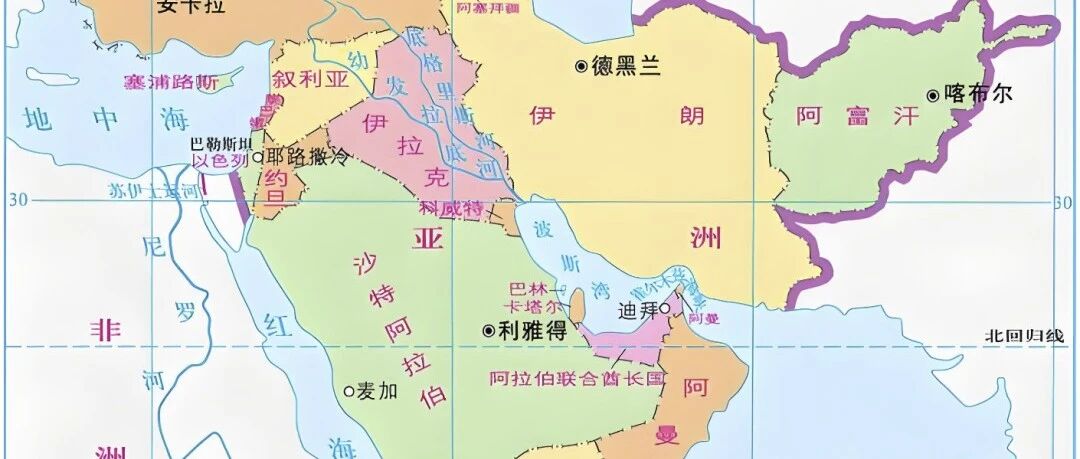
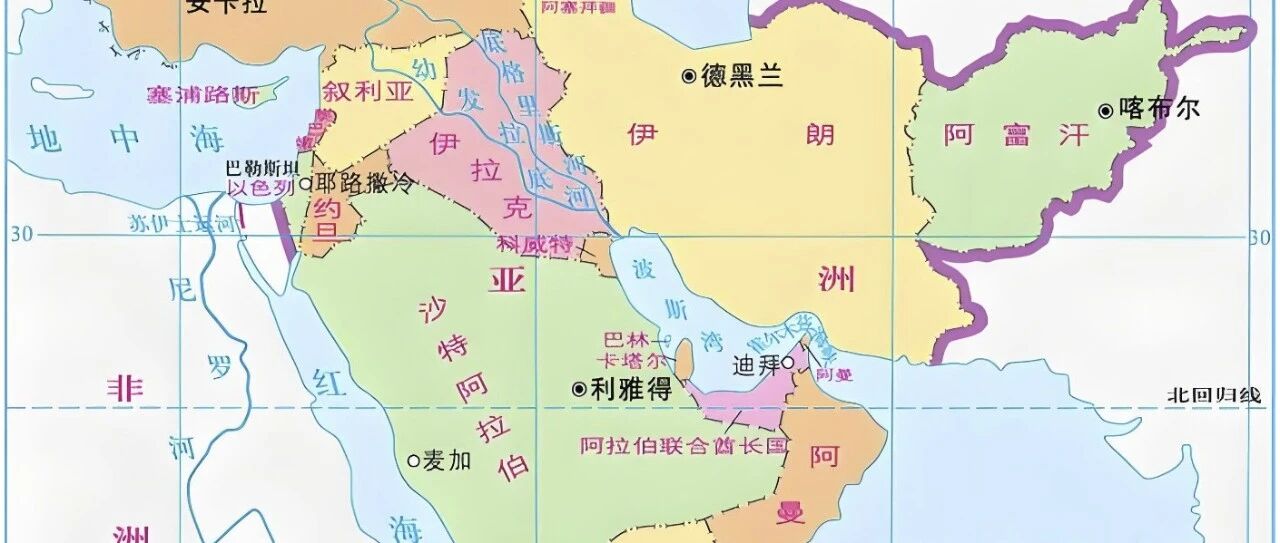
Core Viewpoint - The article discusses the ongoing conflict between the US and Iran, highlighting Iran's desire for revenge and control over the Strait of Hormuz, while the US seeks a dignified end to the war to avoid inflation and its impact on the midterm elections for Trump [1][4]. Group 1: Conflict Overview - On February 28, the US and Israel launched a joint attack on Iran, marking the largest military action in the Middle East since the Iraq War in 2003 [6]. - The attack targeted key strategic military sites in Iran, resulting in significant damage and the death of Iran's Supreme Leader, Khamenei [6]. - Iran retaliated with missile strikes against US military bases in several Middle Eastern countries [6]. Group 2: Geopolitical Context - The conflict is rooted in the nuclear issue, with the US demanding the dismantling of Iran's nuclear facilities, which Iran rejected [4][13]. - The US aims to weaken Iran's nuclear capabilities and control over energy resources, particularly given Iran's significant oil and gas reserves [14]. - Iran controls critical shipping routes in the Strait of Hormuz, through which approximately 20% of global oil consumption is transported [14]. Group 3: Market Reactions - Following the conflict, there was a notable increase in oil prices and a decline in cryptocurrency values, with heightened risk aversion in the markets [5][17]. - Three potential scenarios for the conflict's impact on markets are outlined: a quick resolution leading to market normalization, prolonged conflict causing sustained high oil prices, or a full-scale regional war resulting in a global energy crisis [5][19][28]. Group 4: Historical Context and Implications - The article draws parallels to past oil crises, noting that the current conflict could lead to a new era of commodity price surges, similar to the oil crises of the 1970s [29][30]. - Historical patterns indicate that geopolitical conflicts often lead to significant asset price fluctuations, particularly in energy markets [30][31]. - The potential for a prolonged conflict raises concerns about inflation and monetary policy tightening, which could adversely affect global stock markets [33].
美伊战争:影响和展望
泽平宏观· 2026-03-01 16:06
Core Viewpoint - The article discusses the recent U.S.-Israel military strike on Iran, marking a significant escalation in geopolitical tensions and resource wars, particularly focusing on Iran's nuclear capabilities and oil resources [1][5][9]. Group 1: Event Overview - On February 28, the U.S. and Israel conducted a joint military strike on Iran, targeting key strategic military infrastructure, resulting in the death of Iran's Supreme Leader Khamenei [5]. - The attack was a response to Iran's refusal to dismantle its nuclear facilities and surrender enriched uranium, following failed negotiations [8]. - Iran retaliated with missile and drone strikes against U.S. military bases in the region, leading to widespread disruptions in air travel and emergency UN meetings [5][11]. Group 2: Background and Historical Context - The U.S.-Iran relationship has evolved from alliance to adversarial over the past century, influenced by significant historical events such as the 1953 CIA-backed coup and the 1979 Islamic Revolution [6][7]. - The focus of U.S.-Israeli tensions with Iran centers on Iran's nuclear program, which has faced international sanctions and scrutiny since its secret reactivation in the 1980s [7][9]. Group 3: Geopolitical and Resource Implications - The U.S. aims to weaken Iran's nuclear capabilities and assert dominance in the Middle East, viewing Iran's military and energy resources as direct threats to its hegemony [9][10]. - Iran possesses the world's third-largest oil reserves and second-largest natural gas reserves, controlling critical shipping routes through the Strait of Hormuz, which is vital for global oil transport [9][10]. Group 4: Market Reactions and Future Scenarios - Following the attack, there was a notable market reaction with cryptocurrency values plummeting, oil prices surging, and gold strengthening due to increased risk aversion [2][11]. - Three potential scenarios for future developments are outlined: 1. A quick resolution leading to market normalization, with oil prices stabilizing and stock markets rebounding [12][15]. 2. A prolonged conflict causing significant increases in energy prices and market volatility [16][17]. 3. A full-scale regional war resulting in a global energy crisis reminiscent of the 1970s, with sustained high energy prices and economic stagnation [18][19].
穆迪首席紧急警告:市场与经济脱节严重,美股大幅回调风险上升
Ge Long Hui· 2026-02-25 03:13
Core Viewpoint - The U.S. stock market has been volatile this year, with investor concerns spanning tariffs, artificial intelligence, and other factors, leading to warnings from Moody's chief economist Mark Zandi about potential worsening conditions [1] Group 1: Market Conditions - Zandi emphasizes that recent events have prompted him to issue a warning about the financial markets, suggesting that if certain situations persist, significant issues may arise [1] - He notes that the market may be overreacting and becoming increasingly disconnected from the economy, which could lead to substantial volatility [1] Group 2: Asset Risks - Zandi identifies a dangerous shift occurring that poses a risk of large-scale sell-offs across many assets, which could threaten both the real economy and Wall Street [1] - He highlights that stocks and corporate bonds are facing the greatest threats, while even cryptocurrencies, gold, and silver, despite recent pullbacks, remain at risk [1]
十大券商一周策略:A股将迎“春季躁动”胜率最高阶段,涨价仍是核心配置线索,重视关税税率下降后出口链修复机会
Jin Rong Jie· 2026-02-24 00:10
Group 1 - The core investment theme post-Spring Festival revolves around "price increases" and "revaluation of physical assets," particularly in resource, chemical, and midstream manufacturing sectors, leveraging China's pricing power amid global uncertainties [1][2] - The technology sector, particularly driven by AI, remains a key focus, with sub-sectors like computing power, applications, and robotics expected to remain active due to industrial catalysts [1][2] - The recovery of export chains, non-bank financials, and certain consumer and real estate chains are seen as important supplements to market trends under the backdrop of internal and external demand recovery [1] Group 2 - CITIC Securities emphasizes that price increases are a core configuration clue for Q1, with a focus on sectors like chemicals, non-ferrous metals, power equipment, and new energy, while also increasing exposure to undervalued insurance and brokerage stocks [2] - Historical data indicates that February and the period around the Spring Festival are strong for market movements, with small-cap stocks showing a 100% probability of rising from the Spring Festival to the Two Sessions [3] - Guojin Securities highlights the importance of balancing global physical assets against Chinese assets, recommending commodities like copper, aluminum, and oil, as well as sectors with global comparative advantages like equipment exports and domestic manufacturing [4] Group 3 - Industrial sectors experiencing structural price increases due to supply-demand gaps are primarily in midstream materials and manufacturing, with a focus on chemicals, steel, and high-end manufacturing [5] - The potential for recovery in the export chain is noted, particularly in industries with significant exposure to the U.S. market that will benefit from reduced tariffs [5] - The policy uncertainty surrounding tariffs and trade is expected to favor gold as a risk hedge, with market participants anticipating potential shifts in U.S. trade policy [6] Group 4 - Attention is drawn to the post-holiday inventory replenishment in commodities, with a continued positive outlook on technology applications, particularly in semiconductors and AI [7] - Quantum technology is highlighted as a sector receiving dual catalysts from policy and technological advancements, with significant developments in quantum key distribution networks [8] - The AI industry revolution is identified as a key investment theme, focusing on computing power, storage, and applications, with a strong emphasis on the performance of high-growth sectors [9] Group 5 - Localized opportunities are expected in AI applications linked to overseas trends and robotics associated with the Spring Festival, with a cautious approach to market movements anticipated [10] - The current bull market logic remains intact, with a recommendation for investors to maintain confidence despite short-term volatility, focusing on sectors with high securities ratios [11]