数字强省建设

Search documents
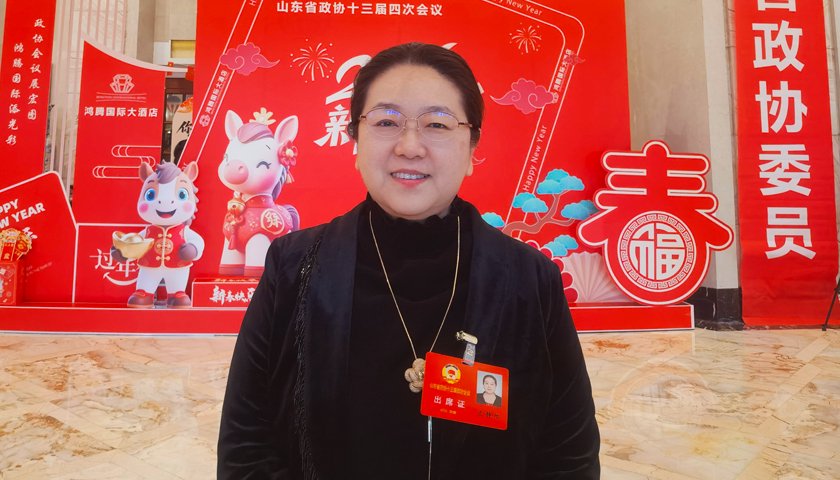
两会之声 | 山东省政协委员王静怡:以数字赋能文化创新,推动山东省文化产业高质量发展
Xin Lang Cai Jing· 2026-01-27 09:35
Core Viewpoint - Shandong Province aims to enhance its cultural industry through digital technology integration, as outlined in the "Shandong Province Cultural Industry Technology Innovation Action Plan (2025-2027)" which emphasizes improving cultural technology innovation capabilities to lead high-quality development in the cultural sector [1][3] Group 1: Current Challenges and Opportunities - Compared to advanced regions like Zhejiang and Guangdong, Shandong's cultural industry faces issues of being "large but not strong" and "rich but not vibrant," primarily due to insufficient integration of digital technology [3] - The province's strategy to transition from a "cultural resource province" to a "cultural industry powerhouse" involves leveraging digital empowerment as a key pathway for innovation and industry upgrade [3] Group 2: Proposed Initiatives - Implementation of five major projects to promote digital empowerment and industry upgrade, establishing a "Shandong model" for cultural innovation [3] - Creation of a "Cultural Resource Digital Decoding and IP Database Construction" project to digitize cultural resources and establish a unified "Shandong Cultural Digital Resource Database" [3][4] Group 3: Digital Content and Experience - Establishment of a "Shandong Cultural IP Super Symbol Library" to modernize and stylize key cultural symbols like Confucius and Mount Tai into a digital IP material library [4] - Development of a "Qilu Cultural Gene Digital Platform" using AI and knowledge graph technology to visualize the internal logic and spiritual lineage of Shandong's cultural resources [5] Group 4: Digital Creative Industry - Launch of a "Digital Cultural Content Creation and Industry Aggregation" project to establish a "Shandong Digital Cultural Content Creation Center" in key areas like Jinan and Qingdao, focusing on original content production based on Shandong cultural IP [6] - Encouragement of "Cultural + Manufacturing" digital integration by creating a platform for cultural design and smart manufacturing, enhancing the cultural connotation of "Shandong manufacturing" [6] Group 5: Digital Tourism and Consumption - Implementation of a "Digital Cultural Tourism Scene Integration and Consumption Upgrade" project to create a comprehensive digital cultural tourism service network through the "Good Guest Shandong" platform [7] - Development of immersive digital tourism experience landmarks in key scenic areas, utilizing VR/AR/MR technologies for enhanced visitor engagement [7] Group 6: Globalization of Cultural IP - Execution of a "Digital Communication and Cross-Border Expansion" project to globalize Shandong cultural IP through a multi-faceted digital communication matrix [8] - Support for digital creative products to reach global markets via overseas distribution platforms and cross-border e-commerce channels [8] Group 7: Ecosystem Optimization - Initiation of a "Market Entity Cultivation and Ecosystem Optimization" project to stimulate private sector vitality and encourage collaboration between state-owned cultural units and private digital tech companies [9] - Establishment of the "Qilu Digital Cultural Talent" program to attract and retain high-end interdisciplinary talent through partnerships with universities [9]

山东加快数据资源开发利用工作,挖掘高质量发展“新富矿”
Qi Lu Wan Bao· 2025-12-24 06:40
Core Viewpoint - The Shandong Provincial Government is advancing its digital economy initiatives during the "14th Five-Year Plan" period, focusing on enhancing data supply, flow, utilization, and security, achieving significant progress in these areas [1]. Group 1: Data Supply - A comprehensive integrated big data platform system has been established, consisting of "1+16+N" components, which serves as the central hub for public data management, circulation, and services [3]. - Over 220 billion public data entries have been aggregated, providing robust support for the development and utilization of public data resources [3]. - A public data resource directory has been compiled with more than 160,000 items, creating a consolidated account of data resources [3]. Group 2: Data Flow - The integrated big data platform has facilitated the sharing and openness of public data, with over 54 billion shared services provided and more than 50 billion data entries made available [3]. - The "Registration Confirmation + Authorized Operation" model has been explored through the issuance of 456 registration certificates for public data resources [3]. - Pilot projects in the health sector have utilized health data to create high-value data products, with 140 authorized operation scenarios developed across 13 cities, including Jinan and Qingdao [3]. Group 3: Data Utilization - The "Data Element ×" initiative has been launched to create efficient data application scenarios, significantly reducing the paperwork required for newborn registration from 11 forms and 52 materials to just 1 form and 4 materials, cutting processing time from 4.5 days to 3 minutes [4]. - The province has innovatively implemented a "No Certificate Province" initiative, providing over 1.2 billion verification services [4]. - The "One Form Pass" system has been introduced to reduce the number of reports at the grassroots level by 68% [4]. Group 4: Data Security - A comprehensive data security management mechanism has been established, ensuring accountability across all parties involved [4]. - The "Shandong Provincial Public Data Classification and Grading Work Specification" has been developed to enhance the protection of public data [4]. - Advanced technologies such as blockchain, privacy computing, and data sandboxes are being utilized to ensure secure and trustworthy data circulation, alongside regular safety checks and emergency drills [4].
山东省16个设区市全部上榜2025年中国数字百强市
Qi Lu Wan Bao· 2025-12-24 06:18
Core Insights - Shandong Province is advancing its digital transformation and smart city initiatives, with all 16 cities listed among China's top 100 digital cities by 2025, maintaining the highest number for three consecutive years [1][2] Group 1: Smart City Development - The provincial government has integrated new smart city construction and comprehensive digital transformation into the overall strategy for building a strong digital province [1] - Shandong has issued several guiding documents to enhance smart city development, including opinions on accelerating smart city and community construction [1] Group 2: Standards and Guidelines - The province has established the first set of graded and classified provincial standards for smart cities, covering 12 specific areas such as smart campuses and scenic spots [1] - A revised guideline for urban digital transformation has been created to assist localities in implementing smart city initiatives [1] Group 3: Pilot Programs and Achievements - Shandong has launched multiple pilot programs for smart cities and communities, achieving a "thousand cities, thousand faces" development model [2] - Two cities, Jinan and Qingdao, have reached the five-star standard for new smart cities, while 14 other cities and 92% of counties have achieved the four-star standard [2] Group 4: Scene Empowerment and Applications - A comprehensive map of typical scenarios for urban digital transformation has been released, covering 43 fields and providing direction for scenario construction [2] - Over 7,000 digital application scenarios have been developed, including a mobile application for online enrollment in compulsory education, streamlining the process for over 1,000 healthcare institutions [2] Group 5: Financial Support - Since 2021, the provincial government has allocated over 345 million yuan in transfer payments to support cities in their smart city and digital transformation efforts [2]
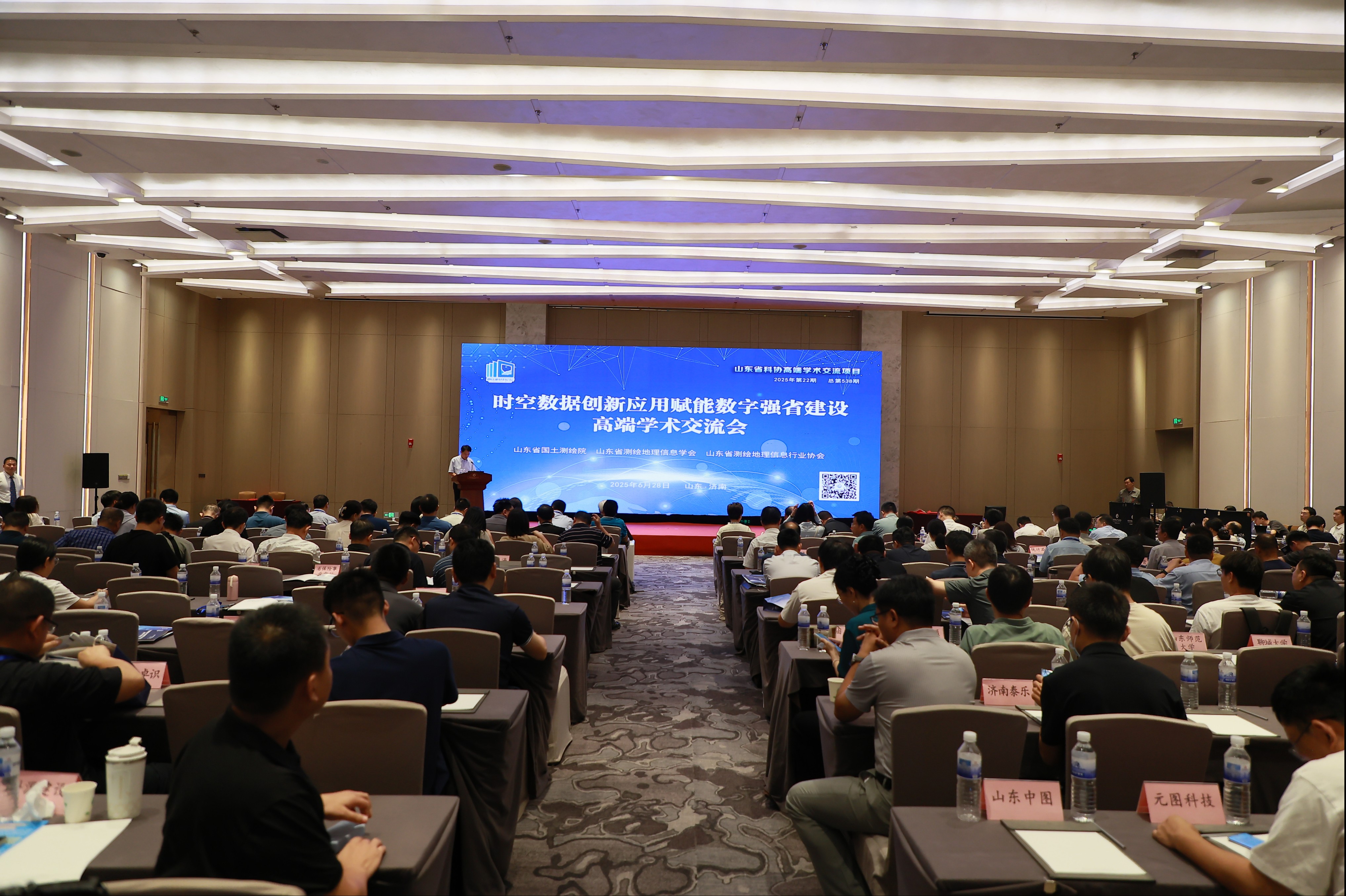
共绘新蓝图,时空数据赋能数字强省建设高端学术交流会在济举行
Qi Lu Wan Bao· 2025-06-28 14:54
Core Viewpoint - The conference focused on the innovative application of spatiotemporal data to empower the construction of a digital strong province in Shandong, highlighting significant advancements and collaborative efforts among various sectors [1][4][23]. Group 1: Conference Overview - The event was guided by the Shandong Provincial Natural Resources Department and the Shandong Provincial Big Data Bureau, featuring over 300 representatives from government, academia, and industry [1][4]. - The conference included high-level academic reports and thematic discussions, forming a "1+2" communication structure centered on spatiotemporal data innovation [4][23]. Group 2: Key Presentations - Academician Gong Jianya discussed the challenges in remote sensing intelligent interpretation, emphasizing the need for a unified sample sharing database and domestic intelligent infrastructure [6]. - Academician Guo Renzhong highlighted the importance of integrating multi-source data through a three-dimensional spatiotemporal foundation for smart city governance [8]. - Yang Guang from Guangzhou introduced the "Guangzhou Eagle Eye" project, which established a low-altitude remote sensing inspection network to enhance urban management and natural resource monitoring [10]. Group 3: Product Launches - The conference unveiled two major spatiotemporal data innovation products: the All-Time Spatiotemporal Big Data Cloud Platform and the Confucian Wisdom Spatiotemporal Geographic Entity Working Platform [12][14]. - The All-Time Spatiotemporal Big Data Cloud Platform offers comprehensive data governance and intelligent analysis capabilities, serving over 5,200 application scenarios with a daily service call volume exceeding 100 million [14]. Group 4: Future Directions - The conference fostered a consensus on the need to strengthen the supply of spatiotemporal data elements and promote technological integration and scenario innovation [23]. - The Shandong Provincial Land Surveying and Mapping Institute aims to leverage the outcomes of the conference to enhance the application of spatiotemporal data in various sectors, contributing to the digital strong province initiative and the broader Digital China strategy [23].