
数据资源开发利用

Search documents
北京市经济和信息化局等四部门关于印发《北京市关于促进商业卫星遥感数据资源开发利用的若干措施(2026-2030年)》的通知
Jin Rong Jie· 2026-01-24 08:38
Core Viewpoint - Beijing has issued measures to promote the development and utilization of commercial satellite remote sensing data resources from 2026 to 2030, aiming to enhance the integration of satellite applications and foster innovation in the industry [2]. Group 1: Strengthening Basic Capabilities - The measures emphasize building strong market entities and infrastructure to support the satellite data industry, encouraging mergers and acquisitions among companies to create globally competitive leaders [3]. - Companies are encouraged to develop differentiated commercial satellite constellations and enhance space infrastructure, with support for projects that meet specific criteria [3]. Group 2: Enhancing Common Support Capabilities - The establishment of multi-source satellite big data platforms is encouraged to integrate various data types and improve overall utilization efficiency [4]. - The construction of urban spatiotemporal digital foundations is promoted to facilitate the integration of information technologies and create urban information models [5]. Group 3: Promoting Technological Innovation - The measures call for the enhancement of technological innovation capabilities in satellite remote sensing, supporting research in key technologies such as agile data acquisition and intelligent interpretation [6]. - The establishment of innovation platforms and laboratories focused on remote sensing data is encouraged to foster collaboration between academia and industry [6]. Group 4: Optimizing the Development Environment - The promotion of satellite data asset management and the establishment of a data asset registration system are highlighted to facilitate data circulation and trading [7]. - Strengthening data security management and encouraging collaboration with cybersecurity sectors are essential to ensure the safe use of satellite data [8]. Group 5: Expanding Application Scenarios - The integration of artificial intelligence in satellite data applications is emphasized to enhance service efficiency in various sectors such as natural resources and disaster management [9][10]. - Support for the development of industry-specific applications in sectors like agriculture, urban governance, and finance is encouraged to deepen the utilization of satellite data [10]. Group 6: Support Measures - Coordination with national policies and financial support for quality projects in satellite data resources is prioritized to ensure successful implementation [11]. - Talent development initiatives are encouraged to cultivate skills in satellite data governance through industry-education integration [11].
阜博集团涨超8% 国家数据局加强数据科技创新 “十五五”规划将深化数据资源开发利用
Zhi Tong Cai Jing· 2026-01-09 02:30
Core Viewpoint - The stock of Fubo Group (03738) has increased by over 8%, currently trading at 4.65 HKD with a transaction volume of 76.74 million HKD, following the release of new government policies aimed at enhancing data technology innovation [1] Group 1: Government Policies - The National Bureau of Statistics has issued implementation opinions to promote the efficient transformation of data technology innovation results [1] - The policies include initiatives such as "Artificial Intelligence +" and "Data Element ×", focusing on building high-value, widely applicable data technology application scenarios [1] - The government aims to guide various entities, including government departments, state-owned enterprises, industry leaders, platform companies, and data trading institutions, to open data application scenarios for technology validation [1] Group 2: Five-Year Plan - The "14th Five-Year Plan" suggests accelerating the improvement of the market-oriented allocation system for factors and establishing a safe, open, and shared national integrated data market [1] - It emphasizes the need to deepen the development and utilization of data resources [1] - By the end of 2025, over 120 national standards in the data field are expected to be established, covering key areas such as data infrastructure and high-quality data sets [1]
港股异动 | 阜博集团(03738)涨超8% 国家数据局加强数据科技创新 “十五五”规划将深化数据资源开发利用
智通财经网· 2026-01-09 02:23
Core Viewpoint - The stock of Fubo Group (03738) has increased by over 8%, currently trading at 4.65 HKD with a transaction volume of 76.74 million HKD, following the release of new government policies aimed at enhancing data technology innovation [1] Group 1: Government Policy Impact - The National Bureau of Statistics has issued implementation opinions to strengthen data technology innovation, emphasizing the efficient transformation of innovative results [1] - The policy includes initiatives such as "Artificial Intelligence+" and "Data Element ×" actions, focusing on building high-value, widely applicable data technology application scenarios [1] - The government aims to guide various entities, including government departments, state-owned enterprises, industry leaders, platform companies, and data trading institutions, to open data application scenarios for technology validation [1] Group 2: Future Standards and Development - The 14th Five-Year Plan suggests accelerating the improvement of the market-oriented allocation system for factors and establishing a safe, open, and shared national integrated data market [1] - By the end of 2025, over 120 national standards in the data field are expected to be established, covering key areas such as data infrastructure and high-quality data sets [1] - The plan includes the promotion of 22 national standard projects related to trusted data spaces and integrated computing networks [1]
把数据资源用好护好(编辑手记)
Ren Min Ri Bao· 2026-01-08 22:50
Core Viewpoint - The article highlights the growing importance of data resources in the digital economy, emphasizing the emergence of service-oriented companies and specialized platforms like the Guiyang Data Exchange to facilitate data utilization and uncover new business opportunities [1] Group 1: Industry Insights - The value of data resources is increasingly recognized, leading to a consensus on the need for effective development and utilization of these resources [1] - The rise of service-oriented enterprises in the digital economy is a significant trend, indicating a shift towards more specialized data services [1] Group 2: Company Opportunities - Companies are discovering new business opportunities through data services, as exemplified by Zhang Xuesong's experience in finding suitable solutions for their needs [1] - The collaboration with professional platforms like the Guiyang Data Exchange is crucial for companies seeking to leverage data effectively [1]
山东加快数据资源开发利用工作,挖掘高质量发展“新富矿”
Qi Lu Wan Bao· 2025-12-24 06:40
Core Viewpoint - The Shandong Provincial Government is advancing its digital economy initiatives during the "14th Five-Year Plan" period, focusing on enhancing data supply, flow, utilization, and security, achieving significant progress in these areas [1]. Group 1: Data Supply - A comprehensive integrated big data platform system has been established, consisting of "1+16+N" components, which serves as the central hub for public data management, circulation, and services [3]. - Over 220 billion public data entries have been aggregated, providing robust support for the development and utilization of public data resources [3]. - A public data resource directory has been compiled with more than 160,000 items, creating a consolidated account of data resources [3]. Group 2: Data Flow - The integrated big data platform has facilitated the sharing and openness of public data, with over 54 billion shared services provided and more than 50 billion data entries made available [3]. - The "Registration Confirmation + Authorized Operation" model has been explored through the issuance of 456 registration certificates for public data resources [3]. - Pilot projects in the health sector have utilized health data to create high-value data products, with 140 authorized operation scenarios developed across 13 cities, including Jinan and Qingdao [3]. Group 3: Data Utilization - The "Data Element ×" initiative has been launched to create efficient data application scenarios, significantly reducing the paperwork required for newborn registration from 11 forms and 52 materials to just 1 form and 4 materials, cutting processing time from 4.5 days to 3 minutes [4]. - The province has innovatively implemented a "No Certificate Province" initiative, providing over 1.2 billion verification services [4]. - The "One Form Pass" system has been introduced to reduce the number of reports at the grassroots level by 68% [4]. Group 4: Data Security - A comprehensive data security management mechanism has been established, ensuring accountability across all parties involved [4]. - The "Shandong Provincial Public Data Classification and Grading Work Specification" has been developed to enhance the protection of public data [4]. - Advanced technologies such as blockchain, privacy computing, and data sandboxes are being utilized to ensure secure and trustworthy data circulation, alongside regular safety checks and emergency drills [4].

国家队开挖数据金矿
经济观察报· 2025-12-07 04:31
Core Viewpoint - The new round of state-owned enterprise reform is enhanced by the integration of data as a key resource, aiming to break down industry barriers through data circulation and drive deep changes in corporate governance and business models [1][3][19]. Group 1: Data Utilization and Collaboration - The National Pipeline Corporation is focusing on utilizing over 10 billion core data points accumulated over five years to enhance operational efficiency and safety [2]. - A pilot program initiated by the National Data Bureau and the State-owned Assets Supervision and Administration Commission aims to explore the transition of data from resources to assets and capital, involving 12 central enterprises [3][5]. - The pilot program emphasizes collaboration between state-owned enterprises and private companies to create a "cooperative ecosystem" for data utilization [3][5]. Group 2: Challenges in Data Ownership and Valuation - The primary challenges in the data element process include difficulties in ownership confirmation, pricing, and circulation, which are critical for the marketization of data [3][11]. - The ambiguity surrounding data ownership complicates its classification as an asset, as seen in the case of pipeline pressure data and user consumption data [10][11]. - The lack of clear ownership leads to difficulties in fair market valuation and internal conflicts regarding data sharing within enterprises [11][12]. Group 3: Technological Solutions and Innovations - Companies are adopting technologies like blockchain and privacy computing to create "trusted data spaces" that allow for secure data circulation without transferring ownership [14]. - The establishment of data-sharing ecosystems, such as China Mobile's "Renew Community," aims to facilitate collaborative development and revenue sharing among partners [14]. - The first successful registration of data assets at the Beijing International Big Data Exchange highlights the potential for data to be recognized as intangible assets, opening avenues for financing [14][15]. Group 4: Emerging Industry Chains and Market Dynamics - The pilot program is expected to stimulate a new industry chain driven by data elements, with increased interest from market players in data asset registration and trading [17]. - Small and medium-sized enterprises are benefiting directly from data-driven credit support initiatives, showcasing the practical impact of data resource development [17]. - The evolving landscape of data utilization is prompting a shift in regulatory focus from traditional asset management to capital and data management [18].


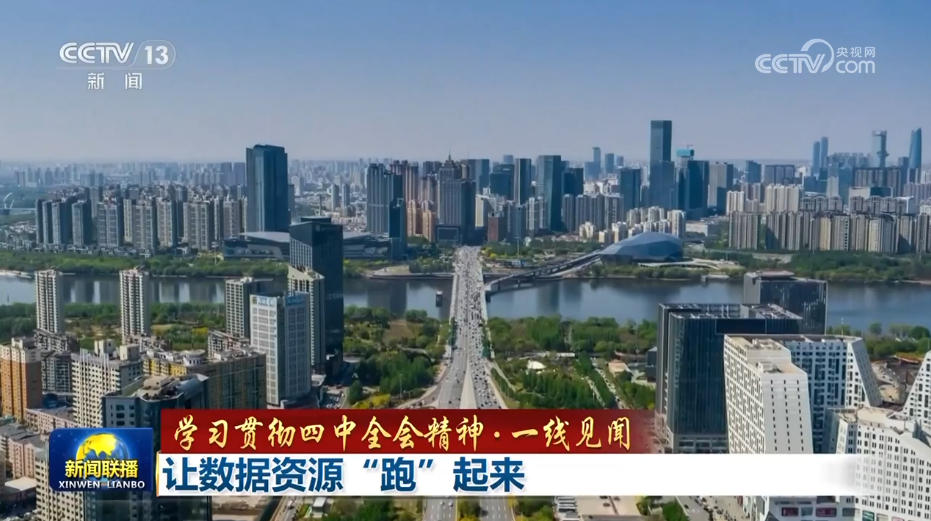
【学习贯彻四中全会精神·一线见闻】让数据资源“跑”起来
Yang Shi Wang· 2025-11-27 12:15
Group 1 - The core viewpoint emphasizes the importance of deepening data resource development and utilization, as well as strengthening efficient data supply to advance the construction of a digital China [1] - A significant data industry supply-demand matching event took place, featuring hundreds of participating companies, particularly in sectors like transportation, industrial manufacturing, and smart energy [1][2] - Data, treated as a new production factor, is accelerating its flow, with over 400,000 data companies and a data industry scale exceeding 5.8 trillion yuan during the 14th Five-Year Plan period, more than doubling since the end of the 13th Five-Year Plan [2][3] Group 2 - The demand from manufacturing enterprises is creating opportunities for transportation and logistics companies, which produce over 3 million high-quality traffic data points annually [2] - The 14th Five-Year Plan has led to the rapid formation of China's data industry chain, with policies promoting data development and utilization [3] - The 15th Five-Year Plan suggests building an open, shared, and secure national integrated data market to promote deep integration of the real economy and digital economy, providing new development opportunities for more enterprises [3]
沪铜产业日报-20251126
Rui Da Qi Huo· 2025-11-26 09:10
1. Report Industry Investment Rating - Not provided in the report 2. Core View of the Report - The Shanghai copper main contract shows a volatile trend with increasing open interest, spot premium, and strengthening basis. The raw material supply of copper concentrate remains tight, and the high price of copper ore still supports the cost of refined copper. The supply of refined copper may converge due to the tight supply of copper ore and the concentrated maintenance of some smelters. The downstream demand is still weak as the downstream开工率 only slightly rebounds after the decline in October, and the downstream is cautious due to high copper prices. The option market sentiment is bullish with a slightly decreasing implied volatility. Technically, the 60 - minute MACD has double - lines above the 0 - axis with a shrinking red column. It is recommended to conduct light - position short - term long trades at low prices and control the rhythm and trading risks [2]. 3. Summary by Relevant Catalogs 3.1 Futures Market - The closing price of the Shanghai copper futures main contract is 86,590 yuan/ton, down 10 yuan; the LME 3 - month copper price is 10,893.50 dollars/ton, up 75.50 dollars. The main contract's inter - month spread is - 10 yuan/ton, down 10 yuan; the open interest of the Shanghai copper main contract is 204,728 hands, up 5,146 hands. The top 20 futures positions of Shanghai copper are - 22,921 hands, up 4,551 hands. The LME copper inventory is 156,575 tons, up 825 tons; the Shanghai Futures Exchange inventory of cathode copper is 110,603 tons, up 1,196 tons; the LME copper cancelled warrants are 5,625 tons, up 100 tons; the Shanghai Futures Exchange warrants of cathode copper are 39,825 tons, down 2,856 tons [2]. 3.2 Spot Market - The SMM 1 copper spot price is 86,655 yuan/ton, up 45 yuan; the Yangtze River Non - ferrous Market 1 copper spot price is 86,745 yuan/ton, up 150 yuan. The CIF (bill of lading) price of Shanghai electrolytic copper is 48 dollars/ton, unchanged; the average premium of Yangshan copper is 31.50 dollars/ton, unchanged. The basis of the CU main contract is 65 yuan/ton, up 55 yuan; the LME copper premium (0 - 3) is 9.52 dollars/ton, down 15.36 dollars [2]. 3.3 Upstream Situation - The import volume of copper ore and concentrates is 245.15 million tons, down 13.56 million tons. The rough smelting fee (TC) of domestic copper smelters is - 42.32 dollars/kiloton, down 0.11 dollars. The price of copper concentrate in Jiangxi is 76,990 yuan/metal ton, up 140 yuan; the price of copper concentrate in Yunnan is 77,690 yuan/metal ton, up 140 yuan. The processing fee of blister copper in the south is 1,300 yuan/ton, unchanged; the processing fee of blister copper in the north is 900 yuan/ton, unchanged [2]. 3.4 Industry Situation - The output of refined copper is 120.40 million tons, down 6.20 million tons. The import volume of unwrought copper and copper products is 440,000 tons, down 50,000 tons. The social inventory of copper is 41.82 million tons, up 0.43 million tons. The price of 1 bright copper wire in Shanghai is 59,290 yuan/ton, up 300 yuan; the price of 2 copper (94 - 96%) in Shanghai is 72,850 yuan/ton, up 50 yuan. The ex - factory price of 98% sulfuric acid of Jiangxi Copper is 870 yuan/ton, unchanged [2]. 3.5 Downstream and Application - The output of copper products is 200.40 million tons, down 22.80 million tons. The cumulative completed investment in power grid infrastructure is 4,824 billion yuan, up 445.93 billion yuan. The cumulative completed investment in real estate development is 73,562.70 billion yuan, up 5,856.99 billion yuan. The monthly output of integrated circuits is 4,177,000 million pieces, down 194,236.10 million pieces [2]. 3.6 Option Situation - The 20 - day historical volatility of Shanghai copper is 11.36%, down 2.21%; the 40 - day historical volatility of Shanghai copper is 19.38%, down 0.03%. The implied volatility of the current - month at - the - money IV is 11.69%, down 0.0045; the call - put ratio of at - the - money options is 1.17, down 0.0042 [2]. 3.7 Industry News - The National Data Bureau launched the first batch of 12 state - owned enterprise data resource development and utilization pilots, covering traditional and emerging fields. The National Data Bureau will support data exchange and trading service system construction. In October, the national power market trading volume was 563.8 billion kWh, a year - on - year increase of 15.6%. From January to October, the cumulative power market trading volume was 5,492 billion kWh, accounting for 63.7% of the total social power consumption. In October, European car sales increased by 4.9% year - on - year to 1.09 million vehicles, with Tesla's new car registrations down 48%, BYD's up 195%, SAIC Group up 56%, and Toyota down 10.8%. A Fed governor said the current monetary policy hinders economic development and the US economy needs significant interest rate cuts. In September, the US PPI rose 0.3% month - on - month, the core PPI rose 0.1% month - on - month, and retail sales rose 0.2% month - on - month but significantly slowed down. The China - US presidential call was initiated by the US side with a positive atmosphere [2].
瑞达期货铝类产业日报-20251126
Rui Da Qi Huo· 2025-11-26 09:10
1. Report Industry Investment Rating No relevant content provided. 2. Core Viewpoints of the Report - For alumina, the market presents a situation of relatively high supply and stable demand. It is recommended to conduct light - position oscillating trading and control the rhythm and trading risks [2]. - For electrolytic aluminum, the supply is stable while the demand weakens slightly due to the off - season. It is advisable to conduct light - position short - long trading at low prices and control the rhythm and trading risks [2]. - For cast aluminum alloy, the supply is contracting and the demand is slightly decreasing. It is suggested to conduct light - position short - long trading at low prices and control the rhythm and trading risks [2]. 3. Summary by Relevant Catalogs 3.1 Futures Market - **Aluminum - related Contracts**: The closing price of the Shanghai aluminum main contract was 21,455 yuan/ton, down 10 yuan; the closing price of the alumina futures main contract was 2,720 yuan/ton, down 7 yuan. The LME electrolytic aluminum three - month quote was 2,801 dollars/ton, down 12 dollars. The LME aluminum inventory was 543,725 tons, down 2,225 tons. The Shanghai - London ratio was 7.66, up 0.03 [2]. - **Other Aluminum Products**: The closing price of the cast aluminum alloy main contract was 20,695 yuan/ton, down 10 yuan. The main - second - contract spread of cast aluminum alloy was - 110 yuan/ton, down 55 yuan [2]. 3.2 Spot Market - **Prices**: The Shanghai Non - ferrous A00 aluminum price was 21,400 yuan/ton, down 40 yuan; the alumina spot price in Shanghai Non - ferrous was 2,770 yuan/ton, unchanged. The average price of ADC12 aluminum alloy ingots nationwide was 21,350 yuan/ton, unchanged [2]. - **Basis**: The basis of cast aluminum alloy was 655 yuan/ton, down 55 yuan; the basis of electrolytic aluminum was - 55 yuan/ton, down 30 yuan. The basis of alumina was 50 yuan/ton, up 7 yuan [2]. 3.3 Upstream Situation - **Raw Materials**: The average price of crushed primary aluminum in Foshan metal scrap was 16,900 yuan/ton, unchanged; the average price in Shandong metal scrap was 16,550 yuan/ton, unchanged. China's import volume of aluminum scrap was 158,360.01 tons, up 2,945.61 tons; the export volume was 32.46 tons, down 36.08 tons [2]. - **Alumina**: The alumina production was 786.50 million tons, down 13.40 million tons; the demand for alumina in the electrolytic aluminum part was 730.23 million tons, up 25.92 million tons. The export volume of alumina was 18.00 million tons, down 7.00 million tons; the import volume was 18.93 million tons, up 12.93 million tons [2]. 3.4 Industry Situation - **Electrolytic Aluminum**: The import volume of primary aluminum was 248,261.37 tons, up 4,462 tons; the export volume was 24,573.56 tons, down 4,396.36 tons. The electrolytic aluminum production capacity was 4,523.20 million tons, unchanged; the operating rate was 98.24%, down 0.12% [2]. - **Aluminum Products**: The aluminum product output was 569.40 million tons, down 20.60 million tons; the export volume of unwrought aluminum and aluminum products was 50.00 million tons, down 2.00 million tons. The output of recycled aluminum alloy ingots was 60.83 million tons, down 4.82 million tons; the export volume of aluminum alloy was 3.09 million tons, up 0.74 million tons [2]. 3.5 Downstream and Application - **Automobile**: The automobile production was 327.90 million vehicles, up 5.25 million vehicles [2]. - **Real Estate**: The National Housing Prosperity Index was 92.43, down 0.34 [2]. 3.6 Option Situation - **Volatility**: The 20 - day historical volatility of Shanghai aluminum was 11.23%, down 0.26%; the 40 - day historical volatility was 10.35%, down 0.04%. The implied volatility of the Shanghai aluminum main - contract at - the - money IV was 9.02%, down 0.0079% [2]. - **Ratio**: The call - put ratio of Shanghai aluminum options was 1.63, up 0.1021 [2]. 3.7 Industry News - **Data and Energy**: The National Data Bureau launched the first batch of 12 state - owned enterprise data resource development and utilization pilots. In October, the national power market trading volume was 563.8 billion kWh, a year - on - year increase of 15.6% [2]. - **Automobile Market**: In October, European car sales increased by 4.9% year - on - year to 1.09 million vehicles. Tesla's new car registrations decreased by 48%, BYD's increased by 195%, SAIC Group's increased by 56%, and Toyota's decreased by 10.8% [2]. - **Economic News**: A Fed governor called for significant interest rate cuts. US PPI and retail sales data showed inflation resurgence and a slowdown in consumption growth. The China - US presidential call had a positive atmosphere [2].
12家央企牵头试点数据资源开发利用
Chang Jiang Shang Bao· 2025-11-26 06:05
Core Insights - State-owned enterprises (SOEs) are crucial for the development and utilization of data resources, which enhances their core competitiveness and fosters innovation across the industrial chain [1][2] - The National Data Bureau, in collaboration with the State-owned Assets Supervision and Administration Commission, has initiated pilot projects for data resource development in 12 central enterprises, aiming to create a positive environment for data utilization [1][2] - The data efficiency enhancement initiative is aligned with the new round of SOE reforms, focusing on integrating data applications into various operational aspects to drive deep changes in governance and business models [2] Summary by Sections Data Resource Development - The pilot program involves collaboration between SOEs, private enterprises, research institutions, and professional service organizations to enhance data resource utilization [1] - The initiative aims to promote high-quality data resource development and digital transformation within SOEs, while encouraging them to fulfill social responsibilities and open data resources at a higher standard [1][2] Key Focus Areas - The data efficiency enhancement action focuses on four main areas: innovating data management mechanisms, fostering the data industry, empowering industrial transformation, and optimizing the innovation environment [2] - Ten key tasks have been outlined, targeting sectors such as energy, transportation, mining, manufacturing, satellite remote sensing, new materials, agriculture, construction, and green low-carbon initiatives [2] Expected Outcomes - By 2027, the initiative aims to significantly improve SOEs' data governance capabilities and enhance the level of data resource development and sharing, benefiting over 100,000 small and medium-sized enterprises [2] - The National Data Bureau will work closely with the State-owned Assets Supervision and Administration Commission to guide the orderly advancement of pilot projects, ensuring the transformation of data into a powerful driver for industrial upgrades and public welfare [3]