
数字文化遗产

Search documents
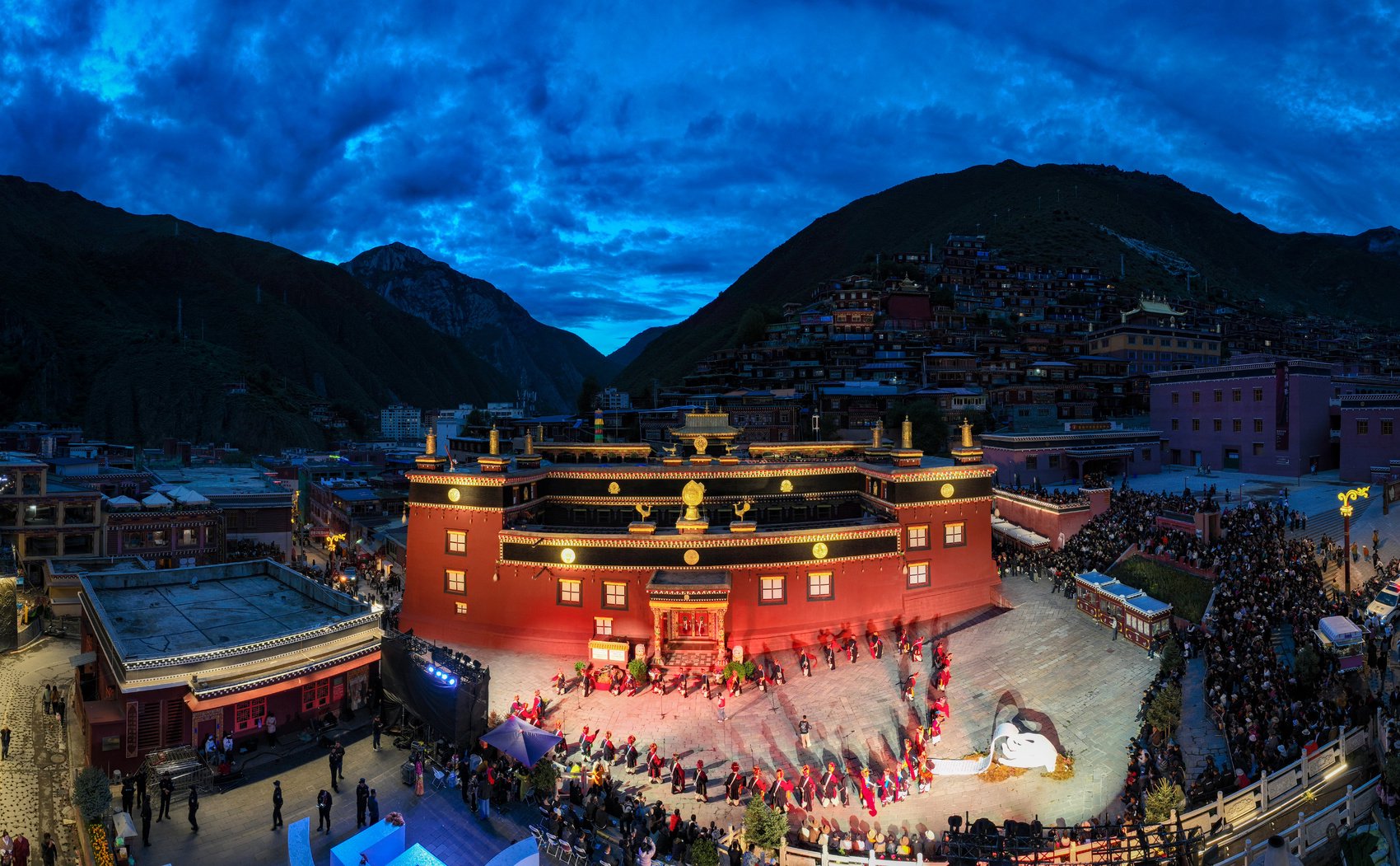
德格印经院院藏雕版档案冲刺《世界记忆国际名录》丨市州观察
Xin Lang Cai Jing· 2026-01-18 08:10
Core Viewpoint - The Dege Printing Institute is making significant progress in its efforts to have its collection of woodblock archives included in the UNESCO Memory of the World International Register, with key tasks entering the final stages of completion [1] Group 1: Digital Archiving and Technology - The Dege Printing Institute has initiated a high-precision scanning project for its collection of 335,500 woodblocks, creating a "digital identity" for each piece and establishing a cloud-based shared database [2] - A VR platform called "Digital Printing Institute" has been developed and is now open to users, allowing for immersive exploration of the Dege Printing Institute [2] Group 2: Exhibition and Promotion - The exhibition titled "Traces of Engraving: Special Exhibition of Woodblock Archives of Dege Printing Institute" has been completed and is now open to the public, showcasing the cultural achievements of woodblock archives from the 18th century to the mid-20th century in various fields [4] - The nomination materials, including bilingual nomination forms and promotional videos, have undergone four rounds of refinement and have been submitted to the National Archives Administration [4]

圆明园四十景实现数字“复活”,部分成果已应用于VR文旅项目
Xin Jing Bao· 2025-10-25 13:20
Core Insights - The "Digital Restoration and Application of the Forty Scenes of the Old Summer Palace" project was launched, showcasing the historical landscape of the Old Summer Palace before 1744 [1][2] - The project was a collaboration between the Old Summer Palace Management Office and the Central Academy of Fine Arts, utilizing advanced digital technologies for restoration [1] - The digital assets created will support various fields such as cultural innovation, art exhibitions, and educational dissemination, promoting the global spread of traditional Chinese culture [2] Group 1 - The project integrates historical materials to reconstruct a complete panoramic view of the Forty Scenes of the Old Summer Palace [1] - Advanced technologies like 3D scanning and GIS were employed to accurately restore architectural features, vegetation, and water systems [1] - The restoration allows for real-time rendering and dynamic interaction, showcasing the garden's beauty under different conditions [1] Group 2 - The digital restoration has been partially applied to multiple VR cultural tourism projects and is a key component of the Haidian District's "Three Mountains and Five Gardens Digital Asset Database" [2] - Ongoing archaeological excavations, artifact restorations, and ecological management have revitalized the historical site [2] - Significant progress has been made in the archaeological exploration and protective restoration of core sites, ensuring the preservation of valuable cultural relics [2]
侯妙乐:测绘遥感新技术让文化遗产在数字世界永生
Xin Jing Bao· 2025-09-24 10:53
Core Viewpoint - The integration of new technologies such as surveying and remote sensing is essential for the digital preservation and utilization of cultural heritage, allowing it to thrive in the digital realm while addressing its historical and contextual significance [1][2]. Group 1: Digital Cultural Heritage - Digital cultural heritage refers to the results of digitizing cultural assets, including images, videos, audio, and models, as well as the comprehensive use of technologies like surveying, geography, and artificial intelligence for information retention, processing, management, and application [1]. - The narrow definition of digital cultural heritage focuses on the digitization outcomes, while the broad definition encompasses integrated technologies for data, analysis, services, and application systems [1]. Group 2: Challenges and Solutions - The current 3D models produced in the cultural heritage digitization industry face challenges such as lack of interactivity, dynamic simulation, and effective spatiotemporal empowerment [2]. - The application of real-scene 3D technology is crucial for creating three-dimensional information products that are spatially, physically, and realistically represented, which can enhance the activation and utilization of cultural heritage [2]. Group 3: Practical Applications - The team led by Hou Miaole has collaborated with various institutions to establish multi-layered semantic models for cave heritage, addressing different needs such as archaeology, protection, and utilization [3]. - The practical work includes the digitalization and virtual restoration of the Dazu Rock Carvings, emphasizing the importance of having spatiotemporal semantic information for intelligent virtual restoration [2][3].
“2025永不消失的遗产”大赛工作坊活动举行 本地生活记忆融入创客数字创意
Nan Jing Ri Bao· 2025-08-11 02:34
Core Insights - The event held at the Nanjing Da Bao En Temple Ruins Museum is a key milestone in the "2025 Never-Disappearing Heritage" global maker competition, focusing on integrating cultural heritage into urban life [1][2] - The competition emphasizes local engagement, with 31 young creators presenting preliminary physical models based on research and community input [1] - The event fosters dialogue between local residents, creators, and the public, aiming to make cultural heritage a tangible and participatory aspect of daily life [2] Group 1: Event Overview - The interactive design workshop attracted a diverse audience, including global makers, mentors, and local citizens [1] - The competition centers around the theme "One City, One Tower, One River," showcasing the spatial relationship between the Da Bao En Temple Ruins, the Ming City Wall, and the Qinhuai River [1] - Eight finalist teams presented their models and engaged in discussions to enhance public connection with their designs [1] Group 2: Significance and Future Directions - The integration of local memories into digital creativity transforms cultural heritage from a distant history into a relatable part of life [2] - The event represents an innovation in the competition, facilitating dialogue among the past, present, and future, as well as between Nanjing citizens and global creators [2] - The final competition will culminate in a roadshow on August 14, where the winning designs will be announced [2]