
文化遗产保护

Search documents
80余项非遗获得系统性保护
Xin Lang Cai Jing· 2026-02-24 23:26
Core Viewpoint - The Gansu Provincial Government is actively engaging in a year-long public interest litigation initiative aimed at protecting cultural heritage, focusing on various key areas such as the Great Wall and historical buildings [1][2] Group 1: Initiative Overview - The Gansu Provincial Procuratorate launched the "Guarding the Cultural Heritage of Longyuan" public interest litigation initiative in January 2025, set to last for one year [1] - The initiative aims to establish a collaborative protection framework involving prosecutorial supervision, administrative duties, and social participation [1] Group 2: Achievements and Statistics - As of December 2025, the Gansu Provincial Procuratorate has identified over 280 cultural heritage-related case clues, initiated 241 cases, and proposed 236 prosecutorial suggestions [1] - The initiative has led to the filing of 8 public interest lawsuits, the restoration and protection of over 230 immovable cultural relics, and the elimination of over 300 safety hazards in cultural heritage sites [1] - The total amount of restoration costs and damages recovered exceeds 50 million yuan, with over 80 intangible cultural heritage items receiving systematic protection [1] Group 3: Collaborative Efforts and Mechanisms - The Gansu Provincial Procuratorate is working with various departments, including cultural heritage, tourism, and natural resources, to establish mechanisms for regular information sharing and joint inspections [2] - The initiative includes the appointment of experts in cultural heritage and history as special assistant prosecutors to enhance case accuracy through professional support [2] - Advanced technologies such as satellite remote sensing and drones are being utilized to monitor and address violations against cultural heritage, particularly in remote areas [2] Group 4: Addressing Systemic Issues - The Gansu Provincial Procuratorate is addressing common and deep-rooted issues in cultural heritage protection by submitting special reports to local governments and issuing social governance prosecutorial suggestions [2] - The goal is to promote the establishment of regulations and mechanisms within administrative agencies to ensure the sustainability of the initiative's outcomes [2]
广西持续加强城乡历史文化保护传承 焕发城市活力
Xin Lang Cai Jing· 2026-02-24 14:10
Group 1 - The core viewpoint of the articles highlights Guangxi's active exploration of new paths for the protection and inheritance of urban and rural historical culture, showcasing vibrant scenes of cultural revival in cities like Wuzhou and Nanning [1][3][4] - Guangxi has prioritized protection and reasonable utilization of historical cultural sites, achieving full coverage of protection planning for historical cities, streets, and towns, with three national historical cultural cities and 38 historical cultural districts identified [3][4] - The implementation of the "Implementation Opinions on Strengthening Historical and Cultural Protection and Inheritance in Urban and Rural Construction" outlines a comprehensive blueprint for protection work, alongside legislative progress on relevant regulations [3][4] Group 2 - In Nanning, the "Three Streets and Two Alleys," dating back to the Song Dynasty, has undergone careful restoration using reclaimed materials to preserve historical authenticity, transforming into a cultural landmark that integrates history, culture, and tourism [4][6] - Wuzhou's Qilou City, known as the "Museum of Qilou," has adopted an integrated strategy of preservation, renovation, and enhancement, utilizing modern techniques and reclaimed materials to improve safety and restore cultural details [6] - Future plans for Guangxi include enhancing the historical cultural protection system, accelerating the application for national historical cultural city status for Nanning and Wuzhou, and continuing to explore "micro-renovation" in urban renewal [6]


构建具有广东特色的海洋文化遗产保护新图景
Xin Lang Cai Jing· 2026-02-19 00:29
Core Viewpoint - The article emphasizes the importance of protecting and developing marine cultural heritage in Guangdong, highlighting the need for a comprehensive approach to safeguard these resources while promoting high-quality marine economic development [1][2]. Summary by Sections Current Status of Marine Cultural Heritage Protection in Guangdong - Guangdong has made significant efforts in protecting marine cultural heritage, including successful archaeological projects like the "Nanhai No. 1" and the establishment of the Guangdong Underwater Cultural Heritage Protection Center [1]. - The province has seen the emergence of cultural events such as the Nansha Mazu Cultural Festival and the opening of the Jiangmen Song-Yuan Yamen Battle Cultural Tourism Area, showcasing the vibrant marine cultural heritage [1]. Challenges in Marine Cultural Heritage Protection - There is a prevailing issue where urban development often overlooks the importance of marine cultural heritage, leading to the destruction of cultural relics during construction projects [2]. - Many marine folk cultural heritages are at risk of being forgotten due to a lack of attention and transmission, compounded by insufficient legal and financial support for their protection [2]. Pathways to Strengthen Marine Cultural Heritage Protection - It is crucial to enhance awareness of marine cultural heritage protection, ensuring that economic development does not come at the expense of cultural preservation [3]. - Regular assessments of risks and vulnerabilities related to marine cultural heritage should be conducted to implement targeted protection strategies [3]. - There is a need to establish a robust legal and regulatory framework specifically for marine cultural heritage protection, as current laws primarily focus on ecological aspects [4][5]. - The integration of technology in the protection of marine cultural heritage is essential, with initiatives like the establishment of the Guangdong Marine Cultural Heritage Technology Alliance aimed at fostering innovative protection methods [5].
苏州获批国家历史文化名城44周年座谈会举行
Su Zhou Ri Bao· 2026-02-09 00:45
Group 1 - The meeting held on February 8 in Suzhou commemorated the 44th anniversary of Suzhou being approved as a National Historical and Cultural City, focusing on the systematic protection of the ancient city’s "water-land dual chessboard" layout [1] - Experts and scholars discussed practices in heritage protection and strategies for updating the ancient city, emphasizing the need to protect the existing layout that has persisted for over a thousand years [2] - The Gusu District plans to incorporate feedback from various stakeholders to enhance the systematic protection of the "water-land dual chessboard" layout, aiming to improve the overall protection, inheritance, and revitalization of the ancient city [2]
【省文化和旅游厅】陕西立足深厚文化根脉与资源优势
Shan Xi Ri Bao· 2026-01-28 00:37
Core Perspective - Shaanxi is leveraging its cultural resources as a strategic asset to enhance its identity and promote economic development through cultural heritage protection and innovation [1] Group 1: Cultural Heritage Protection - Shaanxi has completed a census of 1 million ancient books across 75 storage units, establishing a database of 100,000 records to ensure the preservation of key ancient texts [3] - The province has recognized 5 units as national key protection units for ancient books, with 162 ancient texts included in the National Precious Ancient Books Directory [3] - The restoration of the Song and Yuan editions of the "Qisha Cang" has been completed, extending the lifespan of these texts and setting a foundation for further ancient book protection efforts [2] Group 2: Cultural and Technological Integration - The Shaanxi AR Interactive Experience Exhibition has attracted over 10,000 visitors since its opening, utilizing AI and AR technologies to enhance the presentation of intangible cultural heritage [5] - The province's digital initiatives have generated over 2 billion yuan in revenue from performances like the "Chang Hen Ge" and attracted over 2 million visitors to themed districts [6] - Shaanxi is establishing a digital ecosystem for cultural tourism, including the launch of the first provincial-level cultural tourism AI model, "Bo Guan," which has served over 6.5 million tourists [6] Group 3: International Cultural Exchange - The 11th Silk Road International Arts Festival attracted over 80,000 attendees and reached over 100 million people online, showcasing Shaanxi as a key player in international cultural exchange [8] - Shaanxi has hosted 28 major cultural exchange events, including the first China-Central Asia Summit and the 14th China-U.S. Tourism High-Level Dialogue [9] - The province is preparing for the "Happy Spring Festival" event abroad, aiming to present Shaanxi's cultural heritage to international audiences during the 2026 Lunar New Year [9]
云居寺藏经保护与传承的千年之路
Xin Lang Cai Jing· 2026-01-25 23:27
Core Viewpoint - Yunju Temple houses a unique collection of stone, paper, and wooden scriptures, particularly renowned for its thousands of stone scriptures carved over a millennium, making it a national treasure and a cultural landmark in Beijing, often referred to as "the Dunhuang of Beijing" [1] Group 1: Cultural and Historical Significance - The stone scriptures at Yunju Temple began being carved during the Sui Dynasty (605-618 AD) and continued through various dynasties, resulting in at least 14,641 stone tablets with over 35 million characters, marking it as the largest and longest-lasting stone carving project in human history [2] - Unlike the Dunhuang Mogao Caves, which are famous for murals and sculptures, the stone scriptures at Yunju Temple uniquely blend Buddhist texts with stone carving art, showcasing different calligraphic styles from the Sui to the Ming and Qing dynasties [2] - The scriptures encompass over 1,100 texts and 3,500 volumes, providing invaluable material for studying ancient Chinese Buddhist literature, social beliefs, and cultural transmission [3] Group 2: Preservation Challenges - The preservation of the scriptures has faced significant challenges, including theft and damage throughout history, particularly during the Liao and Jin dynasties, and later during the Republic of China period when many scriptures were destroyed or stolen [4][5] - Reports from the 1920s indicate severe damage to the scriptures, with instances of theft and destruction by Japanese forces during the Second Sino-Japanese War [5] Group 3: Modern Preservation Efforts - After the founding of the People's Republic of China, efforts to protect and organize the scriptures began, with significant investigations and restoration work initiated in the 1950s [6][7] - By 1958, comprehensive protection and restoration efforts were completed, including the creation of over 30,000 prints of the scriptures, marking a new phase in their preservation [7] - In June 2025, the "Fangshan Stone Scriptures" were officially included in the "China Archives Document Heritage List," and there are ongoing efforts to apply for World Memory Heritage status to further protect and promote these cultural treasures [8]
加大保护培育产业
Xin Lang Cai Jing· 2026-01-25 22:24
Core Viewpoint - Qiandongnan Miao and Dong Autonomous Prefecture is recognized for its rich ethnic culture and heritage, with significant achievements in cultural preservation and promotion over the past five years, leading to increased influence and recognition on international platforms [1]. Group 1: Cultural Heritage and Preservation - The region boasts 1 item and 3 sites on the UNESCO Intangible Cultural Heritage list (Dong folk songs), along with 56 national intangible cultural heritage items across 78 sites [1]. - The implementation of the ethnic culture inheritance and promotion project has successfully created a national cultural ecological protection zone, enhancing the local cultural impact [1]. Group 2: Economic and Social Development - The integration of sports, culture, and tourism has led to the popularity of various community sports activities, enriching cultural and sports life for locals and boosting local tourism [1]. - By 2025, the region aims to receive over 100 million tourists and achieve a total tourism revenue exceeding 100 billion yuan [1]. Group 3: Future Development Plans - Future plans include deepening the construction of national cultural ecological protection zones and enhancing the protection of tangible cultural heritage, such as ancient villages and buildings [2]. - The focus will be on encouraging innovation among cultural heritage practitioners and integrating ethnic culture with modern industries like tourism, sports, and wellness, aiming for year-round tourism operations [2].
北京建设面向世界的文明交流互鉴窗口
Zhong Guo Xin Wen Wang· 2026-01-25 13:16
Group 1: Core Urban Quality Enhancement - Beijing aims to continuously improve the quality of its core urban areas, creating an internationally first-class harmonious and livable capital [1][2] - The city will enhance the service guarantee level for central government activities and optimize the spatial layout of government functions along Chang'an Avenue [2][3] - A focus will be placed on reducing building density and promoting the transformation of commercial areas towards high-quality development [3] Group 2: Historical Preservation and Urban Renewal - Strict adherence to the principle that "the old city cannot be further demolished" will guide the protection and renewal of old residential areas [4] - The implementation of a detailed control plan for the core area will unify the improvement of the government environment with the enhancement of residents' quality of life [3][4] - Initiatives will include the restoration of historical patterns and traditional styles, as well as the creation of pocket parks and rest areas to enhance community livability [4] Group 3: Cultural Heritage and Identity - Beijing will promote systematic protection of cultural heritage, integrating ancient and modern elements, and enhancing the cultural landscape along key historical axes [5][6] - The city plans to strengthen the protection of the Grand Canal, Great Wall, and Western Hills cultural belts, showcasing the capital's historical and cultural significance [7] - Efforts will be made to enhance the quality of historical cultural districts while preserving the traditional street and alley patterns [6] Group 4: International Cultural Exchange - The city will establish a multi-channel, three-dimensional external communication system to enhance Beijing's image and promote cultural exchange [8] - Initiatives will include expanding the international influence of cultural events such as the Beijing Cultural Forum and the Beijing International Film Festival [8] - The promotion of Chinese culture through various media, including literature and digital content, will be prioritized to enhance global understanding of China [8]
改革者 正青春|如何给世界级的宝贝做“CT”?
Xin Lang Cai Jing· 2026-01-25 05:56
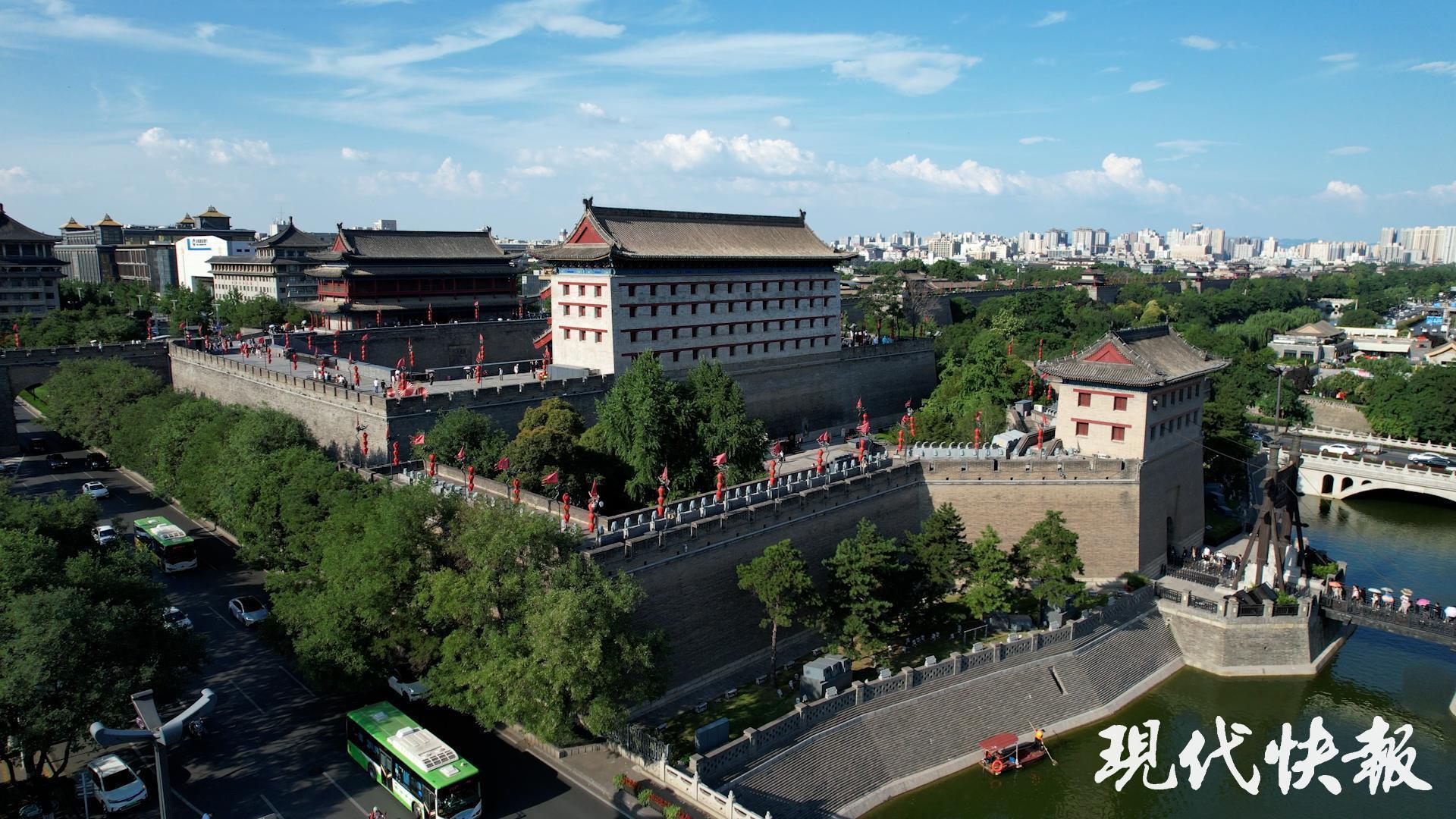
Core Viewpoint - The integration of advanced technologies such as big data, IoT, and 3D scanning is transforming the preservation and management of Xi'an City Wall, enhancing its protection and making it a vibrant cultural landmark for both citizens and tourists [1][3][6] Group 1: Technological Advancements in Preservation - Xi'an City Wall has implemented a comprehensive monitoring system with over 3,000 deformation monitoring points and 1,300 smart sensors, allowing for real-time data feedback on structural integrity [1] - A digital management platform has been created, integrating functions for cultural relic protection, tourism operation, emergency safety, and flood command, effectively unifying independent information into a shared system [3] - Advanced surveying methods, including geological radar and 3D laser scanning, have been employed to conduct a "full-body CT scan" of the wall, identifying over 1,300 air defense holes and 1,800 openings for better internal structure management [3] Group 2: Cultural Heritage and Policy Support - The "14th Five-Year Plan" emphasizes the systematic protection and unified supervision of cultural heritage, promoting the effective preservation and active transmission of historical cultural cities and towns [4] - The shift from experience-based judgment to data-driven approaches in cultural relic protection aligns with national policies advocating for proactive preservation and management of cultural heritage [6] - Xi'an City Wall has been recognized as a national pilot unit for preventive protection of cultural relics, showcasing a commitment to innovative development paths in heritage management [6]
市政协助力中轴线申遗保护工作纪实展开展
Xin Lang Cai Jing· 2026-01-24 21:42
Core Viewpoint - The exhibition titled "Beijing Municipal CPPCC Supports the Protection Work of the Central Axis Application for World Heritage" showcases the contributions of the Beijing Municipal CPPCC in preserving the historical and cultural significance of the Central Axis, which was successfully listed as a UNESCO World Heritage site on July 27, 2024 [1] Group 1: Exhibition Details - The exhibition features a theme of "CPPCC Fulfills Its Responsibilities to Protect the Cultural Heritage of the Central Axis" and is divided into five sections: introduction, the journey of the Central Axis application, promoting the protection of historical cities, supporting the Central Axis application, and conclusion [1] - A total of 153 images, 38 videos, and 172 various physical exhibits are displayed, including oral interviews with witnesses, proposals from previous CPPCC members, and paper-cut artworks related to the Central Axis [1] Group 2: Organizational Involvement - The exhibition is organized by the Cultural, Tourism, Health, and Sports Committee and the Cultural and Historical Committee of the Beijing Municipal CPPCC, targeting CPPCC members, members of various democratic parties, and participants involved in the Central Axis application for heritage protection [1] - A total of 197 pieces of cultural and historical materials were collected for the exhibition [1] Group 3: Audience Engagement - The exhibition will remain open to CPPCC members, party members, administrative staff from the urban sub-center, and the general public [1]