
文物数字化

Search documents
创投月报 | 麓山投资:1月早期投资占比近九成 三分之一投向人工智能赛道
Xin Lang Cai Jing· 2026-02-04 07:21
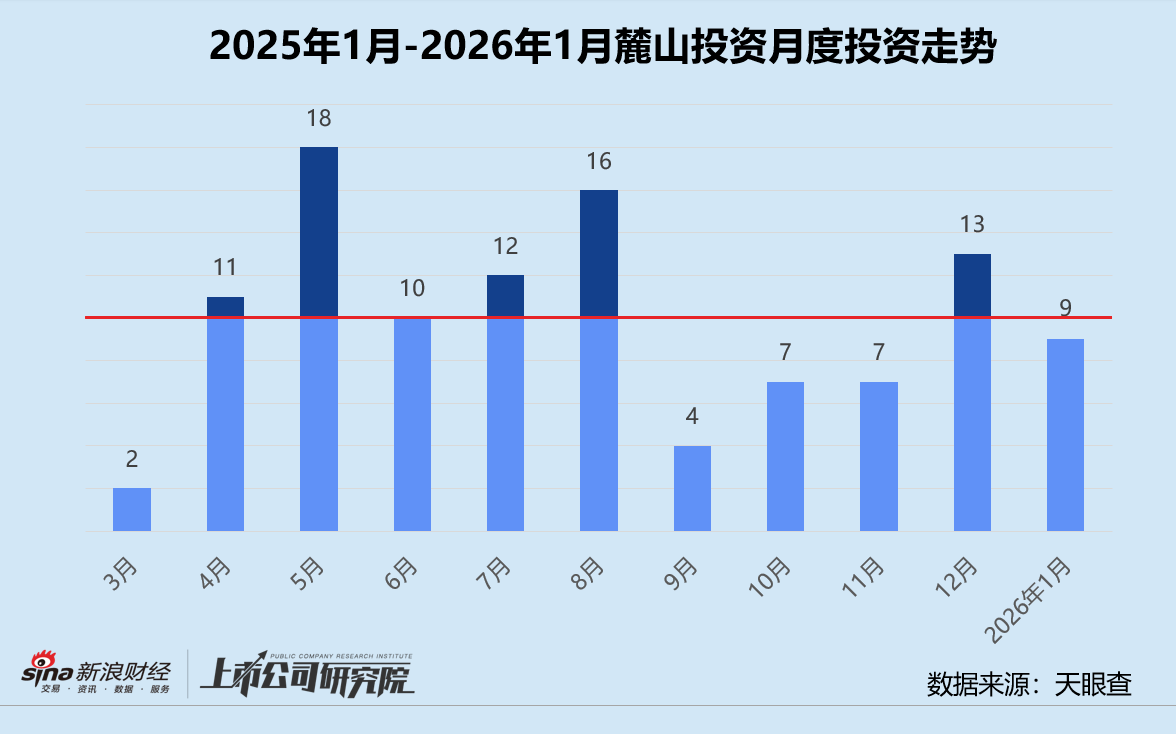
Core Insights - The private equity and venture capital market in January 2026 saw a significant decline in new registrations and filings, with a total of 8 new fund managers registered, marking a 62.5% decrease year-on-year and month-on-month [1] - The total number of newly registered private equity and venture capital funds was 548, which is a 20.6% decrease compared to December 2025, but a notable 66.1% increase compared to January 2025 [1] - The domestic primary market recorded 644 equity investment events in January, with a total disclosed investment amount of approximately 529.99 billion yuan, reflecting a year-on-year increase of 2.1% and a 55.5% increase compared to the same month last year [10] Investment Trends - Lushan Investment, a government-controlled early-stage investment institution in Hunan, did not register any new funds in January 2026, and only registered one fund in 2025 with a capital contribution of 10.5 million yuan [11] - In January 2026, Lushan Investment disclosed 9 equity investment events, a decrease of 30.8% compared to December 2025, indicating a preference for concentrated investment during market windows or project maturity periods [11][13] Investment Stages - Lushan Investment focused heavily on early-stage investments in January, with angel rounds accounting for 66.7% and seed rounds approximately 22.2%, reflecting a willingness to take on higher risks [13] Industry Focus - The majority of Lushan Investment's portfolio in January was concentrated in the artificial intelligence sector, which accounted for about one-third of the invested projects, while new materials and consumer upgrades were tied for second place [15] Regional Investment - All of Lushan Investment's funding in January was directed towards companies within Hunan province, emphasizing a regional investment strategy [17] Notable Investment - Lushan Investment made a notable investment in "Fuxi Cloud," a provider of digital solutions for cultural heritage, during its angel round financing, which will support innovation in the digitalization of cultural heritage [18]

侯妙乐:测绘遥感新技术让文化遗产在数字世界永生
Xin Jing Bao· 2025-09-24 10:53
Core Viewpoint - The integration of new technologies such as surveying and remote sensing is essential for the digital preservation and utilization of cultural heritage, allowing it to thrive in the digital realm while addressing its historical and contextual significance [1][2]. Group 1: Digital Cultural Heritage - Digital cultural heritage refers to the results of digitizing cultural assets, including images, videos, audio, and models, as well as the comprehensive use of technologies like surveying, geography, and artificial intelligence for information retention, processing, management, and application [1]. - The narrow definition of digital cultural heritage focuses on the digitization outcomes, while the broad definition encompasses integrated technologies for data, analysis, services, and application systems [1]. Group 2: Challenges and Solutions - The current 3D models produced in the cultural heritage digitization industry face challenges such as lack of interactivity, dynamic simulation, and effective spatiotemporal empowerment [2]. - The application of real-scene 3D technology is crucial for creating three-dimensional information products that are spatially, physically, and realistically represented, which can enhance the activation and utilization of cultural heritage [2]. Group 3: Practical Applications - The team led by Hou Miaole has collaborated with various institutions to establish multi-layered semantic models for cave heritage, addressing different needs such as archaeology, protection, and utilization [3]. - The practical work includes the digitalization and virtual restoration of the Dazu Rock Carvings, emphasizing the importance of having spatiotemporal semantic information for intelligent virtual restoration [2][3].