数字渔业

Search documents
秦岭腹地“以绿兴渔” 陕西冷水鱼年产量超3万吨
Zhong Guo Xin Wen Wang· 2025-12-12 08:29
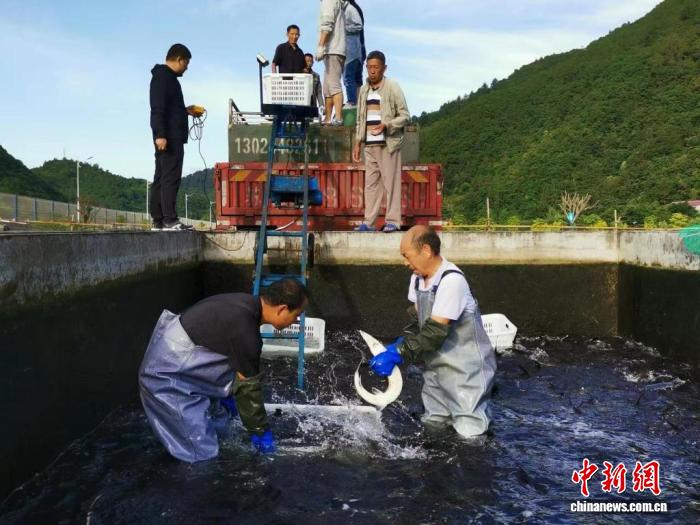
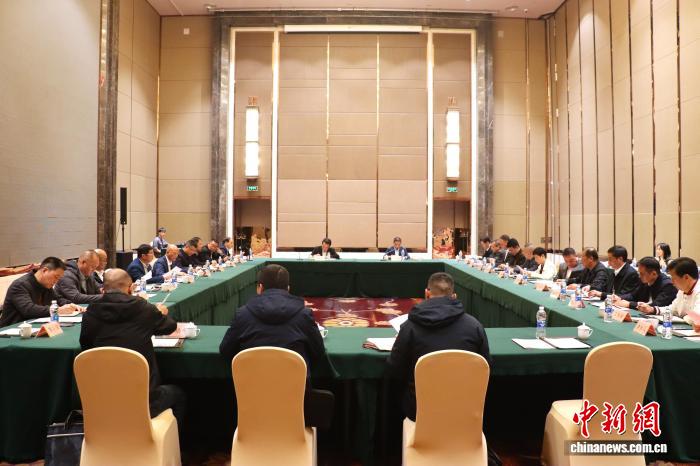
Core Insights - Shaanxi province is a significant cold-water fish production area in China, with an annual output exceeding 30,000 tons and a production value surpassing 3 billion yuan, ranking among the top in the country [1][5] - The city of Shangluo is the core production area for cold-water fish in Shaanxi, with an annual output of 11,000 tons and a comprehensive production value of 1.86 billion yuan [1] - A recent conference aimed at promoting high-quality development of the cold-water fish industry was held in Shangluo, focusing on ecological fishery development and industry transformation [1] Industry Development - The Shaanxi Provincial Department of Agriculture and Rural Affairs signed a cooperation framework agreement with the Shangluo Municipal Government to build a cold-water fish industry cluster, marking a new phase of collaboration among government, industry, academia, and research [1] - The establishment of the "National Digital Fishery Innovation Center of China Agricultural University" in Shangluo will inject core power into the digitalization of the industry [1] - Shangluo has built Shaanxi's first 4.0 version of a fish-vegetable symbiosis smart fishery factory and a digital fishery professor workstation, achieving full-process intelligent management and automation [1] Market Trends - The cold-water fish from the Qinling region has received positive feedback in international markets, particularly in Southeast Asia, indicating a strong export potential [5] - The Shaanxi fishery sector is focusing on sustainable development, with an expected total aquatic product output of over 250,000 tons and a production value exceeding 10 billion yuan this year [5] - Significant breakthroughs have been made in species innovation, including salmon, sturgeon, and giant salamander, as well as in integrated rice-fish farming and smart fishery practices [5]

“中国大黄鱼之都”福建宁德聚力推动大黄鱼产业向“新质”跃变
Zhong Guo Xin Wen Wang· 2025-12-09 08:35
Core Viewpoint - The article highlights the efforts of Ningde City in Fujian Province to transform its yellow croaker industry into a high-quality, modernized sector, aiming for significant growth in production and value by 2024 [1][5]. Industry Development - Ningde City is implementing the "National Fish Plan" to enhance the yellow croaker industry through various measures including seed industry revitalization, ecological farming, processing and circulation expansion, and increased promotion [3][5]. - The projected yellow croaker production for 2024 is 214,900 tons, accounting for approximately 80% of the national total, with the entire industry chain's output value expected to exceed 20 billion yuan [3][5]. Strategic Initiatives - The Ningde yellow croaker industry development task force has established mechanisms for collaborative promotion, tracking, and feedback to ensure the effective implementation of 17 key tasks [4][5]. - The association aims to transition the industry from quantity accumulation to quality improvement, from traditional farming to digital fisheries, and from regional branding to national branding [5][6]. Focus Areas - The current focus is on "controlling quantity and improving quality," emphasizing the importance of maintaining high standards in production [6]. - Efforts are being made to enhance the brand image of "Ningde Yellow Croaker" and to expand the industry's value chain by developing new business models [6].
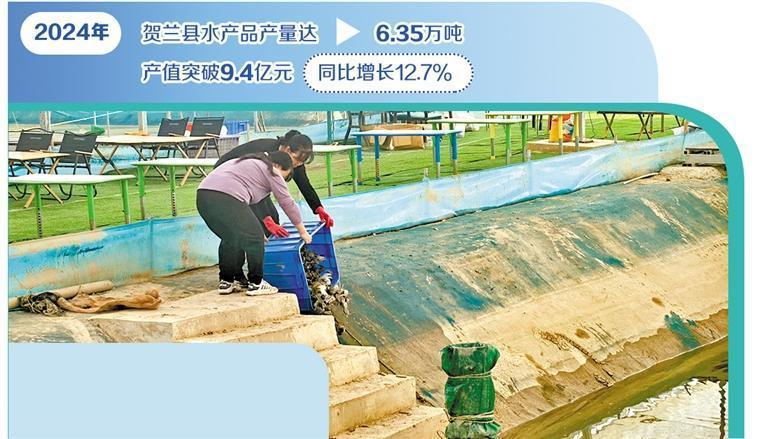
宁夏贺兰:盐碱地变身鱼塘稻田
Jing Ji Ri Bao· 2025-11-18 07:14
Core Viewpoint - The article highlights the innovative practices in aquaculture in Ningxia's Helan County, focusing on the transformation of saline-alkali land into productive agricultural and aquaculture areas through technology and ecological methods. Group 1: Aquaculture Innovations - The company has successfully cultivated 4,000 pounds of shrimp and over 3,000 pounds of crabs during the recent holiday seasons, showcasing the effectiveness of technology in aquaculture [1] - The collaboration with Shanghai Ocean University has led to the establishment of land-based ecological fish farms, utilizing a "wide ditch deep trough" model to enhance soil quality and reduce chemical fertilizer usage by 60% over three years [1] - The integration of digital technology, such as real-time monitoring and drone feeding, has improved the efficiency of aquaculture operations, leading to stable growth in water product output for nine consecutive years [2] Group 2: Economic Impact - Helan County's aquaculture contributes 11.3% of the region's water products, with an average yield of 1,120 kg per mu, and is projected to reach a total output of 63,500 tons and a value exceeding 940 million yuan in 2024, reflecting a 12.7% year-on-year growth [2] - The dual-cropping model of rice and aquaculture has resulted in a 30% premium for crab rice and more than double the net income compared to traditional rice farming [2] - The county has implemented water rights reforms and developed a secondary market for water rights, achieving an annual water savings of approximately 20 million cubic meters [2] Group 3: Sustainable Practices - The establishment of a multi-faceted and efficient water industry system has allowed for the large-scale cultivation of high-end cold-water fish and the transformation of saline-alkali land into productive agricultural areas [3] - The innovative "1+X" saline-alkali land transformation technology has increased income from low-lying saline-alkali land to 3,000 yuan per mu while ensuring food security [4] - The ecological and industrial cycle established in Helan County has led to a modern aquaculture system that supports both environmental sustainability and economic growth [4] Group 4: Future Development Plans - Helan County aims to become the leading region for high-quality water industry development in Northwest China, focusing on the construction of a comprehensive Atlantic salmon industry chain and a large-scale fishery park [5] - Plans include enhancing the cold chain logistics system to improve the distribution radius of aquatic products and fostering a model that integrates industry, processing, and tourism [5] - The goal is to create a virtuous cycle that promotes both fishing and tourism, establishing the water industry as a key feature of local agriculture and a significant source of income for farmers [5]