数字稀缺性

Search documents
比特币跌破93714美元 年初以来超30%涨幅全部回吐
Jing Ji Guan Cha Wang· 2025-11-17 13:25
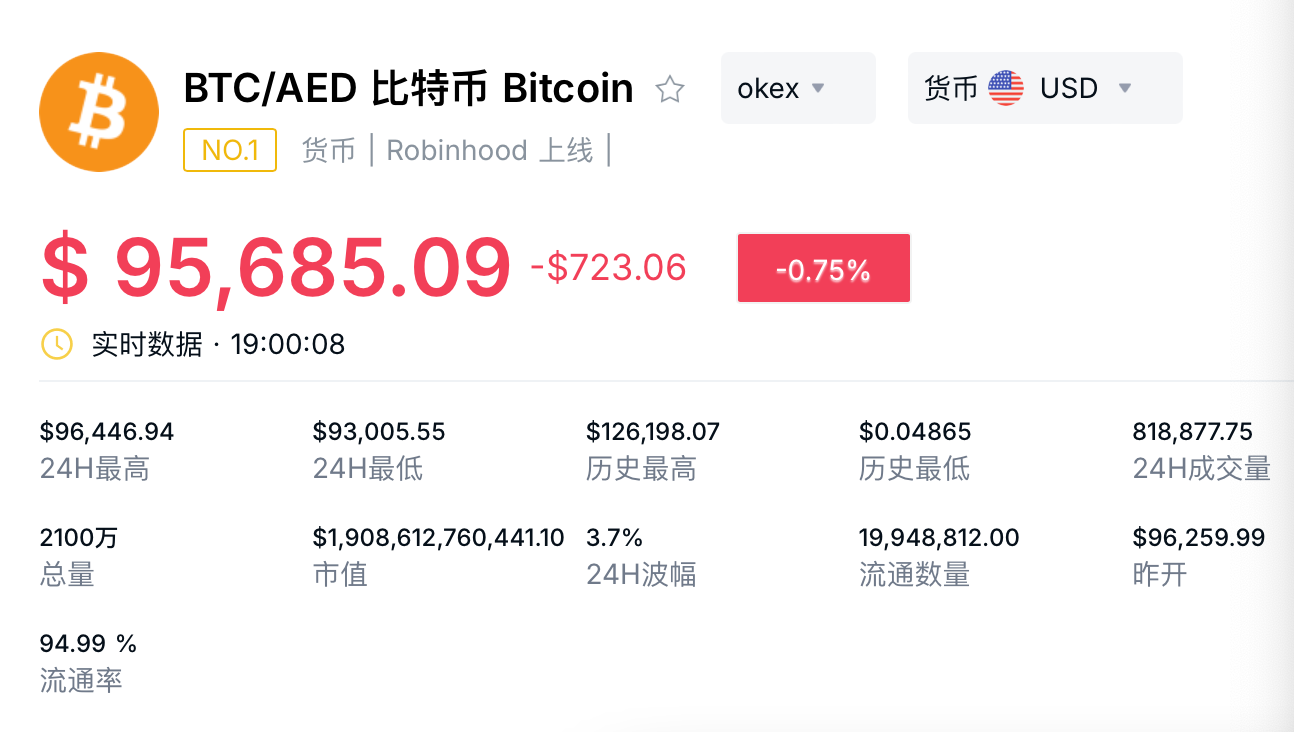
Core Viewpoint - The cryptocurrency market is undergoing a collective reassessment of whether "digital scarcity" can replace traditional value anchors as Bitcoin's price drops below $93,714, erasing all gains for the year [1][4]. Price Movement and Market Sentiment - Bitcoin's price fell to $93,714 on November 16, marking a loss of over 30% in cumulative gains since the beginning of 2025 [1][3]. - Following a peak of $126,198 on October 6, Bitcoin has since declined by more than 25%, entering a technical bear market [4]. - As of November 17, Bitcoin was fluctuating around $93,000, with market sentiment remaining low and both technical and funding indicators showing fatigue [1]. Institutional Participation and ETF Dynamics - Institutional participation has weakened, contributing to the recent price decline, with U.S. Bitcoin spot ETFs attracting over $25 billion in 2025, raising total assets under management to approximately $169 billion [4]. - Recent months have seen a slowdown in ETF fund inflows, with some trading days even experiencing net outflows, indicating a cautious approach from institutional buyers [4]. Macro Environment and Economic Indicators - Recent U.S. economic data, including a rise in job vacancies, has reinforced inflation expectations, dampening optimism regarding the Federal Reserve's interest rate cuts in 2025 [4]. - Rising U.S. Treasury yields and a pullback in tech stocks have contributed to a decline in overall risk appetite among investors [4]. Broader Market Impact - Bitcoin's decline has triggered widespread sell-offs in the cryptocurrency market, leading to significant losses in the total market capitalization and a sharp drop in investor risk appetite [5]. - Companies involved in Bitcoin mining are facing pressure as their revenues are directly tied to Bitcoin prices, which may impact their ability to upgrade equipment and expand operations [5]. Asset Identity and Market Logic - The current downturn in Bitcoin's price reflects a redefinition of its "asset identity," transitioning from a speculative asset to one that requires validation through cash flow and practical utility [5][6]. - The market's pricing logic has shifted from "future potential discounting" to "current cash flow verification," necessitating that Bitcoin proves its value beyond being a speculative or hedging tool [6].

避险还是泡沫?普通人必须看懂的比特币“反周期”财富逻辑!
Sou Hu Cai Jing· 2025-10-05 06:52
Core Insights - Bitcoin and the entire digital asset space are becoming an irreversible part of the global mainstream financial landscape, moving beyond the concept of "electronic cash" to a new type of asset characterized by counter-cyclicality, high volatility, and scarcity [1][3] Group 1: Bitcoin's Value Proposition - The core value of Bitcoin lies in its ability to act as a "reverse hedge" against the traditional financial system's inflationary pressures caused by central banks' money printing [3][4] - Bitcoin's absolute scarcity, capped at 21 million coins, makes it an ideal tool against global central bank monetary expansion and inflation, earning it the title of "digital gold" [5] Group 2: Investment Strategies - Ordinary investors should view digital assets, particularly Bitcoin and Ethereum, as a high-elasticity "overweight gold" rather than a primary asset due to their significant volatility [4] - Recommended asset allocation for digital assets is between 1% to 5% of total assets, treated as "risk capital" that would not impact core life and wealth goals if lost [5] - A long-term holding and dollar-cost averaging (DCA) strategy is advised to mitigate high volatility risks, avoiding short-term speculative trading [5] - Investors should focus on established digital assets like Bitcoin and Ethereum, avoiding the majority of emerging "altcoins" that may ultimately fail [5] Group 3: Future of Blockchain Technology - Blockchain technology represents the foundational infrastructure for the future of finance and the internet, with opportunities in decentralized finance (DeFi) and Web3 [6][7] - DeFi is reshaping lending, trading, and asset management, enhancing efficiency and reducing costs [7] - Blockchain enables secure and transparent ownership and transactions of digital assets, leading to the emergence of new industries such as NFTs and the metaverse economy [7]