数据备份

Search documents
帮长辈清手机成过年“基操”,这份2026年最新攻略请收好
3 6 Ke· 2026-02-16 07:52
Core Viewpoint - The article discusses the importance of systematically cleaning and backing up mobile phones for elderly relatives during the Chinese New Year, emphasizing the need for a structured approach to avoid data loss and improve device performance [1][25]. Group 1: Data Backup - The first step in cleaning a phone is to back up critical data, including WeChat, contacts, messages, photos, wallet information, and passwords [4][10][17]. - There are three main methods for backing up WeChat data: computer backup, phone backup, and external storage backup, with the latter being the fastest using USB devices [4][6]. - For contacts and messages, most phones offer cloud synchronization, and it is essential to check for data stored on SIM cards to prevent loss [6][10]. Group 2: Cleaning Process - After backing up data, the next step is to delete unnecessary software and malware, as third-party apps often cause phone lag [18][21]. - Users are advised to enter safe mode to remove non-essential third-party apps and check for app permissions that may affect performance [21][24]. - If the phone remains slow after these steps, a factory reset is recommended, followed by system updates and data restoration [24]. Group 3: Importance of Family Interaction - The process of helping elderly relatives with their phones serves as an opportunity for family bonding, highlighting that the act of cleaning the phone is also about spending quality time together [25].


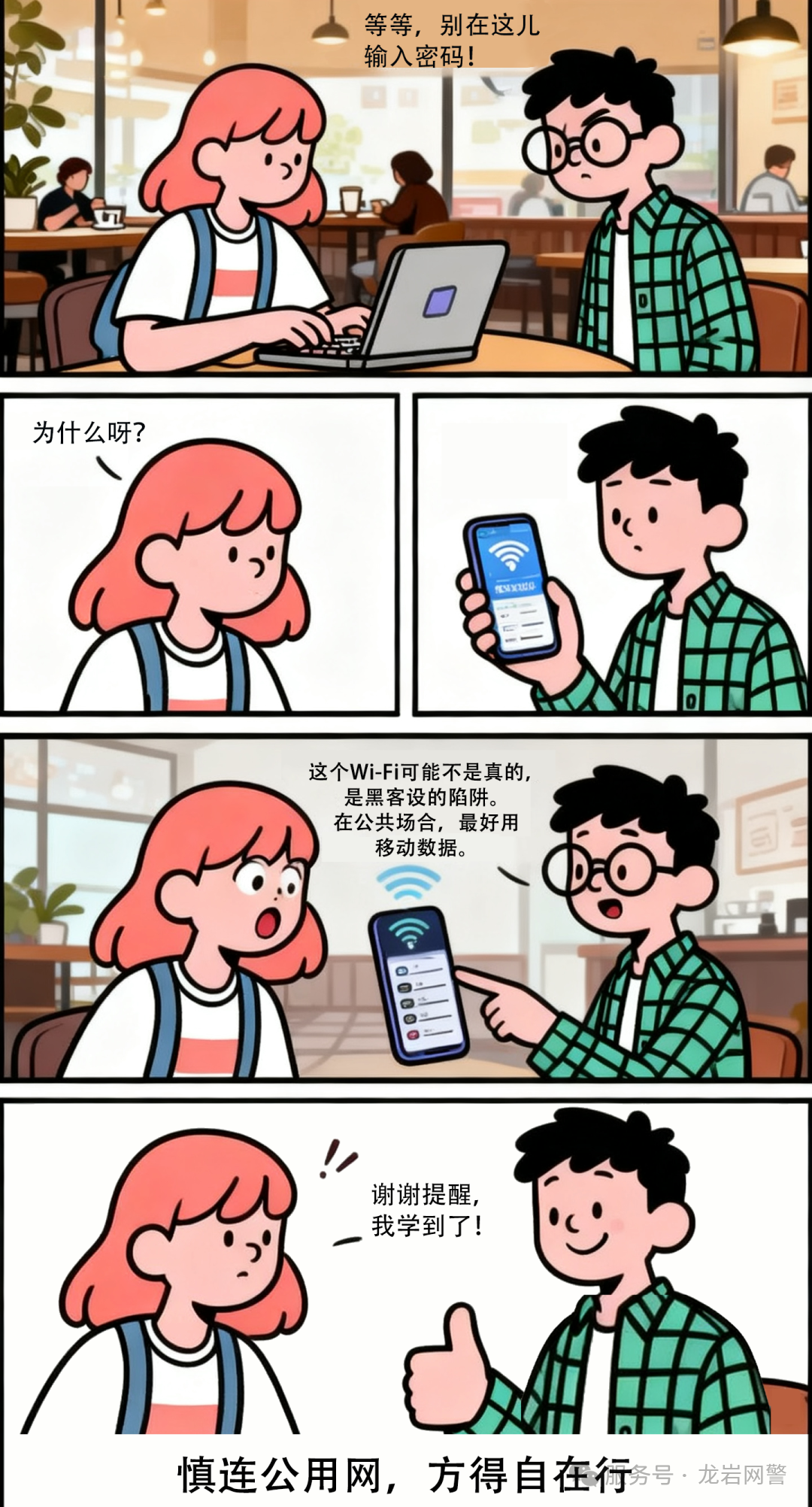
使用公共Wi-Fi需谨慎!假期网络安全指南请查收
Qi Lu Wan Bao· 2025-10-02 05:25
Group 1: Public Wi-Fi Security - Public Wi-Fi poses significant risks including data eavesdropping, where hackers can easily intercept unencrypted network data to obtain sensitive information such as account credentials and chat logs [2] - Hackers can create fake hotspots that mimic legitimate networks, leading users to unknowingly connect and expose their data [3] - There is a risk of direct attacks on devices connected to the same network, potentially resulting in the installation of malware or ransomware [5] Group 2: Personal Information Protection - The risk of information leakage can lead to targeted scams, where criminals exploit personal details to impersonate legitimate entities for fraud [13] - Identity theft can occur when personal information such as ID numbers and photos are misused for illegal activities [15] - Leaked credentials from one site can be used to attempt unauthorized access to other important accounts, a practice known as credential stuffing [17] Group 3: Weak Passwords and Password Reuse Risks - Weak passwords are easily guessable, with common patterns like "123456" or personal information being particularly vulnerable to attacks [34] - Strong passwords should be at least 12 characters long and include a mix of uppercase letters, lowercase letters, numbers, and special characters [34] Group 4: Data Backup Awareness - The loss of data can have severe emotional and financial impacts, including the permanent loss of cherished memories and critical business documents [34][36] - It is recommended to maintain three copies of important data, stored on two different media types, with at least one copy kept offsite [39][41][43] Group 5: Youth Internet Addiction - Internet addiction can lead to various health issues, including vision problems, sleep disturbances, and emotional challenges such as anxiety and depression [45] - Excessive internet use can negatively impact academic performance and lead to disengagement from educational pursuits [46] - Parents are encouraged to communicate openly with their children about internet use and establish reasonable screen time limits [48]
75万公务员近7年的工作文件全部丢失!机房内锂电池组爆炸引发火灾,韩国政府文件存储系统被烧毁且没有备份
Mei Ri Jing Ji Xin Wen· 2025-10-01 15:24
Core Points - A fire at the National Information Resources Management Institute in South Korea resulted in the loss of approximately 750,000 government work files over the past seven years, affecting around 647 government business systems, with 96 systems completely destroyed [1][3][4] - The fire, which occurred on September 26, was caused by an explosion of lithium battery packs in the server room, leading to significant disruptions in government services, including emergency response and online document issuance [4] Summary by Sections Incident Overview - The fire at the National Information Resources Management Institute, located about 140 kilometers south of Seoul, has been classified as a major incident affecting the central computer network of South Korea [1][4] - The government had previously recommended that civil servants store work-related documents in this system rather than on personal computers, resulting in the complete loss of files due to the lack of external backups [3] Impact on Government Services - As of October 1, 101 of the affected government business systems have been restored, representing a recovery rate of 15.6% [4] - The incident has led to the paralysis of nearly one-third of the online information services and systems of the South Korean government, including critical services like emergency rescue tracking and access to official documents [4] Response and Recovery Efforts - The South Korean government has selected a cloud computing company to assist in migrating the affected systems to a data center in Daegu, with an estimated repair time of about one month [4] - The Prime Minister of South Korea has publicly apologized for the service disruptions and highlighted the need for improved backup mechanisms, noting that similar service outages had occurred earlier in 2023 [4]