文化乡愁

Search documents
从白居易《邯郸冬至夜思家》看生命的孤独与守望
Xin Lang Cai Jing· 2025-12-20 20:03
Group 1 - The article reflects on the themes of loneliness and nostalgia during the winter solstice, using the historical context of Bai Juyi's experiences as a lens to explore these emotions [1][2] - It emphasizes the contrast between the warmth of collective celebrations and the individual's solitude, highlighting how memories of home and loved ones can evoke deep feelings of longing [1][2] - The narrative illustrates how the act of remembering serves as a source of comfort and warmth during cold, lonely nights, suggesting that memory can create a sense of home even in physical absence [3] Group 2 - The text draws parallels between geographical distance and emotional experiences, indicating that the feelings of isolation can be both a physical and emotional journey [2][3] - It discusses the significance of winter solstice as a time for reflection, where the longest night prompts deeper contemplation of personal connections and the passage of time [2][3] - The imagery of snow and the changing seasons serves as a metaphor for the transient nature of life and the enduring power of memory, suggesting that each winter solstice carries the weight of past experiences [3]
用石雕刻出侨乡印记(侨界关注)
Ren Min Ri Bao Hai Wai Ban· 2025-09-05 01:02
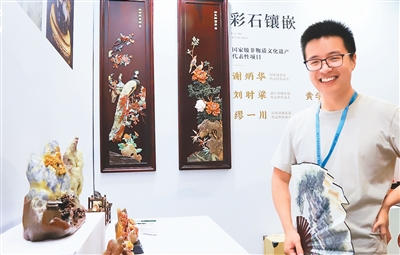
Core Viewpoint - The article highlights the journey of Hu Zhizhu, a young overseas Chinese who returned to his hometown to promote and preserve the traditional stone carving art, reflecting a blend of personal growth and cultural heritage [1][9]. Group 1: Background and Early Life - Hu Zhizhu was born in Wenzhou, Zhejiang Province, and moved to Italy at the age of 13, where he faced language barriers and cultural challenges [2][3]. - He worked in a garment factory to support his family, developing resilience and a strong work ethic during his formative years [3][4]. Group 2: Return to Hometown and Learning Stone Carving - In 2012, Hu returned to China with his family to start a new venture, feeling both familiar and foreign in his homeland after years abroad [5]. - Inspired by the local stone carving tradition, he sought to learn the craft, eventually finding a mentor and mastering the intricate techniques of stone carving [7][8]. Group 3: Establishing a Business and Cultural Promotion - In 2019, Hu and his brother established a studio called "Stone Speaker" to promote stone carving culture and sell their works, initially facing challenges due to limited local awareness [9]. - Their products gained traction among overseas Chinese, who sought items that connected them to their homeland, leading to a growing customer base [9]. Group 4: Community Engagement and Future Plans - Hu has taken on a leadership role in his village, contributing to local development while continuing to promote stone carving and cultural heritage [10]. - He plans to showcase his stone carvings in Italy and collaborate with institutions to further the reach of traditional Chinese craftsmanship [10].