文化交流与文明互鉴

Search documents
金色流光:近距离欣赏一场“含金量”很高的展
Jing Ji Guan Cha Bao· 2025-12-17 06:53
Core Viewpoint - The exhibition "Golden Threads: Ancient Gold Artifacts from the Hong Kong Palace Museum" showcases 170 pieces of ancient gold artifacts from various regions of China, highlighting over 3,000 years of gold craftsmanship and cultural exchange between the Central Plains and surrounding areas [1]. Group 1: Historical Context - In early civilization, nobility from the Eurasian steppes and the Central Plains used different forms of gold jewelry for identity marking, with steppe nobility favoring animal motifs [2]. - The influence of migration, warfare, and trade led to the adoption of gold by Central Plains nobility during the Zhou to Qin-Han periods [2]. - Animal motifs, significant in northern steppe culture, were introduced to China around the 7th century BC, impacting metal decoration styles during the Warring States to Han dynasties [2][4]. Group 2: Cultural Exchange - The Tang dynasty saw significant cultural exchange with the rise of the Tibetan Empire, where gold artifacts played a crucial role in diplomatic relations [6][7]. - The Silk Road facilitated the convergence of diverse cultures in Tibet, leading to a unique Tibetan gold style influenced by various regions [7]. - The Tang dynasty's gold and silver artifacts reflected the integration of different cultural elements, showcasing a blend of styles [8]. Group 3: Artistic Techniques - The exhibition details ancient Chinese gold craftsmanship, including techniques like "bead-making," which became popular during the Han and Tang dynasties [23]. - Two primary methods for creating gold beads are identified: "suction bead method" and "splash bead method," both of which were used to produce decorative elements [24][25]. - The "wrong gold and silver" technique involves embedding gold and silver into artifacts, requiring precise craftsmanship to ensure aesthetic quality [26]. Group 4: Evolution of Gold Artifacts - During the Liao and Song dynasties, gold ornaments continued to symbolize status, with Liao gold reflecting a blend of steppe and Han styles [11][12]. - The Song dynasty introduced innovative hair accessories, such as the flower tube hairpin, showcasing a rich variety of designs [17]. - The Ming dynasty saw the continuation of traditional styles while also incorporating new designs, particularly in hair accessories and ceremonial attire [20][21].
“文学之都”对话“音乐之城”
Nan Jing Ri Bao· 2025-11-10 02:49
Core Points - The Nanjing-Leipzig Cultural Heritage Protection and Cultural Tourism Industry Innovation Exchange Conference was held in Leipzig, Germany, aiming to strengthen the connection between the "World City of Literature" and the "City of Music" in Europe [1][2] - The exhibition "Common Heritage, Common World" featuring Nanjing's Ming City Wall and Leipzig's historical architecture was launched, showcasing the wisdom of ancient city preservation from both Eastern and Western perspectives [1] - The exhibition received positive feedback from local audiences, who expressed admiration for the scale of the Nanjing City Wall and its underlying Eastern philosophy [1] Group 1 - The roundtable dialogue included experts from Leipzig's Bach Archive, Grassi Museum of Ethnology, Leipzig University, and Nanjing Archives Bureau, discussing topics such as "Public Participation in Heritage Protection and Transmission" and "The Meeting of the City of Music and the City of Literature" [2] - The "China Nanjing Week" initiative, part of the national "Cultural Going Out" strategy, has connected with major cities like Milan, London, New York, and Paris since 2015, creating a diverse cultural exchange network [2] - The current series of "Nanjing Week" activities will continue until February 2026, with Nanjing engaging in deep exchanges across Munich, Leipzig, and Dusseldorf, contributing to cultural exchange and mutual learning on the international stage [2]
“洋学生”中国说|Z世代东盟青年话交融:以青春之力助推文明互鉴
Huan Qiu Wang· 2025-09-27 08:34
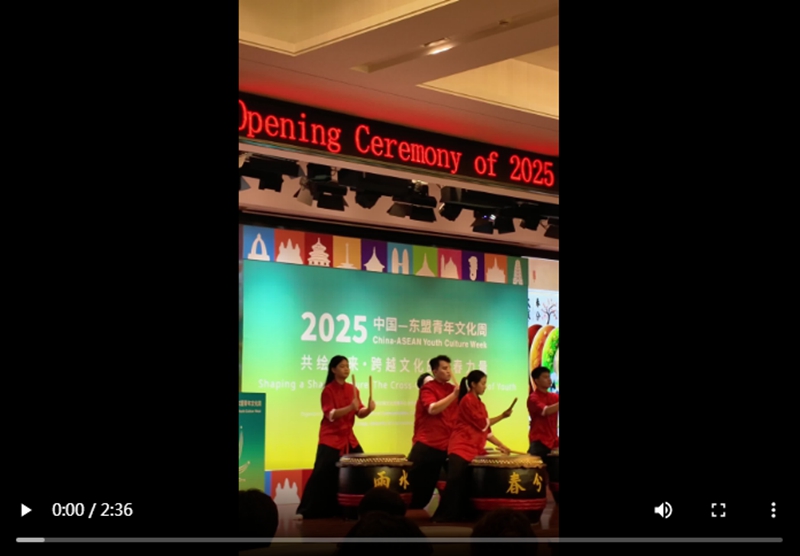
Core Points - The 2025 China-ASEAN Youth Cultural Week opened in Beijing, focusing on the theme "Drawing the Future Together: The Youth Power Across Cultures" [1] - Over 200 experts and youth representatives from China and ASEAN countries participated in the event [1] - The opening ceremony featured four poetic and culturally rich chapters: "Initial Bloom, Mutual Growth," "Coexistence, Harmony of Mountains and Rivers," "Radiance, Hearts United Across Miles," and "Drawing Together, Harmony and Progress" [1] Group 1 - Cultural exchange enriches diversity, and youth resonate through shared experiences and viewpoints [3] - Chinese and ASEAN youth contribute to regional integration and mutual prosperity through their interactions and cultural exchanges [3]

金熊猫盛典幕后揭秘:艺术交融中的四川故事与国际表达
Sou Hu Cai Jing· 2025-09-14 18:14
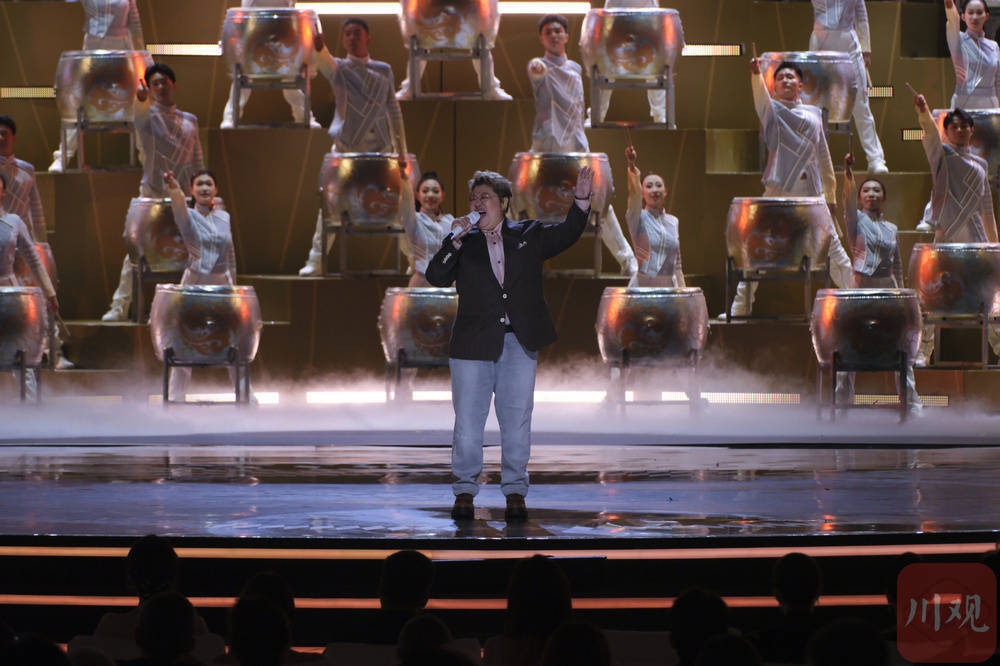
Core Viewpoint - The second Golden Panda Awards ceremony showcased a blend of Sichuan culture and international artistry, emphasizing emotional connections through music and performance [1][11]. Group 1: Performances and Artists - Renowned singer and composer Han Hong opened the ceremony with her self-composed song "Jinxiu," which reflects her personal emotions and is tailored for Sichuan [2][4]. - Tan Weiwei performed "Dang Shi," marking her return to the song after twenty years, expressing deep emotional resonance and support for the potential revival of the musical "Jinsha" [6]. - Tenor Shi Yijie collaborated with international artists to perform the theme song "Tongxing," highlighting a fusion of various musical styles and cultures [7]. - Singer Hai Lai A Mu and the children from the Niuniu Choir performed "Kou Xian," revitalizing a traditional folk song with modern elements [7]. Group 2: Cultural Significance and Artistic Direction - Pianist Tian Jiaxin presented a special program "Mei Mei Yu Gong," integrating piano, violin, and pipa to narrate stories of Chinese culture and promote cultural exchange [9]. - The stage design, inspired by Sichuan's bamboo sea, created an immersive experience, showcasing the integration of art and technology [9]. - The event served as a bridge for cultural exchange, illustrating that culture enriches through communication and civilization progresses through mutual learning [11].