文化产业数智化转型

Search documents
虞花荣:驱动文化产业数智化转型
Jing Ji Ri Bao· 2026-01-15 00:05
Core Viewpoint - The integration of digital intelligence technology into the cultural industry is essential for achieving a multi-layered and systematic fusion, driving transformation in production, dissemination, and consumption, and promoting efficient and intelligent development of the cultural sector [1][2]. Group 1: Digital Empowerment in Cultural Production - Digital intelligence tools have lowered the barriers to cultural content production, shifting the core element from "experience-based creation" to "intelligent creation" through human-machine collaboration, leading to a more diversified production base [1]. - The use of digital tools allows for quantitative analysis of big data, enabling precise capture of social trends and providing market forecasts and guidance for cultural content creation [1]. - Intelligent production lines and virtual production techniques significantly enhance production efficiency, reduce costs, and shorten production cycles [1]. Group 2: Transformation in Media and Cultural Consumption - Digital technology breaks the limitations of traditional media's one-way flow, creating a multi-media communication environment that allows for precise dissemination of information [2]. - Technologies such as AI translation and cross-cultural databases facilitate accurate outreach to overseas audiences, promoting the global presence of Chinese traditional culture [2]. - New cultural business models such as "technology + film," "technology + tourism," and "technology + performing arts" have emerged, enhancing immersive cultural experiences through augmented and virtual reality [2]. Group 3: Government Support and Policy Framework - The government is enhancing top-level design and proactively laying out key development areas to guide the integration of technology and culture [3]. - Infrastructure development is being prioritized, utilizing new technologies like cloud computing and big data to improve the application scenarios within the cultural industry [3]. - Establishing industry standards and regulatory frameworks is crucial for supporting the application of new technologies and the development of new business models [3]. Group 4: Talent Development and Collaboration - There is a focus on cultivating compound talents with both cultural innovation capabilities and digital literacy, in line with national educational plans [4]. - A collaborative mechanism between academia, research institutions, and cultural and technology enterprises is encouraged to build a digital cultural industry cluster [4].
驱动文化产业数智化转型
Jing Ji Ri Bao· 2026-01-14 22:10
Group 1 - The core viewpoint emphasizes the integration of digital intelligence technologies with the cultural industry, driving transformation across production, dissemination, and consumption processes, ultimately promoting efficient and intelligent development of the cultural sector [1][2] - Since 2025, digital technologies such as the internet, big data, cloud computing, and artificial intelligence have become new engines for the iterative upgrade of the cultural industry [1] - AI tools have lowered the barriers to cultural content production, shifting the focus from "experience-based creation" to "intelligent creation," leading to a more diversified production landscape [1] Group 2 - Digital technologies have broken the limitations of traditional media's one-way flow, creating a multi-media communication environment that enables precise dissemination of information [2] - The emergence of new cultural business models such as "technology + film," "technology + tourism," and "technology + performing arts" has enhanced the immersive cultural experience through augmented and virtual reality technologies [2] - The global cultural industry competition is primarily about cultural industry clusters, with notable examples including Los Angeles for film and entertainment, Silicon Valley for software and digital content, and London for design and media [2] Group 3 - The government is proactively planning and ensuring the deep integration of culture and technology by strengthening top-level design and infrastructure construction [3] - Emphasizing "content is king," the cultural industry must focus on core competitiveness and meet the real needs of the public while promoting the creative transformation of traditional Chinese culture [3] - A multi-faceted collaborative innovation system is encouraged to build digital cultural industry clusters, enhancing international competitiveness [3] Group 4 - The cultivation of compound talents in cultural technology is being accelerated, aligning with national educational and digital talent development plans [4] - A collaborative mechanism between industry, academia, and research institutions is being established to support the development of talents with both cultural innovation capabilities and digital literacy [4]
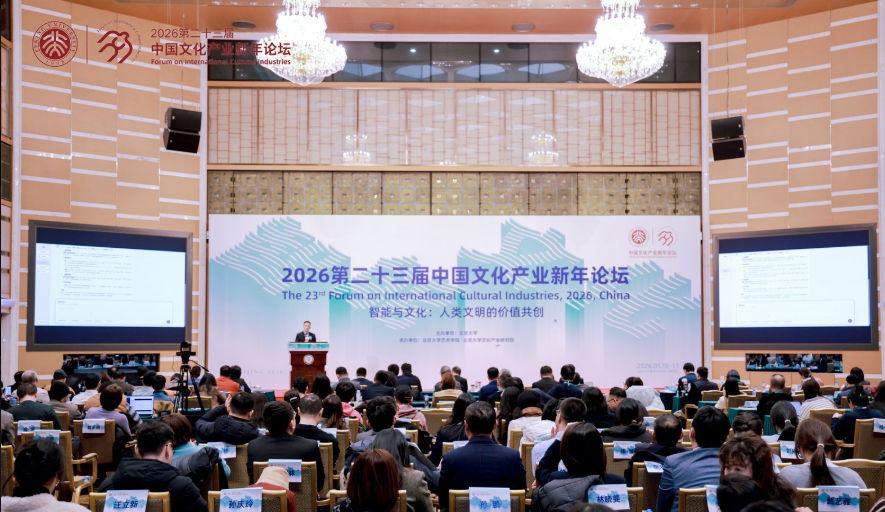
聚焦智能与文化 第二十三届中国文化产业新年论坛在北京大学开幕
Zhong Guo Jing Ji Wang· 2026-01-12 02:52
Group 1 - The 23rd China Cultural Industry New Year Forum was held at Peking University, focusing on the theme "Intelligence and Culture: Co-creation of Human Civilization Values" [1] - The forum gathered representatives from government, industry, academia, and research to explore the pathways and mechanisms for high-quality development of the cultural industry empowered by artificial intelligence [1] Group 2 - Peking University Vice President Ning Qi emphasized the need for technology and humanities to resonate together, advocating for a future that combines intelligence and cultural depth [3] - The Director of the Industry Development Department of the Ministry of Culture and Tourism, Miao Mu Yang, discussed the digital transformation path of the cultural industry during the 14th Five-Year Plan, highlighting the importance of AI in restructuring creative production and expanding consumption scenarios [3] - Li Fengliang, Secretary of the Party Committee of South China Agricultural University, presented the concept of "intelligent culture" driven by technology, data, algorithms, and interaction, while cautioning against issues like creativity poverty and algorithm bias [3] Group 3 - Li Xiangmin, Deputy Secretary of the Party Committee of Nanjing University of the Arts, argued that the lack of cultural elements contributes to the "modern Solow paradox," suggesting that integrating culture into the economic system can stimulate consumption and promote sustainable growth [4] - Chen Shaofeng, a professor at Peking University, introduced a new model for the cultural industry focusing on AI short dramas and cross-border cultural e-commerce, proposing a strategy to enhance local products through storytelling [4] - Yan Yan, Deputy Secretary and President of Inner Mongolia University of the Arts, shared research on the value co-creation of ethnic arts in the digital age, emphasizing innovation in education and communication [4] Group 4 - The "Chinese Aesthetic Gene Database Luoshen Intelligent Creator 2.0" was launched, enhancing the intelligent generation of multimodal content and supporting the modern transformation of traditional cultural elements [5] - The forum included parallel discussions on topics such as "Cultural New Landscape in the AI Era," "Digital Development of Intangible Cultural Heritage," and "New Business Models for Local Culture and Tourism," addressing forward-looking issues [7] - The event was organized by Peking University, with the Peking University Art College and the Peking University Cultural Industry Research Institute as co-hosts [7]