文化传承与交流

Search documents
逛福礼市集,寻千年文脉,来模式口解锁辽宁镇山限定体验
Bei Jing Ri Bao Ke Hu Duan· 2026-02-06 04:05
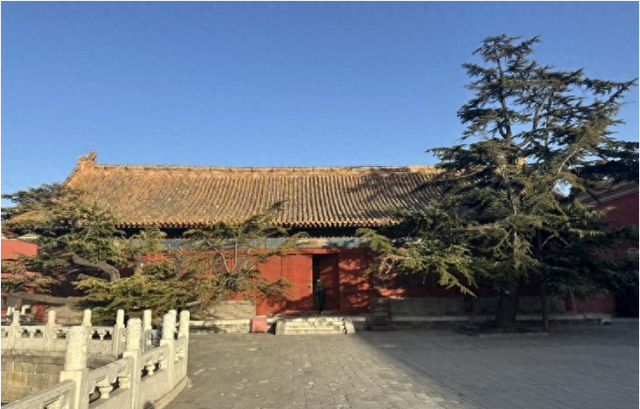
Core Viewpoint - The "Zhenshan Cultural Exhibition" themed "Ancient Path Encountering Zhenshan Culture" opened at the Fahai Temple Mural Art Museum, showcasing the rich cultural heritage of Zhenshan and promoting cultural tourism integration [2][7][10] Group 1: Cultural Significance - The Modekou Historical and Cultural District serves as a significant cultural landmark in Beijing, connecting historical trade routes and facilitating cultural exchange [4][5] - The exhibition aims to deepen the connection between Zhenshan culture and the ancient trade route culture of Beijing, providing a unique experience for visitors [5][7] Group 2: Exhibition Highlights - The exhibition features six thematic sections, including the history of Zhenshan, the Zhenshan Temple, and the integration of Zhenshan and Beijing's historical ties [7] - A non-material cultural heritage display area became a popular attraction, showcasing traditional Manchu paper-cutting and other crafts, which are considered "living stones" of Zhenshan culture [7][8] Group 3: Technological Integration - The Fahai Temple Mural Art Museum utilizes digital technology to bring 600-year-old murals to life, enhancing the visitor experience alongside the exhibition's non-material cultural heritage [8] Group 4: Local Products and Activities - The exhibition features a "Beizhen Fortune Market," highlighting local delicacies and agricultural products, promoting the image of Beizhen [9] - The event also promotes winter tourism activities in Beizhen, inviting visitors to participate in the upcoming traditional temple fair [9][10]

新更名的“鼓浪屿故宫文物馆”正式开展
Xin Hua Wang· 2025-12-07 04:01
Core Viewpoint - The "Former Palace Museum of Foreign Art on Gulangyu" has officially been renamed to "Gulangyu Palace Museum," marking a significant development in cultural heritage and tourism in Xiamen [1] Group 1: Museum Overview - The Gulangyu Palace Museum is a collaboration between the Xiamen municipal government and the Palace Museum, making it the only thematic branch of the Palace Museum located in a local area [1] - The museum's permanent exhibitions are divided into two main sections: "Splendid Treasures of the Era" and "Waves of Maritime Nations," showcasing over 200 artifacts, with 128 of them being new exhibits [1] Group 2: Exhibition Details - The "Splendid Treasures of the Era" section focuses on Qing Dynasty court art and collections, spanning from the Shang and Zhou dynasties to the Ming Dynasty, reflecting the achievements of ancient Chinese art and the depth of Chinese civilization [1] - The "Waves of Maritime Nations" section updates some of the original foreign artifacts, highlighting the development of cultural exchange between China and the West [1] Group 3: Event and Participation - The new exhibition represents the most comprehensive coverage of artifacts and the longest chronological span since the museum's opening eight years ago [1] - A roundtable dialogue on "Protection of World Heritage Sites and Living Cultural Transmission" was held as a supporting event, with participation from nearly a hundred experts, scholars, and representatives from UNESCO [1]
打造永远在线的北京文化论坛,17处“会客厅”亮相
Bei Jing Ri Bao Ke Hu Duan· 2025-04-10 03:53
Group 1 - The Beijing Cultural Forum aims to promote cultural heritage protection and innovation, establishing itself as a significant platform for cultural exchange and mutual learning [1][2] - The forum has launched the "Beijing Cultural Forum Salon" to facilitate regular discussions among cultural experts and scholars, focusing on themes of cultural inheritance and development [1][2] - The first batch of 17 salon venues emphasizes cultural preservation and revitalization, showcasing the rich historical heritage of Beijing [1] Group 2 - The salon venues will integrate existing high-quality cultural activities and performances in Beijing, focusing on forum-type, dialogue-type, and academic exchange activities [2] - The forum plans to establish deep cooperative relationships with various enterprises and institutions to enhance its market presence and resource integration [2] Group 3 - The venues include significant historical sites such as the Temple of Heaven, which is the largest ancient sacrificial building complex in China, and the Imperial Ancestral Temple, which reflects ancient Chinese cultural and architectural traditions [3][5] - Other notable venues include the Drum Tower, which served as a timekeeping center during the Yuan, Ming, and Qing dynasties, and the Yanyuan Guild Hall, a key cultural exchange site [12][14] - The forum's venues are strategically selected to enhance the cultural experience and facilitate academic discussions, contributing to the revitalization of Beijing's cultural landscape [1][2]