文化兴县

Search documents
山西五寨:文化赋能打通多元融合发展“快车道”
Xin Lang Cai Jing· 2025-12-29 09:59
Group 1 - The core strategy of Wuzhai County focuses on leveraging historical culture, red gene, and ecological cultural tourism to transform cultural resources into development momentum, promoting deep integration of culture with industry, livelihood, and urban development [1][3] - Since 2025, Wuzhai County has prioritized enhancing public cultural services to meet the spiritual and cultural needs of the populace, organizing various themed activities and achieving significant outreach through free performances and cultural events [3][4] Group 2 - Wuzhai County has made substantial progress in public reading services, adding over 1,100 physical books to the library, launching a "cloud reading" platform, and engaging the community through various reading activities [4] - The county has implemented a comprehensive approach to cultural heritage protection, completing a national survey of immovable cultural relics and establishing a management system to ensure their safety and public awareness [5][6] Group 3 - A thorough survey of tourism resources has been completed, identifying 1,233 resource points and laying the groundwork for future development, while safety measures and regulatory actions have been taken to ensure the orderly operation of cultural and tourism venues [7] - The integration of health and tourism has shown significant results, with the establishment of a wellness tourism base that combines traditional Chinese medicine services with tourism, enhancing rural tourism [8]


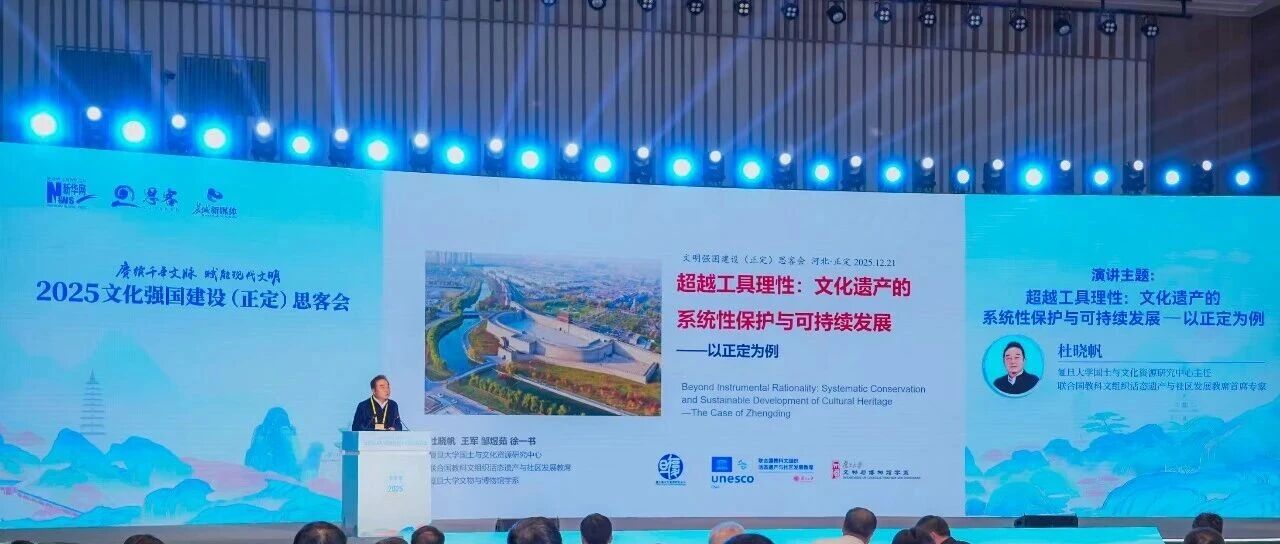
侧记|赓续千年文脉 赋能现代文明:一场在古城正定展开的文化强国思想激荡
新华网财经· 2025-12-22 03:08
Core Viewpoint - The article emphasizes the importance of cultural heritage in building a strong cultural nation, highlighting the integration of historical preservation with contemporary development as a pathway for sustainable growth [4][10]. Group 1: Cultural Heritage and Development - Zhengding, with a history of over 1,600 years and numerous ancient buildings, serves as a model for integrating cultural heritage into modern development [4]. - The conference aims to create a high-quality dialogue platform, showcasing Zhengding as an early practice site for the "Cultural Prosperity County" concept, merging historical preservation with contemporary growth [4][10]. Group 2: Cultural Strength and Economic Impact - The China Human Rights Development Foundation highlights that both hard and soft power are essential for cultural strength, with a significant increase in cultural service exports projected for 2024, particularly in online literature and entertainment [6]. - The rise in young museum visitors from under 30% to 60% indicates a growing engagement with cultural institutions, suggesting a need for better cultural products that resonate with contemporary audiences [6][8]. Group 3: Systematic Protection and Creative Transformation - Experts advocate for a systematic approach to cultural heritage protection, emphasizing the need to connect various heritage sites within a broader regional framework to avoid fragmentation [8]. - The concepts of "creative transformation" and "innovative development" are discussed as essential for the continuity of Chinese civilization, stressing the importance of inheriting and innovating based on traditional culture [9]. Group 4: Local Experience and Methodology - The "Zhengding model" is presented as a valuable case study, demonstrating how cultural investment can yield long-term benefits, with over 178 films shot in the area attracting more than 12 million visitors [11]. - The article notes that the local government's focus on user-friendly infrastructure enhances the cultural experience, showcasing a model of continuous innovation [11][12]. Group 5: Future Directions and Consensus - The conference participants reached a consensus on the need for a balanced approach to cultural development, emphasizing the importance of high-quality growth in ensuring cultural security [14]. - The discussions highlighted the necessity of leveraging cultural strengths to empower economic and social development, with a focus on both preservation and innovation [14].