文化定权

Search documents
七佛塔碑与琉璃阁
Xin Lang Cai Jing· 2026-01-28 23:07
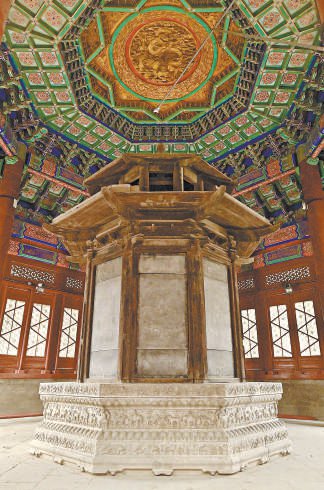
Core Viewpoint - The article discusses the cultural significance and historical context of the Seven Buddha Tower Stele in Beihai's "Western Paradise," highlighting its role in reinforcing cultural identity and political authority during the Qianlong Emperor's reign [2][6][7]. Cultural Integration Wisdom of the Seven Buddha Tower Stele - The Seven Buddha Tower Stele represents a synthesis of Confucian and Tibetan Buddhist cultures, showcasing the Qianlong Emperor's efforts to maintain cultural unity and stability in the frontier regions [2][4]. - The stele features inscriptions in Mandarin, Manchu, Mongolian, and Tibetan, emphasizing the centrality of Han culture while respecting diverse cultural identities [3][5]. Cultural Authority of the Qianlong Era - The Qianlong Emperor's initiative to establish the Seven Buddha Tower Stele was part of a broader strategy to assert cultural authority over Tibetan Buddhism and reinforce the Qing dynasty's legitimacy [7][8]. - The stele serves as an official interpretation of Tibetan Buddhist teachings, thereby consolidating the central government's control over religious narratives in the region [7][8]. Architectural Significance of the Liuli Pavilion - The Liuli Pavilion, constructed from remnants of a previously destroyed tower, exemplifies the peak of Qing dynasty craftsmanship and serves as a cultural landmark [9][10]. - The pavilion integrates both Han and Tibetan architectural elements, reflecting the harmonious coexistence of different cultural influences during the Qianlong period [9][10]. Historical Context of the Liuli Pavilion - The construction of the Liuli Pavilion was initiated after a fire destroyed the original tower, showcasing the Qianlong Emperor's commitment to cultural and religious projects [9][10]. - The pavilion not only serves as a religious site but also as a repository for important Buddhist texts, highlighting its dual function of worship and scholarship [10].