
文学复古运动

Search documents
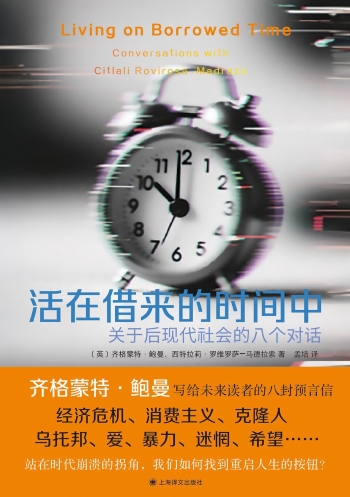
深度透支的现代文明,能否找到一条可持续的出路|荐书
Di Yi Cai Jing· 2026-02-24 08:41
Group 1 - The core argument of the article revolves around the exploration of contemporary society's liquidity and postmodern phenomena, addressing issues such as consumerism, climate change, and ethical dilemmas posed by biotechnological advancements [1][3][5] - The dialogue initiated by Zygmunt Bauman and scholar Sitrali Rovirosa-Madraso begins with the 2008 financial crisis but transcends mere economic analysis, highlighting a comprehensive dependency on borrowing across ecological, ethical, and temporal dimensions [3][4] - Bauman argues that the modern world has transitioned from a producer society to a consumer society, leading to a permanent debtor society, with states acting as enforcers of market sovereignty and the privatization of human society [3][4] Group 2 - In the current "liquid" era, traditional social structures have become fragile, job security has diminished, and interpersonal relationships are increasingly unstable, resulting in a fragmented and uncertain life experience [4][5] - Bauman's reflections are informed by his experiences of totalitarianism, economic downturns, and significant political events, which shape his critical analysis of contemporary issues and his hope for a sustainable future amidst systemic imbalances [5]

王世贞:大明文坛盟主的多面人生|历史人物
Jing Ji Guan Cha Bao· 2025-08-25 08:47
Core Viewpoint - Wang Shizhen, a prominent figure in the Ming Dynasty literary scene, experienced a multifaceted life marked by literary achievements and political struggles, particularly after the death of his father, Wang Xu, due to political machinations [1][9]. Group 1: Early Life and Education - Wang Shizhen was born in 1526 into a well-established family, the Wang family of Langya, which had a history of serving in government positions [2]. - His father, Wang Xu, focused on his education, leading to Wang Shizhen's extensive literary knowledge and early poetic talent [3][4]. - By the age of 15, he had already gained recognition for his poetic abilities, impressing his teachers [3]. Group 2: Literary Contributions and Political Career - Wang Shizhen became a Jinshi in 1547 and began a decade-long career in the capital, where he initially held political ambitions but faced numerous setbacks due to conflicts with powerful officials [4][5]. - His disillusionment with the political landscape led him to focus on literary pursuits, particularly the revival of classical literature [5][6]. - He formed a literary alliance known as the "Post-Seven Sons," advocating for a return to classical literary forms [5][6]. Group 3: Historical Writings and Personal Experiences - Wang Shizhen's historical writings were deeply influenced by his personal experiences, particularly the political downfall of his father at the hands of the powerful official Yan Song [9][10]. - He documented his disdain for Yan Song in his historical works, portraying him as corrupt and tyrannical [10][11]. - His major historical contributions include "Records of the Cabinet Ministers since Jiajing," which reflects his critical view of the political environment [11][12]. Group 4: Later Life and Legacy - In his later years, Wang Shizhen shifted focus to collecting books and artworks, becoming a notable collector in Jiangnan [24][25]. - He established the Yanshan Garden, which became a cultural hub for literary gatherings and artistic exchanges [30][31]. - Wang Shizhen's influence extended to his support for Li Shizhen's "Compendium of Materia Medica," for which he wrote a preface, highlighting his role in promoting significant literary works [36][37].
文徵明:从“笨小孩”到江南“顶流”|历史人物
Jing Ji Guan Cha Bao· 2025-06-20 01:15
Core Viewpoint - Wen Zhengming transformed from an underestimated child into a prominent figure in Jiangnan art, achieving mastery in both calligraphy and painting over nearly ninety years of dedication [1][2]. Group 1: Early Life and Development - Wen Zhengming was perceived as slow-witted in his youth, but his father, Wen Lin, believed in his potential, stating that late bloomers can still achieve greatness [2][3]. - Despite failing the provincial examination nine times, Wen Zhengming's father encouraged him, contrasting his journey with that of his talented friend Tang Yin, who achieved success quickly but later faced downfall due to misconduct [2][3]. Group 2: Artistic Pursuits - At nineteen, Wen Zhengming pursued painting against his father's friend's advice, who suggested he focus on obtaining a degree instead [3]. - His mentor, Shen Zhou, recognized his potential and provided extensive guidance, which laid the foundation for Wen Zhengming's artistic skills [3]. Group 3: Principles and Integrity - Wen Zhengming maintained strong principles, refusing to accept gifts from powerful figures and declining offers to work for them, which showcased his integrity [4][5]. - He was known for his humility and generosity, often supporting younger artists like Qiu Ying by promoting their work despite his own established reputation [6]. Group 4: Legacy and Influence - Wen Zhengming's calligraphy and painting were characterized by elegance and depth, with his works reflecting a blend of traditional styles and personal expression [7][8]. - His influence extended to later generations, particularly in flower-and-bird painting, where he developed a unique style that combined meticulous detail with a refined aesthetic [9][10]. - He preferred regular script and semi-cursive styles, achieving a balance of grace and strength, which distinguished him from contemporaries who favored more flamboyant styles [12].