文学抄袭

Search documents
86岁畅销书作家杨本芬就“抄袭”道歉!曾获谷雨文学奖,“出圈”代表作被曝与王朔、余华等人作品高度相似
Xin Lang Cai Jing· 2026-02-27 04:59
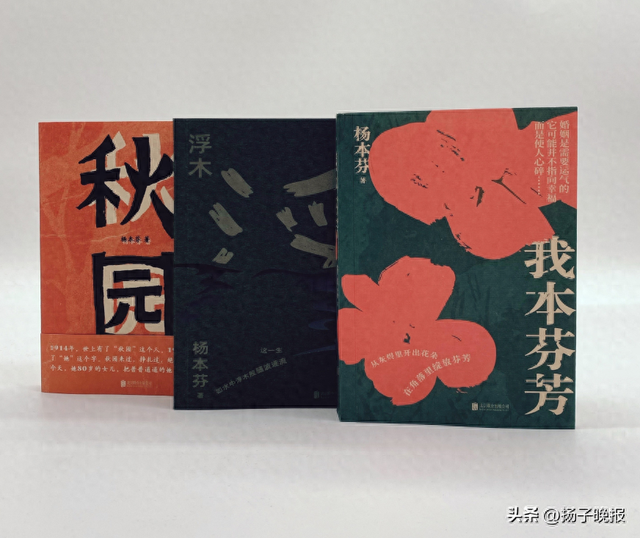
Core Viewpoint - The controversy surrounding Hunan writer Yang Benfen involves allegations of plagiarism in her popular works, leading to her public admission of using others' phrases and an apology to the affected authors and readers [1][10]. Group 1: Allegations of Plagiarism - Yang Benfen's notable works, including "Autumn Garden," "Bean Sesame Tea," "I Am Fragrant," and "Driftwood," have been accused of having high similarities with the works of renowned authors such as Yu Hua, Wang Shuo, and Huo Da [1][3]. - Specific examples include similarities between "Autumn Garden" and Wang Shuo's "I Am Your Father," as well as between "Driftwood" and John Grisham's "The Client" [3][10]. Group 2: Yang Benfen's Response - Following the allegations, Yang Benfen publicly acknowledged her actions, stating that using others' phrases violated writing ethics and expressed her sincere apologies to the affected authors and readers [10][11]. - In her response, she explained that her writing process involved extensive reading and note-taking, which led to unintentional borrowing of phrases, but she recognized that this was still wrong [14][15]. Group 3: Background on Yang Benfen - Yang Benfen, born in 1940, began her writing career at the age of 60 and has published several autobiographical novels, including "Autumn Garden," which received critical acclaim and numerous awards [10][16]. - Her debut work, "Autumn Garden," published in 2020, was well-received, selling over 300,000 copies and earning a high rating of 9.0 on Douban [10][11].

文坛抄袭风波发酵:读书博主打假多名作家,国内文学大刊开始查重
第一财经· 2025-07-08 15:48
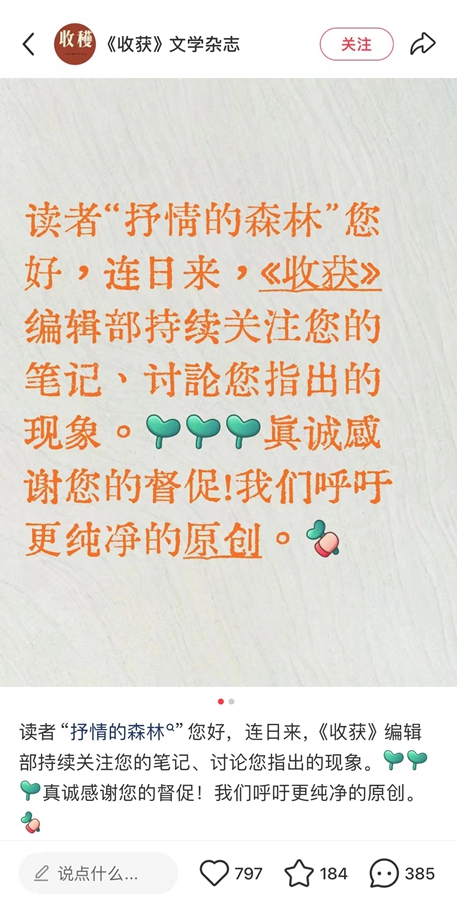
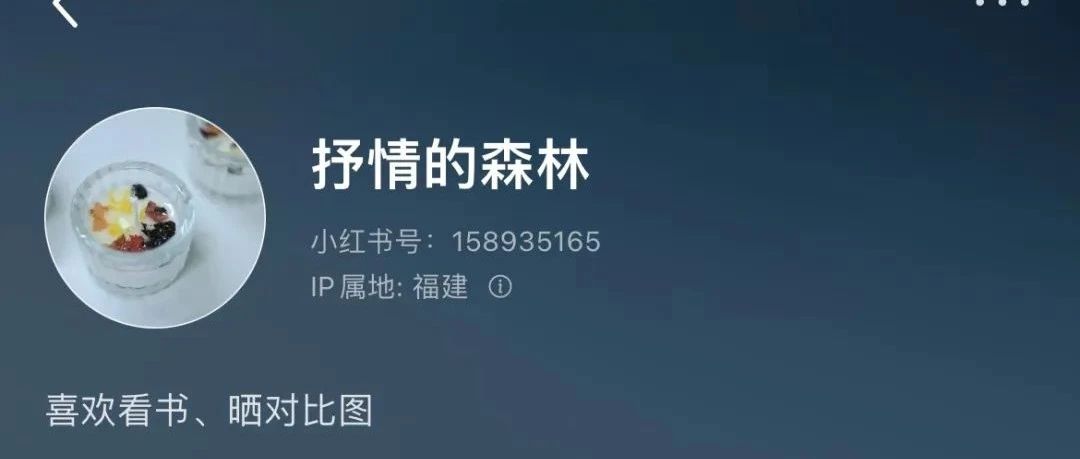
Core Viewpoint - The article discusses the ongoing plagiarism controversy in the Chinese literary world, sparked by a "plagiarism blogger" who has exposed various authors for copying texts, leading to a significant response from literary magazines and a call for stricter originality checks [2][5][18]. Group 1: Response from Literary Magazines - Newly published literary magazines, such as the latest issue of "Flower City," have announced the implementation of plagiarism detection software to ensure content integrity [3]. - "Harvest" magazine expressed gratitude to the blogger for highlighting plagiarism issues and emphasized the need for a purer original literary environment [5]. - Other magazines, including "Tianya" and "People's Literature," have also committed to increasing their efforts in manuscript originality checks, recognizing that originality is fundamental to literary vitality [5][20]. Group 2: Authors Involved and Their Reactions - The controversy involves both emerging and bestselling authors, with varied responses to the allegations of plagiarism [10]. - Author Jiang Fangzhou acknowledged the similarities in her early works and expressed understanding towards the blogger's criticism [11]. - Author Sun Ping thanked the blogger for pointing out her past mistakes, admitting that her early writing was heavily influenced by Flaubert [11]. - In contrast, author Ding Yan questioned the validity of sentence similarity checks, arguing that not all similarities constitute plagiarism [11]. Group 3: Historical Context of Plagiarism in Literature - The article references past high-profile plagiarism cases in Chinese literature, such as the 2006 case involving Guo Jingming, which resulted in a court ruling against him for copyright infringement [14]. - It highlights the ongoing issue of plagiarism in online literature, where accountability is often lacking, citing the 2016 drama "Splendid Nanyang" as an example of widespread plagiarism [15]. Group 4: The Role of Technology and Social Media - The emergence of AI tools has made it easier to detect plagiarism, allowing for more thorough checks of literary works [17]. - Social media platforms have enabled bloggers to gain attention by showcasing comparisons of plagiarized texts, further fueling the discussion around plagiarism [17]. Group 5: The Importance of Originality - The article emphasizes the necessity of respecting original literature and the detrimental effects of plagiarism on the literary community [18]. - It argues that strict measures against plagiarism are essential to uphold the integrity of literary creation and to honor genuine authors [20].
文坛抄袭风波发酵:读书博主打假多名作家,大刊开始查重
Di Yi Cai Jing· 2025-07-08 14:05
Core Viewpoint - A plagiarism controversy in the literary world, initiated by a "plagiarism blogger," is intensifying, prompting major literary magazines in China to implement stricter plagiarism checks and software to ensure content originality [1][4][10]. Group 1: Response from Literary Magazines - The newly released issue of "Hua Cheng" magazine announced the use of plagiarism detection software starting from its 2025 issue [1]. - "Shouhuo" magazine expressed gratitude to the blogger for highlighting plagiarism issues and called for purer originality [3]. - "Tianya" magazine stated that any authors found guilty of plagiarism would be publicly condemned and barred from publishing in the magazine [3]. - "People's Literature" magazine emphasized the importance of originality and pledged to increase the rigor of manuscript checks [3]. Group 2: Impact on Authors - The plagiarism scandal has led to significant discussions about the definitions of plagiarism versus borrowing in literature, with many accused authors choosing to remain silent [4]. - Notable authors, including Jiang Fangzhou and Sun Ping, have acknowledged their past mistakes regarding unintentional plagiarism and expressed a willingness to learn from the criticism [7]. - Some authors, like Ding Yan, have questioned the validity of sentence-level plagiarism checks, arguing that similarities in phrasing do not necessarily equate to plagiarism [8]. Group 3: Historical Context and Ongoing Issues - Plagiarism has been a longstanding issue in the literary field, with notable cases dating back to 2006 involving high-profile authors [10][11]. - The rise of AI tools has made it easier to detect plagiarism, leading to increased scrutiny of literary works [11]. - The current situation reflects a broader cultural shift towards valuing originality and the integrity of literary creation [13].