创意写作

Search documents
马斯克抢先谷歌一步放大招,Grok 4.1登顶LMArena,创意写作直逼GPT-5.1
AI前线· 2025-11-18 05:34
Core Insights - The article discusses the launch of xAI's latest model, Grok 4.1, which significantly improves response speed and reduces hallucination rates, offering more accurate and human-like answers [2][10][28] Model Overview - Grok 4.1 and Grok 4.1 Thinking are the two forms released, with the latter being an enhanced reasoning variant based on the same underlying model [2][10] - Grok 4.1 is available for free on various platforms, including a mobile app for both iOS and Android [2] Performance Metrics - Grok 4.1 Thinking leads the LMArena leaderboard with an Elo score of 1483, surpassing Gemini 2.5 Pro by 31 points [4][11] - Even without the reasoning mode, Grok 4.1 maintains a strong second place with an Elo score of 1465, indicating stable underlying capabilities [5][11] Training and Improvements - The model's training involved a large-scale reinforcement learning system, enhancing its output stability, factual accuracy, and reducing hallucination rates from 12.09% to 4.22% [12][13] - Grok 4.1's FActScore improved from 9.89 to 2.97, showcasing its enhanced ability to provide factually accurate responses [15] Emotional Intelligence and Creative Writing - Grok 4.1 achieved a high score of 1586 Elo in the EQ-Bench test, indicating significant improvements in emotional understanding compared to its predecessor [16][18] - In Creative Writing v3, Grok 4.1 scored 1722 Elo, reflecting a substantial increase in narrative quality and creativity [20][23] User Experience and Interaction - The model offers a more stable personality and better understanding of user intent, resulting in a more natural interaction style [26] - During a silent release phase, Grok 4.1 was preferred by users 64.78% of the time in blind comparisons, indicating strong user approval [26] Conclusion - Grok 4.1 represents a comprehensive upgrade across various dimensions, including performance, factual reliability, emotional intelligence, and user interaction, positioning xAI competitively in the large model landscape [28]

文坛抄袭风波发酵:读书博主打假多名作家,国内文学大刊开始查重
第一财经· 2025-07-08 15:48
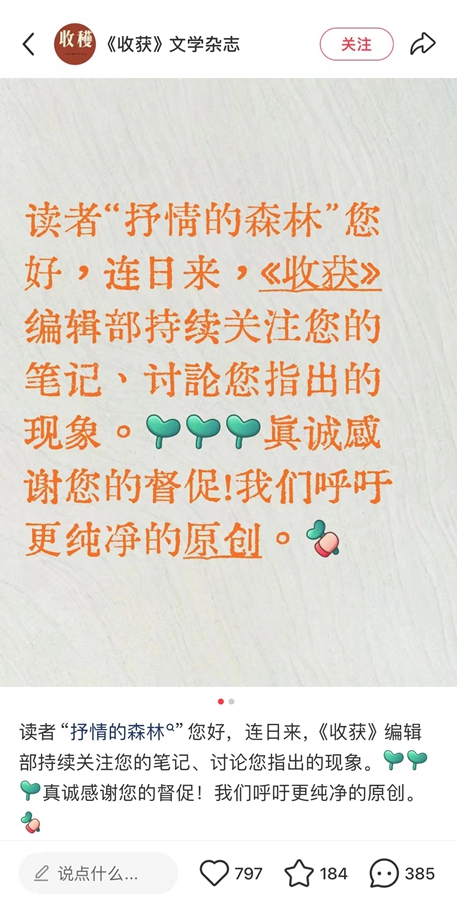
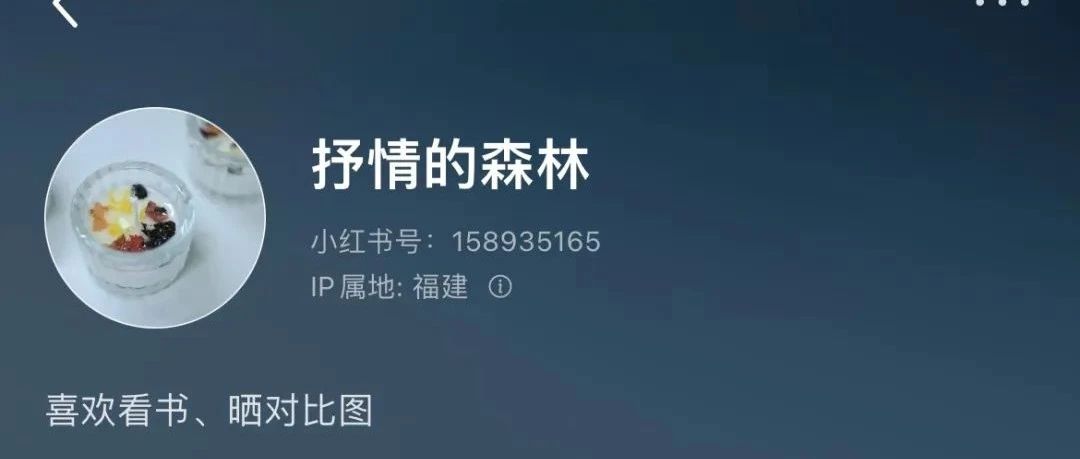
Core Viewpoint - The article discusses the ongoing plagiarism controversy in the Chinese literary world, sparked by a "plagiarism blogger" who has exposed various authors for copying texts, leading to a significant response from literary magazines and a call for stricter originality checks [2][5][18]. Group 1: Response from Literary Magazines - Newly published literary magazines, such as the latest issue of "Flower City," have announced the implementation of plagiarism detection software to ensure content integrity [3]. - "Harvest" magazine expressed gratitude to the blogger for highlighting plagiarism issues and emphasized the need for a purer original literary environment [5]. - Other magazines, including "Tianya" and "People's Literature," have also committed to increasing their efforts in manuscript originality checks, recognizing that originality is fundamental to literary vitality [5][20]. Group 2: Authors Involved and Their Reactions - The controversy involves both emerging and bestselling authors, with varied responses to the allegations of plagiarism [10]. - Author Jiang Fangzhou acknowledged the similarities in her early works and expressed understanding towards the blogger's criticism [11]. - Author Sun Ping thanked the blogger for pointing out her past mistakes, admitting that her early writing was heavily influenced by Flaubert [11]. - In contrast, author Ding Yan questioned the validity of sentence similarity checks, arguing that not all similarities constitute plagiarism [11]. Group 3: Historical Context of Plagiarism in Literature - The article references past high-profile plagiarism cases in Chinese literature, such as the 2006 case involving Guo Jingming, which resulted in a court ruling against him for copyright infringement [14]. - It highlights the ongoing issue of plagiarism in online literature, where accountability is often lacking, citing the 2016 drama "Splendid Nanyang" as an example of widespread plagiarism [15]. Group 4: The Role of Technology and Social Media - The emergence of AI tools has made it easier to detect plagiarism, allowing for more thorough checks of literary works [17]. - Social media platforms have enabled bloggers to gain attention by showcasing comparisons of plagiarized texts, further fueling the discussion around plagiarism [17]. Group 5: The Importance of Originality - The article emphasizes the necessity of respecting original literature and the detrimental effects of plagiarism on the literary community [18]. - It argues that strict measures against plagiarism are essential to uphold the integrity of literary creation and to honor genuine authors [20].
文坛抄袭风波发酵:读书博主打假多名作家,大刊开始查重
Di Yi Cai Jing· 2025-07-08 14:05
Core Viewpoint - A plagiarism controversy in the literary world, initiated by a "plagiarism blogger," is intensifying, prompting major literary magazines in China to implement stricter plagiarism checks and software to ensure content originality [1][4][10]. Group 1: Response from Literary Magazines - The newly released issue of "Hua Cheng" magazine announced the use of plagiarism detection software starting from its 2025 issue [1]. - "Shouhuo" magazine expressed gratitude to the blogger for highlighting plagiarism issues and called for purer originality [3]. - "Tianya" magazine stated that any authors found guilty of plagiarism would be publicly condemned and barred from publishing in the magazine [3]. - "People's Literature" magazine emphasized the importance of originality and pledged to increase the rigor of manuscript checks [3]. Group 2: Impact on Authors - The plagiarism scandal has led to significant discussions about the definitions of plagiarism versus borrowing in literature, with many accused authors choosing to remain silent [4]. - Notable authors, including Jiang Fangzhou and Sun Ping, have acknowledged their past mistakes regarding unintentional plagiarism and expressed a willingness to learn from the criticism [7]. - Some authors, like Ding Yan, have questioned the validity of sentence-level plagiarism checks, arguing that similarities in phrasing do not necessarily equate to plagiarism [8]. Group 3: Historical Context and Ongoing Issues - Plagiarism has been a longstanding issue in the literary field, with notable cases dating back to 2006 involving high-profile authors [10][11]. - The rise of AI tools has made it easier to detect plagiarism, leading to increased scrutiny of literary works [11]. - The current situation reflects a broader cultural shift towards valuing originality and the integrity of literary creation [13].