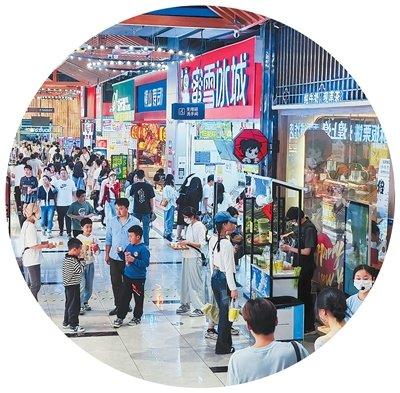
新型商业生态

Search documents
新华百货CC mall盛大启幕
Huan Qiu Wang· 2026-02-12 06:48
Core Insights - The opening of Xinhua Department Store CC Mall marks a significant transformation and upgrade strategy for the company, establishing a new commercial ecosystem focused on "natural healing + diverse experiences" [1][5] - The mall, located in the core area of Beijing's second ring road, spans 64,000 square meters and aims to provide convenience for local residents while stimulating the regional economy [1][5] - Xinhua Department Store CC Mall breaks away from traditional shopping models by positioning itself as a city service center and family life hub, enhancing customer experiences through innovative space design and thematic marketing [1][3] Commercial Strategy - The mall features over ten thousand quality products to meet the convenience needs of local consumers, while promoting a "first-store economy" and differentiated dining options to attract visitors and drive economic growth for tenants [3] - On the opening day, the mall offered various promotions, including significant discounts, subsidies, and giveaways, to engage customers and enhance foot traffic [3] - The mall's design incorporates natural elements and leisure spaces, creating a unique shopping experience that combines entertainment with purchasing, moving away from a purely transactional model [1][3] Future Outlook - Xinhua Department Store CC Mall aims to continue its commitment to enhancing the quality of life for visitors, positioning itself as a "proposer of beautiful living" and optimizing its business layout for better service [5] - The mall aspires to become a cultural landmark that aligns with urban development, contributing to the high-quality economic growth of Beijing's market [5]



小县城如何撬动大市场(新视窗·新供给引领新消费新需求)
Ren Min Wang· 2025-08-20 22:49
Core Viewpoint - The article highlights the significant growth and transformation of the county-level consumption market in China, driven by innovative commercial models, improved infrastructure, and supportive government policies, which are collectively enhancing consumer experiences and expanding market potential [20][21]. Group 1: County-Level Consumption Growth - In the first half of the year, China's rural retail sales reached 32,409 billion yuan, growing by 4.9%, with county and township markets accounting for 38.9% of total social retail sales [4][21]. - The "Special Action Plan to Boost Consumption" emphasizes supporting new consumption models and enhancing county-level commercial infrastructure [4][21]. - The county-level market is seen as a new growth point for consumption, with ongoing construction and renovation of commercial centers across various levels [8][21]. Group 2: Innovative Commercial Models - The "Star Joy" commercial complex in Guizhou has successfully integrated modern commercial operations with local characteristics, attracting significant foot traffic and enhancing consumer experiences [5][7]. - The introduction of new retail formats, such as instant retail and digital consumption, is reshaping consumer habits and preferences in rural areas [16][17]. - The establishment of smart logistics centers is improving the efficiency of supply chains and reducing costs for rural consumers, facilitating better access to goods [10][12]. Group 3: Infrastructure Development - Various regions are implementing measures to optimize existing urban spaces and enhance county-level commercial networks, including the construction of comprehensive service centers [8][19]. - The integration of logistics and e-commerce services is addressing the "last mile" delivery challenges in rural areas, significantly improving service accessibility [11][23]. - The development of smart logistics systems is enabling faster and more reliable delivery services, enhancing the overall consumer experience in rural markets [11][12]. Group 4: Consumer Behavior and Trends - Rural residents' per capita consumption expenditure has increased from 8,383 yuan in 2014 to 19,280 yuan in 2024, reflecting a compound annual growth rate of 8.7% [21]. - The shift in consumer preferences from basic needs to quality and brand-oriented products is evident, with a growing demand for diverse and high-quality offerings [21][22]. - The rise of new tourism destinations and cultural consumption in counties is expanding the market and attracting more visitors [18][19].