
新时代人才强国战略

Search documents
我国创新人才发展指数稳步增长
Xin Lang Cai Jing· 2025-12-28 07:00
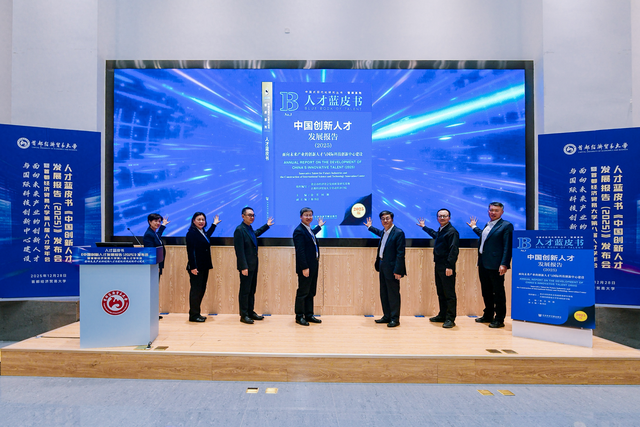
报告建立了涉及高校在校研究生数、国家大学科技园在孵企业数、发明专利授权量等指标的指数评估体 系,围绕投入、转化、效能为我国创新人才发展"画像"。结果显示,2016年至今,指数呈"早期增长较 快-中期速度减缓-后期速度再次加快"的增长态势。这说明我国实施新时代人才强国战略取得了一定成 效,投入和效能指数上升迅猛。其中,高校科技论文发表数稳定增长,国家行业标准形成数、专利所有 权转让及许可收入等呈快速增长趋势。这体现出我国在科技效能上更注重自主创新,实现了科技创新成 果质量提升,稳步推进科技成果转化。 转自:北京日报客户端 我国创新人才发展指数呈稳步增长趋势,近3年年均增长率为15.03%。12月28日,首都经济贸易大学和 社会科学文献出版社联合发布《人才蓝皮书:中国创新人才发展报告(2025)》,分析创新人才和群体 的规模、结构和发展趋势。 报告还预测了我国创新人才发展势头良好,提出创新人才区域和领域发展不均衡的问题,建议强化未来 产业重点领域创新人才的吸纳和培养,大力促进产才融合,以加快新质生产力发展。 来源:北京日报客户端 今年,报告特别关注面向未来产业的创新人才和群体,重点围绕两院院士、国家最高科学技术奖 ...

深入实施新时代人才强国战略 构建具有国际竞争力的博士后制度体系
Ren Min Ri Bao· 2025-11-26 22:21
Core Points - The meeting on postdoctoral work highlighted significant achievements in China's postdoctoral system over the past 40 years, emphasizing the cultivation of a large number of young talents and high-level research outcomes [1] - The primary task of postdoctoral work in the new era is to serve national construction and the rejuvenation of the nation, aligning with the strategic goals of high-quality development and talent cultivation [1] Group 1 - The postdoctoral system has made remarkable progress since the 18th National Congress of the Communist Party, contributing to talent training, technological innovation, and socio-economic development [1] - There is a strong emphasis on implementing the talent strategy with a global perspective, enhancing the quality of postdoctoral recruitment and training, and increasing support for innovation and entrepreneurship among postdoctoral researchers [1][1] - The establishment of a competitive postdoctoral system is aimed at accelerating high-level technological self-reliance and leading new productive forces [1] Group 2 - Postdoctoral researchers are encouraged to embrace a sense of responsibility towards innovation and adhere to academic integrity, aiming to produce research outcomes that provide long-term value and benefit the quality of life [1]
谌贻琴在博士后工作座谈会上强调 深入实施新时代人才强国战略 构建具有国际竞争力的博士后制度体系
Xin Hua She· 2025-11-26 12:02
Core Points - The postdoctoral system in China has achieved significant results over the past 40 years, cultivating a large number of young talents and high-level research outcomes [1] - Since the 18th National Congress of the Communist Party, postdoctoral work has experienced rapid development, contributing importantly to talent cultivation, technological innovation, and socio-economic development [1] Group 1 - The primary task of postdoctoral work in the new era is to serve the construction of a strong nation and the great rejuvenation of the nation [1] - There is a need to implement the important thoughts of General Secretary Xi Jinping on talent work, adhering to the principle of party management of talents [1] - The focus is on high-quality development, enhancing the quality of postdoctoral recruitment and training, and increasing support for postdoctoral innovation and entrepreneurship [1] Group 2 - The goal is to build a postdoctoral system with international competitiveness to support high-level technological self-reliance and lead the development of new productive forces [1] - Postdoctoral researchers are encouraged to have a sense of patriotism, take on the responsibility of innovation, and adhere to academic integrity [1] - The aim is to create more research outcomes that have long-term value, serve high-quality development, and benefit people's livelihoods [1]
博士后工作座谈会在京举行 谌贻琴出席会议并讲话
Xin Hua Wang· 2025-11-26 12:01
Core Viewpoint - The meeting emphasized the importance of enhancing the postdoctoral system in China to support national development and innovation, aligning with the talent strategy for a strong nation [1] Group 1: Achievements and Contributions - The postdoctoral system in China has made significant progress over the past 40 years, cultivating a large number of young talents and achieving high-level research outcomes [1] - Since the 18th National Congress of the Communist Party, postdoctoral work has experienced rapid development, contributing importantly to talent cultivation, technological innovation, and socio-economic development [1] Group 2: Future Directions - The primary task of postdoctoral work in the new era is to serve the construction of a strong nation and the great rejuvenation of the nation [1] - There is a need to implement the talent strategy for a strong nation, focusing on high-quality development, enhancing the quality of postdoctoral recruitment and training, and increasing support for postdoctoral innovation and entrepreneurship [1] - The goal is to build a postdoctoral system with international competitiveness to provide strong talent support for advancing high-level technological self-reliance and leading new productive forces [1] Group 3: Encouragement for Postdoctoral Researchers - Postdoctoral researchers are encouraged to have a sense of patriotism, take on innovation responsibilities, and adhere to academic integrity, aiming to create research outcomes that have long-term value and benefit the quality of life [1]
外国人入境出境管理条例修改 四部门负责人解读“K字签证”
Yang Shi Xin Wen· 2025-08-14 12:46
Core Points - The State Council of China has announced the implementation of a new visa category, the K visa, aimed at facilitating the entry of foreign young scientific and technological talents into China, effective from October 1, 2025 [1][2][3] Group 1: Background and Purpose - The introduction of the K visa aligns with the goals outlined in the 20th National Congress report, emphasizing the importance of technology, talent, and innovation for China's development [2] - The decision aims to attract global talent to participate in China's development while providing opportunities for foreign talents [2] Group 2: Key Features of the K Visa - The K visa is a new addition to the existing categories of ordinary visas, specifically designed for foreign young scientific and technological talents [3] - Applicants for the K visa must meet specific criteria set by relevant Chinese authorities and provide necessary documentation [4] - Compared to existing visa types, the K visa offers more advantages in terms of entry frequency, validity period, and duration of stay, allowing holders to engage in various activities such as education, technology, culture, entrepreneurship, and business [5] Group 3: Implementation Measures - The Ministry of Foreign Affairs will work on developing supporting measures to clarify the specific conditions and requirements for K visa applications, as well as improving the application process [6] - Various channels will be utilized to promote and explain the K visa policy, ensuring that potential applicants are well-informed about the application requirements [6] - Coordination among relevant departments and embassies will be essential for the issuance and management of the K visa, ensuring a smooth process for applicants and holders [6]