新注册经营主体

Search documents
中国经济观测点丨2025年12月新注册经营主体数小幅增加 融资规模进一步缩小
Xin Hua Cai Jing· 2026-01-15 06:55
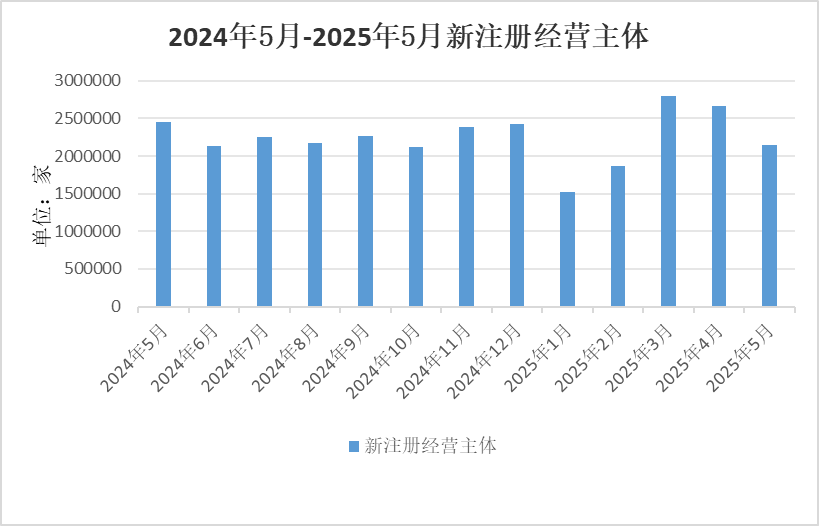
Group 1 - In December 2025, a total of 2.2429 million new business entities were registered nationwide, an increase of 113,900 from the previous month, but a year-on-year decrease of 7.07% [1] - Guangdong province continued to lead in new business registrations with 262,227 entities, representing a year-on-year growth of 15.59% and accounting for 11.69% of the national total [3] - The top ten provinces for new business registrations in December accounted for 61.43% of the total nationwide [3] Group 2 - Hainan province experienced the highest growth rate in new business registrations at 45.58%, with several provinces showing positive growth compared to the previous month [5] - The retail industry had the highest number of new registrations in December, totaling 222,100, with a year-on-year growth of 9.4%, while the software and information technology services sector saw the fastest growth at 34.73% [7] - In December, there were 808 financing events in China, with a total financing scale of 53.421 billion yuan, a decrease of 12.25 billion yuan from the previous month [9] Group 3 - The information technology sector led in financing events with 367 occurrences, followed by the manufacturing sector with 221 events [9] - Jiangsu province had the highest number of financing events at 132, while Guangdong province ranked second with 122 events [11]

中国经济观测点丨11月新注册经营主体数环比回升明显 融资规模缩小
Xin Hua Cai Jing· 2025-12-16 05:18
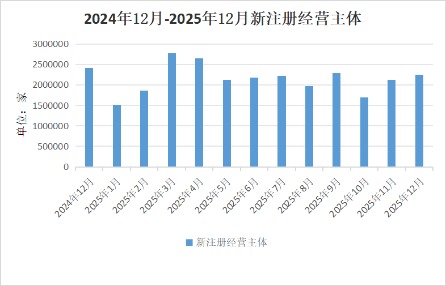
Group 1: National Overview - In November 2025, a total of 2.0875 million new business entities were registered nationwide, showing a month-on-month increase of 22.72% but a year-on-year decrease of 12.38% [1] - The top ten provinces accounted for 62.7% of the new registrations, with Guangdong leading at 261,919 new entities, representing 12.55% of the national total [3][4] Group 2: Provincial Insights - Guangdong province registered 261,919 new business entities in November, an increase of 52,500 from the previous month, maintaining its position as the top province for new registrations [3] - Hubei and Zhejiang followed with 157,111 and 149,064 new registrations, respectively, indicating strong activity in these regions [4] Group 3: Growth Trends - Nine provinces and cities experienced positive growth in new registrations in November, with Beijing leading at a growth rate of 28.3% [6] - The top ten provinces by growth rate included Beijing, Hainan, Guangdong, and Zhejiang, reflecting a broader recovery in business registrations [6] Group 4: Industry Analysis - The retail sector saw the highest number of new registrations in November, totaling 233,100, with a year-on-year growth of 29.88% [8] - The technology promotion and application services industry had the fastest growth rate, with 119,600 new registrations, marking a year-on-year increase of 53.29% [8] Group 5: Financing Activity - In November 2025, there were 331 financing events, a decrease of 112 from the previous month, with a total financing scale of 65.671 billion yuan, down by 24.203 billion yuan [10] - The information technology sector led in financing events with 133 occurrences, followed by the manufacturing sector with 71 events [10][13]
中国经济观测点丨10月新注册经营主体数下降明显 融资规模加大
Xin Hua Cai Jing· 2025-11-11 07:11
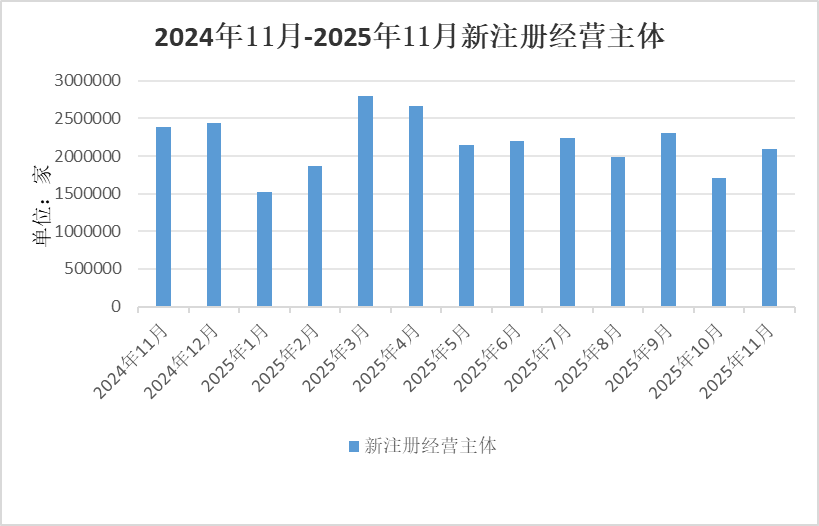
Core Insights - In October 2025, the total number of newly registered business entities in China was 1.6092 million, showing a significant decline of 23.97% year-on-year and 29.92% month-on-month [1][3]. Provincial Analysis - Guangdong province led the country with 209,405 new registered entities in October, accounting for 13.01% of the national total. Henan followed with 109,314 new registrations [3]. - The top ten provinces contributed to 60.5% of the total new registrations, indicating a concentration of business activity in these regions [4]. Growth Rate Analysis - Only three provinces showed positive growth rates in new registrations: Hainan (78.54%), Beijing (9.09%), and Liaoning (1.04%) [6]. - The top ten provinces by growth rate included Hainan, Beijing, Liaoning, Guangdong, Inner Mongolia, Qinghai, Shanghai, Chongqing, Guizhou, and Jiangsu [7]. Industry Insights - The retail sector had the highest number of new registrations in October, totaling 172,300, with a year-on-year growth of 9.54%. The fastest-growing sector was technology promotion and application services, with 87,500 new registrations and a growth rate of 31.71% [9]. - The top ten industries by new registrations included retail, wholesale, technology promotion and application services, business services, software and information technology services, construction and decoration, cultural arts, professional technical services, agriculture, and real estate [9]. Financing Activity - In October 2025, there were 443 financing events in China, with a total financing amount of 89.874 billion yuan, an increase of 24.704 billion yuan from the previous month [12]. - The information technology sector led in financing events with 142 occurrences, followed by manufacturing with 103 events. Other notable sectors included healthcare, business services, electronic information, materials, automotive transportation, energy minerals, consumer life, and agriculture [12]. - Guangdong province had the highest number of financing events at 79, followed by Shanghai with 69 [14].
中国经济观测点丨8月新注册经营主体数量下降 资本市场融资减少
Xin Hua Cai Jing· 2025-09-15 15:26
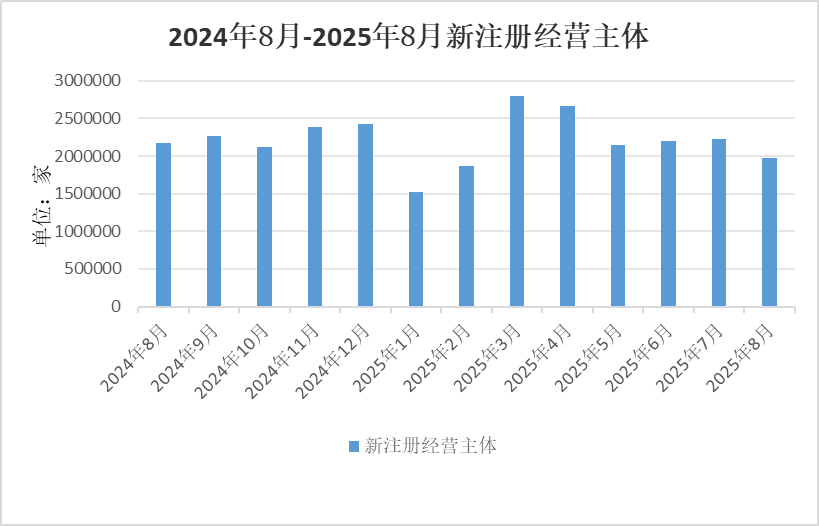
Group 1 - The core viewpoint of the article highlights a decline in new business registrations across China in August 2025, with a total of 1.9698 million new entities registered, marking a year-on-year decrease of 9.36% and a month-on-month decrease of 11.7% [2][11]. - Guangdong province leads in new business registrations, with 281,125 new entities, significantly outpacing the second-ranked Henan province, which registered 138,363 new entities [4][5]. - The top ten provinces for new business registrations account for over 60% of the total registrations, indicating a concentration of entrepreneurial activity in these regions [5]. Group 2 - Liaoning province shows the highest year-on-year growth rate in new business registrations at 69.3%, followed by Beijing at 21.84% [7]. - The retail sector continues to dominate new business registrations, with 197,000 new entities, far exceeding the wholesale sector, which registered 113,400 [9]. - The capital market experienced a significant reduction in financing activities, with only 313 investment events recorded in August, down from 631 in July, and a total financing scale of 57.543 billion yuan, a decrease of 52.41% [11].
中国经济观测点丨5月新注册经营主体数量大幅减少 资本市场融资需求回落
Xin Hua Cai Jing· 2025-06-13 07:56
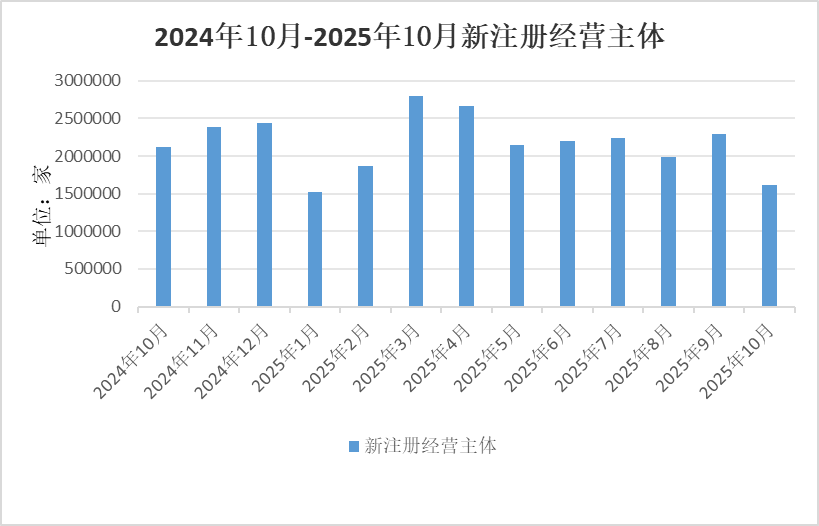
Group 1 - In May, Guangdong Province had the highest number of newly registered business entities, totaling 270,167, a decrease of 52,000 from the previous month [2] - The top ten provinces for new business registrations included Hubei, Henan, Zhejiang, Shandong, Jiangsu, Hunan, Hebei, Fujian, and Sichuan [2][3] - Overall, the top ten provinces accounted for over 60% of the national new business registrations [3] Group 2 - Hubei Province recorded the fastest year-on-year growth in new business registrations at 8.33%, although this was a significant drop from the previous month's 26.10% [5] - Only six provinces experienced positive year-on-year growth in May, with the top ten growth rankings including Hubei, Hunan, Liaoning, Beijing, Shaanxi, Fujian, Shandong, Guangdong, Guangxi, and Zhejiang [5] Group 3 - The retail sector had the highest number of new business registrations in May, with 191,800 new entities, representing a year-on-year growth of 17.19% [7] - Other sectors with significant new registrations included wholesale, business services, technology promotion and application services, software and information technology services, construction and decoration, cultural arts, agriculture, professional technical services, and real estate [7] - The technology promotion and application services sector saw the fastest growth at 25.83% year-on-year [7] Group 4 - In May, the capital market financing demand decreased, with a total of 260 financing events and a total financing scale of 20.578 billion [9] - The manufacturing sector had the highest financing scale at 11.752 billion, accounting for 57.11% of the total [9] - The electricity, gas, and water production and supply sector received 3.217 billion, making up 15.63% of the total financing [9] Group 5 - In terms of regional financing, economically developed southeastern coastal provinces led in financing scale [10] - Jiangsu had 44 financing events with a total scale of 3.693 billion, while Shanghai achieved a financing scale of 3.042 billion [11] - The financing rounds showed that public offerings accounted for 24.22% of the total financing, with D-round financing at 21.59% and A-round financing at 14.26% [11]