新能源+储能+产业场景化

Search documents
邱慈观专栏 | “新能源+储能+产业场景化”趋势下,金融如何赋能?
Xin Lang Cai Jing· 2026-01-28 03:06
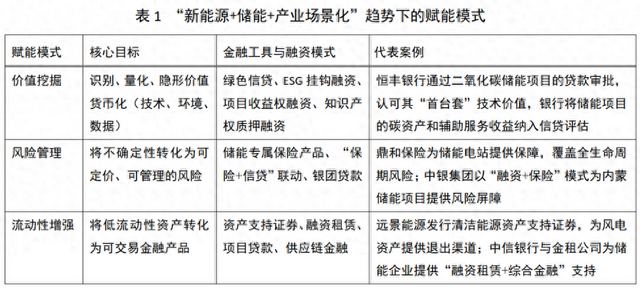
Core Viewpoint - The energy revolution in China has transitioned from a land-grabbing development model to a systematic reform phase, emphasizing the importance of scenario integration in the renewable energy sector [1] Group 1: Industry Development - The renewable energy industry is currently tasked with ensuring supply, stabilizing the foundation, transitioning, and tackling challenges, with scenario integration being a key focus [1] - The integration of renewable energy, storage, and industrial scenarios is essential for maximizing value through intelligent interaction among sources, networks, loads, and storage [1] - The shift from policy-driven to market-driven dynamics necessitates the use of diversified and creative financial tools to adapt to changing scenarios [1] Group 2: Financing Stages - The financing development of the renewable energy industry can be divided into two stages: 1.0, which relies on subsidy-driven debt financing, and 2.0, which utilizes diversified financial tools for innovative growth [2] - In the 1.0 stage, reliance on subsidies helped lower funding barriers, but the withdrawal of subsidies has led to increased financing costs and project terminations, as seen in the case of Ørsted's offshore wind projects in the U.S. [2] - The 2.0 stage requires financial institutions to become proactive value enablers, utilizing innovative tools like equity-debt linkage to support the scaling of renewable energy projects [2] Group 3: Value Extraction - Project value now extends beyond tangible assets and electricity revenue to include technological advancement, environmental services, and data management [5][6] - Financial institutions must recognize and price the potential of emerging technologies, as demonstrated by the credit approval for a carbon molten salt storage project [5] - The value of environmental services and data management must be identified and leveraged to enhance financing advantages, with examples of successful integration of these values into project assessments [6] Group 4: Risk Management - Financial institutions should address risks related to technology, revenue volatility, and operational safety by transforming uncertainties into manageable financial products [7] - Insurance models can mitigate technology-related risks, with examples of comprehensive insurance products tailored for the renewable energy sector [7][8] - Collaborative risk assessment approaches, such as the "iron triangle" service team model, can enhance project viability by considering technology, market, and industry chain value [8] Group 5: Liquidity Enhancement - The large investment scale and long payback periods in renewable energy necessitate financial institutions to enhance liquidity and facilitate a cycle of investment and reinvestment [10] - Asset securitization is a common method to convert stable future revenue rights into tradable financial products, providing liquidity for operational renewable energy projects [10] - Financing leasing models can offer flexible funding solutions for projects in the construction phase, alleviating short-term financial pressures [10] Group 6: Ecosystem Approach - Financial institutions should shift their evaluation focus from individual enterprises to the entire industrial chain, assessing the stability of trade relationships and receivables [11] - Financing models centered around leading enterprises can extend creditworthiness throughout the supply chain, ensuring financial support for smaller firms [11] - Examples of successful financing collaborations highlight the importance of integrating core enterprises' stability and credit into broader financing strategies [11] Conclusion - In the context of "renewable energy + storage + industrial scenario integration," financial institutions must evolve from mere fund providers to ecosystem builders, leveraging technology, market insights, and data to better serve the real economy [12] - By employing value extraction, risk management, and liquidity enhancement strategies, the financial system can activate the value of multi-dimensional assets and address industry risks [12] - The future of renewable energy finance will depend on the ability to optimize resource allocation and risk-sharing among stakeholders, positioning financial institutions as key players in the energy transition [12]