新能源汽车产业摆脱政策依赖

Search documents
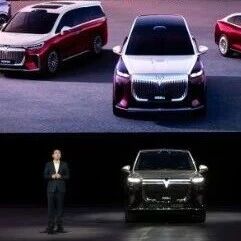
岚图,“争峰”!
中国基金报· 2025-11-19 03:38
Core Viewpoint - The article discusses the competitive landscape of the automotive industry, particularly focusing on the transition from fuel vehicles to electric vehicles (EVs) as the purchase tax subsidies for EVs will be halved starting January 1, 2026, prompting companies to prepare for intensified competition [2][4][8]. Group 1: Company Developments - Lantu Motors, a high-end smart EV brand under Dongfeng Motor Corporation, has been actively pursuing growth, including filing for a listing on the Hong Kong Stock Exchange on October 2 [2]. - The company launched its flagship SUV, Lantu Taishan, on November 18, aiming to elevate its brand positioning [2][11]. - Lantu Motors is noted for being the fastest EV company to achieve quarterly profitability and positive operating cash flow [6]. Group 2: Market Dynamics - The transition to a new tax regime is expected to impact consumer purchasing decisions and costs, leading to increased competition between fuel and electric vehicles [4][8]. - The Chinese automotive industry is predicted to shift from reliance on policy incentives to focusing on core technologies for sustainable growth [9]. - As of October 2025, the production and sales of EVs in China reached 1.772 million and 1.715 million units, respectively, marking year-on-year growth of 21.1% and 20% [4]. Group 3: Product and Technology - Lantu Taishan is highlighted as the world's first SUV equipped with the 800V Lanhai Intelligent Super Hybrid System and features a 65-degree ternary lithium battery [9]. - The vehicle also includes advanced technology such as Huawei's Qian Kun Intelligent Driving ADS 4 and Harmony OS cockpit, enhancing its smart capabilities [9]. - Lantu Motors aims to establish a comprehensive product lineup covering sedans, SUVs, and MPVs, with the Lantu Zhuiguang L luxury sedan set to launch in December [11].