
新能源汽车配件

Search documents
十年深耕跨境路 潍坊这家企业捧回eBay年度巅峰成就奖
Sou Hu Cai Jing· 2026-02-14 15:41
Group 1 - The article highlights the proactive approach of Shandong enterprises in responding to the national "going global" strategy, emphasizing their efforts to increase foreign investment and accelerate internationalization [2] - The focus is on the evolution of the cross-border e-commerce industry in China, showcasing how companies have transitioned from selling generic products to building their own brands and diversifying their platforms [3] - Shandong Tuiyi Information Technology is presented as a successful example of this evolution, having expanded from eBay to multiple platforms like Amazon, AliExpress, Walmart, and independent sites [3] Group 2 - In 2015, Tuiyi identified a strong demand for high-quality automotive parts in mature markets like North America and Europe, leading to a strategic shift from the domestic market [3] - A significant turning point occurred in 2018 when Tuiyi faced challenges related to product compatibility and supply chain management, prompting the establishment of a comprehensive vehicle model database [4] - By 2020, Tuiyi successfully executed its first cross-border e-commerce export business, significantly improving logistics efficiency and expanding its market presence across over 150 countries [4] Group 3 - Tuiyi's product line now includes a wide range of automotive and garden machinery parts, and the company has established a strong foothold in key markets such as North America, Europe, and Australia [4] - The company aims to explore emerging markets in Latin America and the Middle East while also venturing into the electric vehicle parts sector and AI digital research [4] - By 2025, Tuiyi expects to have over 600 employees and continue its trend of increasing annual sales, solidifying its status as a benchmark enterprise in the regional cross-border e-commerce sector [4]


中国汽车配件出口水涨船高
Zhong Guo Qi Che Bao Wang· 2026-02-09 07:59
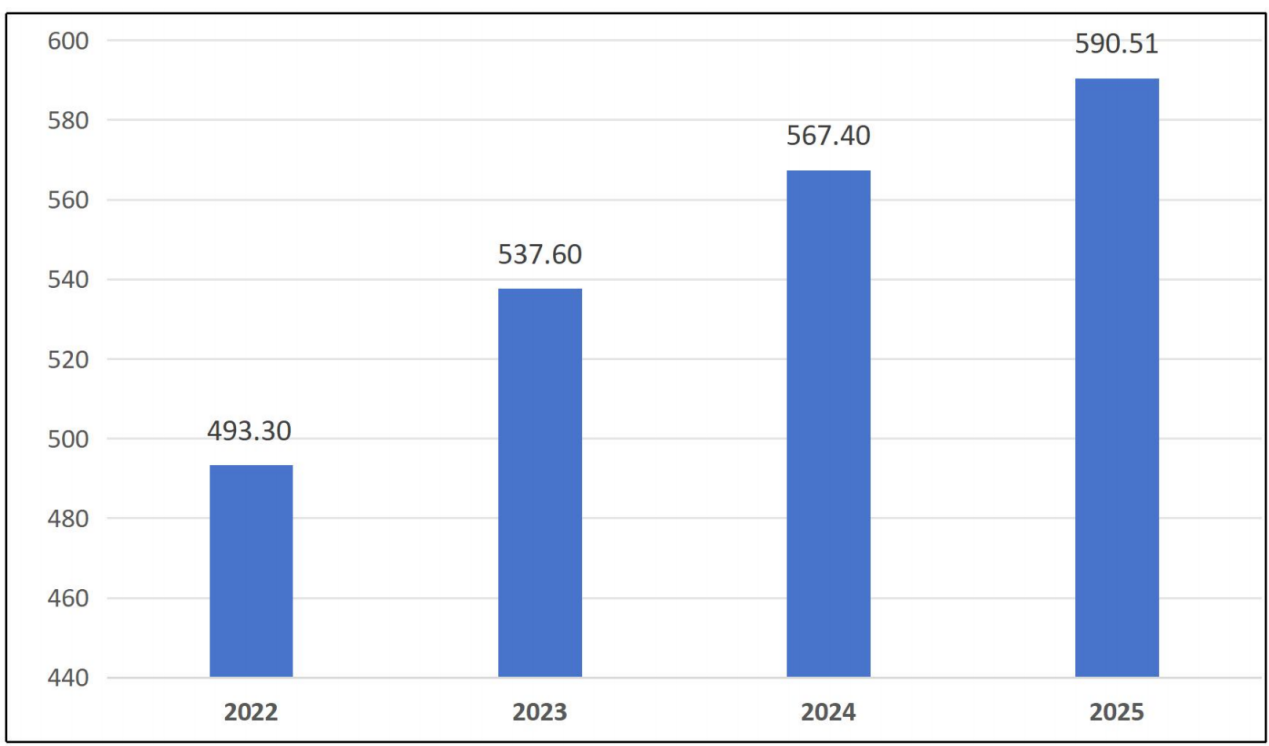
Core Insights - China has become the world's largest automobile exporter for three consecutive years, with a significant increase in auto parts exports driven by complete vehicle exports [1][2] - By 2025, China's total auto parts export is projected to reach $59.051 billion, marking a year-on-year growth of 4.07% [2] - The export structure is characterized by a "three-horsepower" model, with auto parts, complete vehicles, and home appliances contributing equally to China's manufacturing exports [2] Export Growth and Market Dynamics - The total export value of auto parts is expected to rise from $49.33 billion in 2022 to $59.051 billion in 2025, with a notable increase in categories such as body parts, braking systems, and wheel systems [2] - Emerging markets like Russia, Mexico, Malaysia, and Southeast Asian countries are becoming key growth areas, with significant increases in exports to these regions [1][6][7][8] Competitive Advantages - China's auto parts industry benefits from scale effects in major industrial clusters like the Yangtze River Delta and Pearl River Delta, with a 40% reduction in mold development cycles compared to international peers [2] - The resilience of the supply chain has improved, with overseas warehouse networks covering 52 countries and a localization rate of over 90% for key components [2] Globalization and Strategic Investments - Leading companies are accelerating their global expansion by investing in factories in Mexico to leverage its position as a North American supply chain hub, thereby avoiding trade barriers [3] - By 2025, engine components are expected to account for 29% of China's auto parts exports to Mexico [3] Emerging Market Characteristics - Russia's auto parts imports involve around 1,000 buyers and 2,000 suppliers, with a transaction volume of approximately $600 million in 2025 [6] - Mexico's auto parts imports are projected to involve 2,000 buyers and 5,000 suppliers, with a transaction volume of about $10.93 billion [7] - Malaysia's auto parts imports are expected to involve 8,000 buyers and suppliers, with a transaction volume of around $3.91 billion [8] High-Value Product Trends - The report anticipates that global electric vehicle sales will exceed 25 million units by 2025, driving the market for core electric vehicle components to $180 billion [13] - The demand for maintenance parts in markets like Russia and Malaysia is projected to account for 40% of the total, providing significant growth opportunities for China's economical parts exports [13] E-commerce Growth - Cross-border e-commerce is emerging as a new growth point for auto parts exports, with online penetration in the European and American markets increasing from 6%-7% to over 10% post-pandemic [13][14] - The shift towards high-value electric vehicle components is becoming a priority for Chinese companies to capture market opportunities [14]
利安科技(300784) - 300784利安科技投资者关系管理信息20250516
2025-05-16 08:42
Group 1: Financial Performance - In 2024, Lian Technology's revenue is expected to grow by 9.01% to 512 million yuan, while net profit is projected to decline by 13.07% to 65.81 million yuan, primarily due to rising labor costs and underutilization of production capacity in Vietnam [1] Group 2: Research and Development - The collaboration with Zhejiang University has resulted in 10 software copyrights and 8 patents. The panoramic ring lens (PAL) imaging system is completed and entering small batch testing, while the food-grade polymer materials project has begun small batch production and market launch [1][2] Group 3: Market and Customer Strategy - The company's direct exports to the U.S. are relatively low, thus the impact of high tariff policies on performance is limited. The company will closely monitor external environmental changes and policy adjustments to ensure stable operations [3] - Logitech Group represents a significant portion of the company's major clients. To mitigate customer concentration risk, the company will enhance its technical communication and collaboration with Logitech, ensuring product quality and delivery stability [4] Group 4: Business Focus - The company aims to maintain steady growth in traditional injection molding while increasing investment in the electric vehicle parts sector [5]