摄像头

Search documents
中芯国际:产业链迭代带动增长,预测全年营业收入751.11~812.80亿元
Xin Lang Cai Jing· 2026-02-27 15:05
Core Viewpoint - SMIC is expected to report annual revenue between 751.11 billion to 812.80 billion yuan and a net profit between 50.53 billion to 74.49 billion yuan by February 27, 2026, with attention on whether future financial disclosures will exceed expectations [1] Business Performance - In Q4 2025, SMIC demonstrated a strong sales trend despite the seasonal downturn, achieving sales revenue of 2.489 billion USD, a 4.5% increase quarter-on-quarter [2] - The company's capacity utilization rate remains high at 95.7%, with 8-inch and 12-inch capacities nearing full load, benefiting from the restructuring effects of the industry's shift towards localization [2][3] - SMIC has a technological advantage in various segments including BCD, analog, storage, MCU, and mid-to-high-end display drivers, accelerating validation and capacity expansion [2][3] Capital Expenditure and Revenue Growth - The capital expenditure for 2025 is projected at 8.1 billion USD, exceeding expectations to meet customer demand and adapt to external environmental changes [2][3] - For 2026, SMIC anticipates revenue growth to surpass the industry average, with capital expenditure expected to remain roughly the same as in 2025 [2][3]

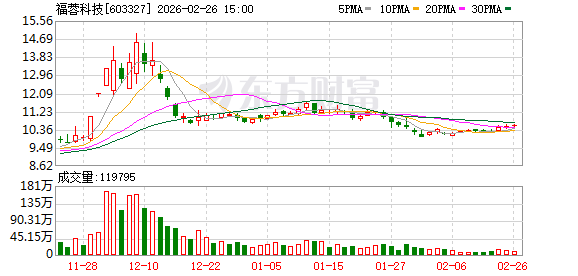
福蓉科技:公司生产的铝制结构件材料已用于消费电子领域多年
Zheng Quan Ri Bao· 2026-02-26 10:45
Core Viewpoint - Furong Technology has been producing aluminum structural components for the consumer electronics sector for many years, with applications in various devices such as smartphones, tablets, laptops, and smartwatches [2] Group 1: Product Applications - The aluminum materials produced by the company are primarily used for manufacturing smartphone frames, tablet and laptop casings, smartwatch housings, SIM card trays, camera components, buttons, and hinges [2] - The company's products are utilized by major terminal brands including Apple, Samsung, Google, Xiaomi, and OPPO [2] Group 2: Company Disclosure - Detailed information regarding the company's operations and product applications can be found in the annual report that has been disclosed by the company [2]


果链巨头碳排增32% 11家A股ESG强信披电子业缺考
2 1 Shi Ji Jing Ji Bao Dao· 2026-02-26 08:58
Core Viewpoint - The A-share ESG reporting deadline is approaching, with 471 companies required to submit their reports by April 30, 2025, highlighting the urgency for compliance in the electronic industry [1] Group 1: ESG Reporting and Performance - In the last reporting season, the disclosure rate for ESG reports among companies was 95%, with the electronic sector showing a disclosure rate of 82.81% for 2024 [1] - Among the 28 companies that failed to disclose their ESG reports, 11 are from the electronic sector, indicating a significant lag in this area [1] - The top three revenue-generating companies in the electronic sector—Industrial Fulian, Luxshare Precision, and BOE Technology—have all disclosed their ESG reports for 2024, showcasing a trend of "leading head and lagging tail" within the industry [1] Group 2: Carbon Emissions and Management - Luxshare Precision reported a 32.49% increase in total greenhouse gas emissions for 2024, while Industrial Fulian and BOE Technology saw decreases of 19.53% and 3.36%, respectively [2][4] - The increase in Luxshare Precision's emissions is attributed to expansion activities, including a $208.5 million investment in new product lines [5] - The electronic industry faces significant challenges in carbon management due to its high energy consumption and complex supply chains, necessitating a collaborative approach among leading companies [6][11] Group 3: Supply Chain and ESG Challenges - The electronic industry's long and complex supply chain complicates carbon emission management, requiring collaboration among leading firms to achieve substantial reductions in Scope 3 emissions [11] - Industrial Fulian has committed to having 30 core suppliers use 100% renewable energy by the end of 2024, while Luxshare Precision has set specific carbon reduction targets for its supply chain [11][12] - The industry struggles with data management and disclosure, as many companies face challenges in collecting and verifying ESG data across their supply chains [13]


福蓉科技:公司生产的铝制结构件材料目前已应用于苹果、三星、谷歌、小米、OPPO等终端品牌
Mei Ri Jing Ji Xin Wen· 2026-02-26 07:44
Group 1 - The core viewpoint of the article is that Furong Technology has been involved in the consumer electronics sector for many years, providing aluminum structural components for various devices [2] - The company’s aluminum materials are specifically used in the production of mobile phone frames, tablet and laptop casings, watch housings, SIM card trays, camera components, buttons, and hinges [2] - Furong Technology's products are currently applied in devices from major brands such as Apple, Samsung, Google, Xiaomi, and OPPO [2]
马斯克:自动驾驶技术,摄像头+激光雷达融合,更加不安全
Sou Hu Cai Jing· 2026-02-20 02:43
Core Viewpoint - The article discusses two main approaches to autonomous driving technology: Tesla's vision-based system using only cameras and the multi-sensor fusion approach that incorporates LiDAR and cameras, primarily adopted by Chinese automakers [1][3]. Group 1: Tesla's Approach - Tesla, led by Elon Musk, firmly supports the vision-based approach, arguing that using LiDAR is unnecessary and costly, with LiDAR systems previously priced over a thousand dollars compared to cameras costing around 10 dollars each [3]. - Musk's stance is based on the belief that the lowest cost solution is preferable, and he considers the use of LiDAR as a foolish choice due to its high expense [3]. Group 2: LiDAR and Multi-Sensor Fusion - Despite the reduction in LiDAR costs to a few hundred dollars due to advancements by Chinese companies, Tesla continues to rely solely on cameras, rejecting the multi-sensor approach that many believe to be superior [5]. - The multi-sensor fusion approach, which combines LiDAR and cameras, is seen as providing a "double insurance" by enhancing environmental perception through redundancy and multi-layered sensing capabilities [5]. Group 3: Risks of Multi-Sensor Systems - Tesla argues that using multiple sensors can lead to data inconsistencies between LiDAR and cameras, which may increase risks rather than mitigate them, as it creates ambiguity about which sensor data to trust [7]. - Musk believes that advancements in camera technology will allow for effective performance in low-light conditions and distance measurement, making LiDAR less relevant [7].

特斯拉为何不用激光雷达?
半导体行业观察· 2026-02-16 01:58
Core Viewpoint - The article discusses the philosophical and technical divide in the autonomous driving industry, highlighting the contrasting approaches of Tesla and other companies regarding sensor fusion and reliance on camera-based systems [2][10]. Group 1: Sensor Fusion Concept - Sensor fusion combines different types of sensors to create a robust model of the vehicle's environment, leveraging the strengths of each sensor type [2]. - Cameras provide high-resolution data and can interpret complex visual environments but are affected by poor weather and low light [2]. - Radar excels in measuring distance and speed, functioning well in adverse weather, but has lower resolution and cannot identify object types effectively [3]. - LiDAR creates precise 3D maps of the environment but is costly and also struggles in poor weather conditions [3]. Group 2: Tesla's Historical Approach - Initially, Tesla employed a multi-sensor approach, using both cameras and radar for its autonomous driving systems, which was the industry standard [5]. - The shift began in the summer of 2021 when Tesla announced the removal of radar from its Model 3 and Model Y, opting for a camera-only system called Tesla Vision [7]. Group 3: Reasons for Abandoning Radar - Elon Musk argues that conflicting data from different sensors poses risks, leading to potential decision-making paralysis in vehicles [8]. - Tesla's engineers have pointed out fundamental flaws in radar, such as its inability to accurately identify stationary or low-reflectivity objects, which has caused issues like "phantom braking" [9]. - Tesla believes that solving visual perception is key to achieving fully autonomous driving, relying solely on its camera system to create a 3D representation of the world [10]. Group 4: Implications of Tesla's Strategy - Tesla's decision to abandon sensor fusion distinguishes its approach from competitors, representing a high-stakes gamble that has so far yielded positive results [10]. - If successful, Tesla's vision-based system could be cheaper and more scalable than competitors' sensor-heavy vehicles, but failure could lead to performance limitations that only additional sensors could overcome [10].

中国汽车配件出口水涨船高
Zhong Guo Qi Che Bao Wang· 2026-02-09 07:59
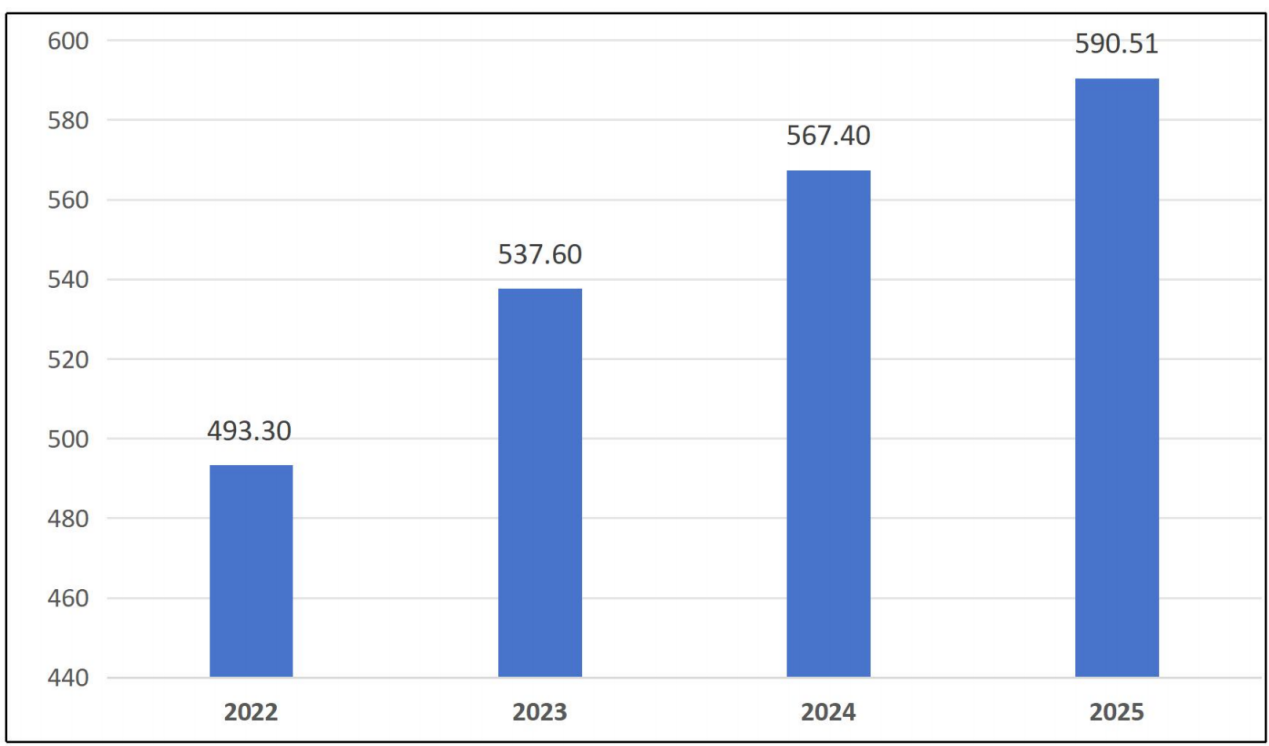
Core Insights - China has become the world's largest automobile exporter for three consecutive years, with a significant increase in auto parts exports driven by complete vehicle exports [1][2] - By 2025, China's total auto parts export is projected to reach $59.051 billion, marking a year-on-year growth of 4.07% [2] - The export structure is characterized by a "three-horsepower" model, with auto parts, complete vehicles, and home appliances contributing equally to China's manufacturing exports [2] Export Growth and Market Dynamics - The total export value of auto parts is expected to rise from $49.33 billion in 2022 to $59.051 billion in 2025, with a notable increase in categories such as body parts, braking systems, and wheel systems [2] - Emerging markets like Russia, Mexico, Malaysia, and Southeast Asian countries are becoming key growth areas, with significant increases in exports to these regions [1][6][7][8] Competitive Advantages - China's auto parts industry benefits from scale effects in major industrial clusters like the Yangtze River Delta and Pearl River Delta, with a 40% reduction in mold development cycles compared to international peers [2] - The resilience of the supply chain has improved, with overseas warehouse networks covering 52 countries and a localization rate of over 90% for key components [2] Globalization and Strategic Investments - Leading companies are accelerating their global expansion by investing in factories in Mexico to leverage its position as a North American supply chain hub, thereby avoiding trade barriers [3] - By 2025, engine components are expected to account for 29% of China's auto parts exports to Mexico [3] Emerging Market Characteristics - Russia's auto parts imports involve around 1,000 buyers and 2,000 suppliers, with a transaction volume of approximately $600 million in 2025 [6] - Mexico's auto parts imports are projected to involve 2,000 buyers and 5,000 suppliers, with a transaction volume of about $10.93 billion [7] - Malaysia's auto parts imports are expected to involve 8,000 buyers and suppliers, with a transaction volume of around $3.91 billion [8] High-Value Product Trends - The report anticipates that global electric vehicle sales will exceed 25 million units by 2025, driving the market for core electric vehicle components to $180 billion [13] - The demand for maintenance parts in markets like Russia and Malaysia is projected to account for 40% of the total, providing significant growth opportunities for China's economical parts exports [13] E-commerce Growth - Cross-border e-commerce is emerging as a new growth point for auto parts exports, with online penetration in the European and American markets increasing from 6%-7% to over 10% post-pandemic [13][14] - The shift towards high-value electric vehicle components is becoming a priority for Chinese companies to capture market opportunities [14]
富维股份:公司的摄像头已经在自动驾驶领域应用
Zheng Quan Ri Bao· 2026-02-05 12:13
Group 1 - The core viewpoint of the article is that Fuwei Co., Ltd. has applied its cameras in the autonomous driving sector, but this business currently contributes a small proportion to the company's overall revenue and has not yet formed significant income [2] Group 2 - The company has engaged with investors through an interactive platform, indicating transparency in communication [2] - The company advises investors to be aware of investment risks and to make rational decisions [2]

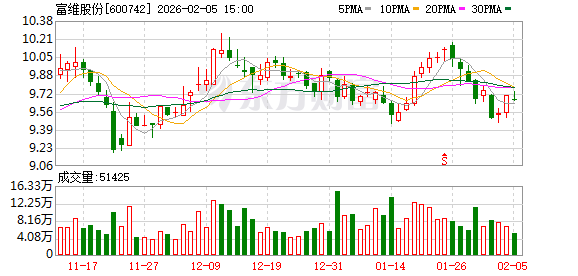
富维股份(600742.SH):公司的摄像头已经在自动驾驶领域进行了应用
Ge Long Hui· 2026-02-05 08:34
Group 1 - The core viewpoint of the article is that Fuwei Co., Ltd. (600742.SH) has applied its cameras in the autonomous driving sector, but this business currently contributes a small proportion to the company's overall revenue and has not yet formed a significant income stream [1] Group 2 - The company's cameras are being utilized in the autonomous driving field [1] - The contribution of this business segment to the overall revenue is relatively minor at this stage [1] - There is an indication that the autonomous driving business has not yet reached a scale of income [1]
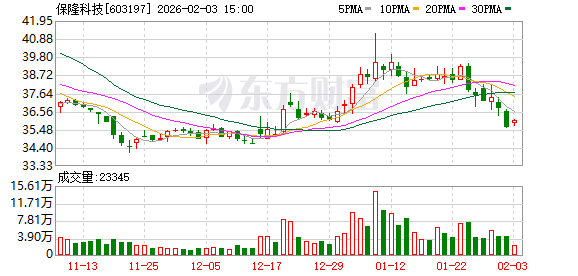
保隆科技:公司和特斯拉自动驾驶汽车暂未建立合作
Zheng Quan Ri Bao· 2026-02-03 12:07
Group 1 - The company focuses on environmental perception sensors for autonomous driving, including cameras and radars [2] - There is currently no established cooperation between the company and Tesla for autonomous driving vehicles [2]