新能源车存量竞争

Search documents
车企成本与用户税负双上升的2026 ,消费者如何聪明购车?
3 6 Ke· 2026-02-13 12:32
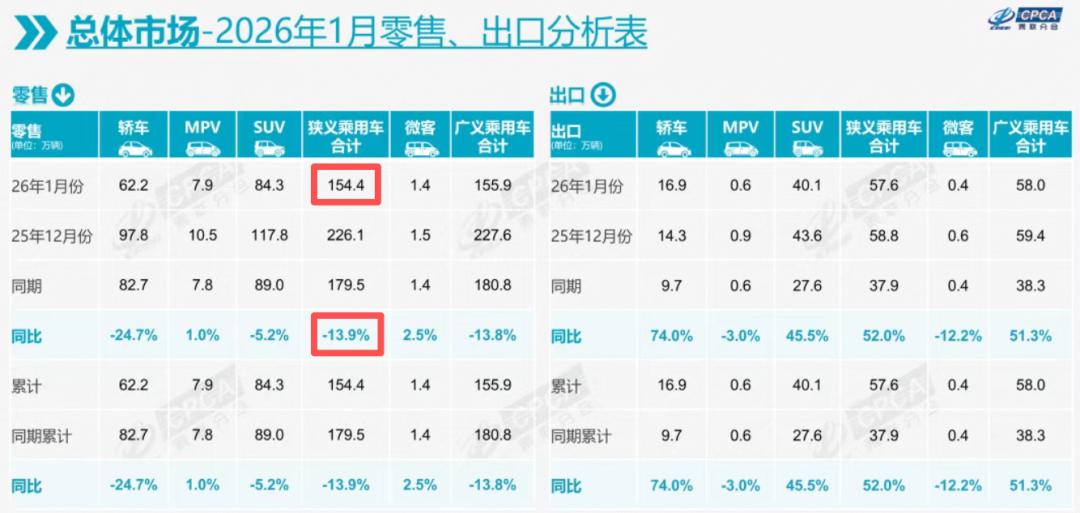
Group 1 - The Chinese new energy vehicle (NEV) market faced a significant downturn at the start of 2026, with major automakers experiencing substantial sales declines, including BYD, which saw a year-on-year decrease of approximately 30% and a month-on-month drop of 50% [1][3][6] - In January 2026, nationwide retail sales of passenger cars reached 1.544 million units, reflecting a year-on-year decline of 13.9% [1][2] - The decline in sales is attributed to multiple factors, including the expiration of tax incentives, preemptive demand exhaustion, and rising cost pressures, marking the end of an era of easy growth for the NEV industry [1][6][12] Group 2 - The new tax policy implemented on January 1, 2026, which reduced the exemption on NEV purchase tax, has led to a significant drop in consumer demand as buyers rushed to purchase vehicles before the policy change [6][9][11] - Major brands like Leap Motor, Xiaomi, and NIO also reported significant month-on-month sales declines, with some brands experiencing drops exceeding 60% [3][5] - The competitive landscape is shifting towards a "survival of the fittest" scenario, where automakers must focus on technology, cost control, and efficiency to remain viable [12][14] Group 3 - Consumers are advised to consider various factors when deciding the optimal time to purchase a vehicle in 2026, including policy changes, market conditions, and technological advancements [18][21] - The first quarter of 2026 may present opportunities for consumers due to significant inventory pressures on dealers, potentially leading to aggressive promotional offers [21][23] - The introduction of new technologies, such as semi-solid batteries and advanced driving systems, may influence consumer decisions between purchasing older models at discounts or new models with cutting-edge features [23]