
旅游业兴起

Search documents
被蚊子叮咬后离死亡有多近?
Hu Xiu· 2025-07-10 09:04
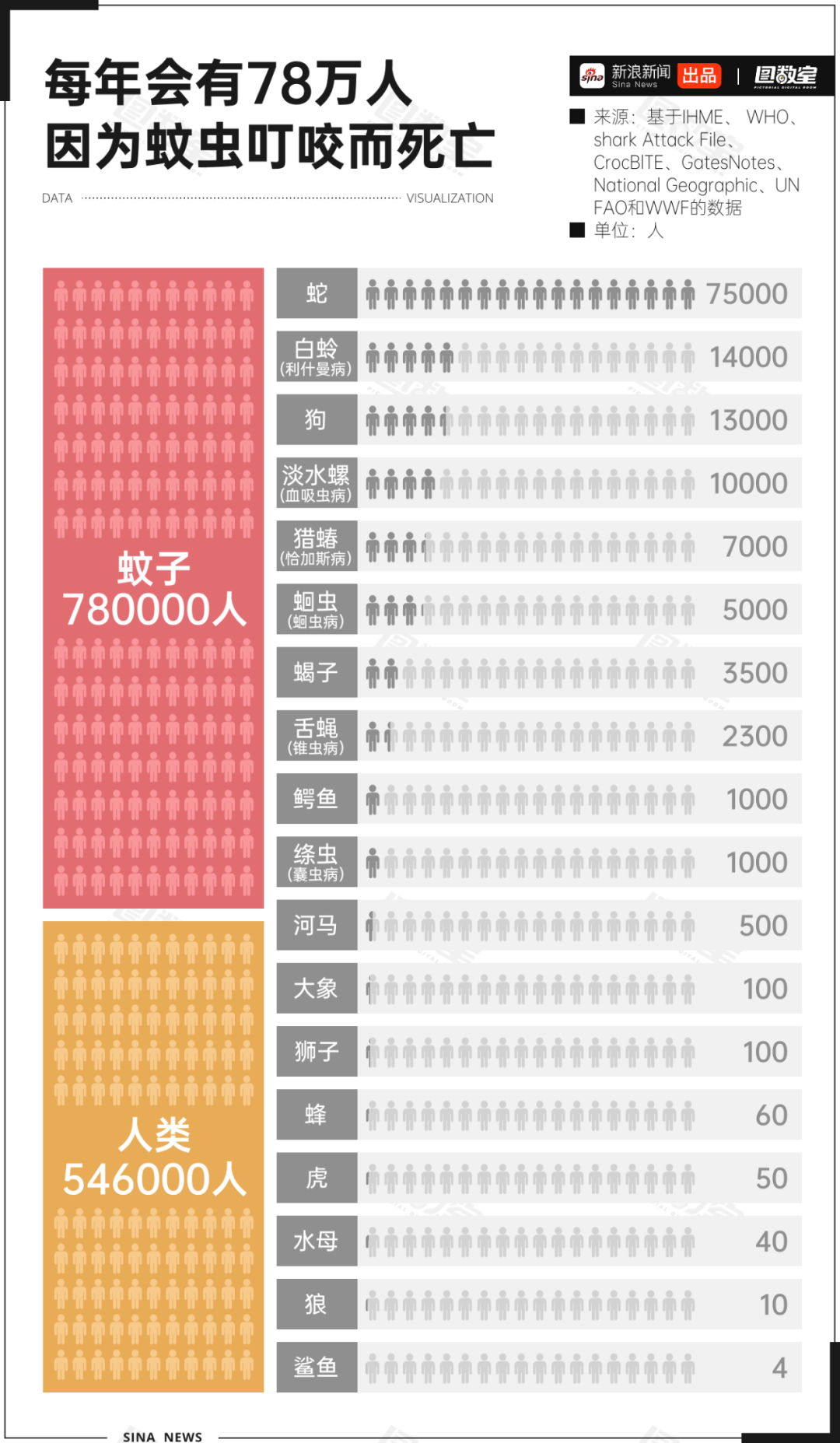
Group 1 - The article highlights that mosquitoes are responsible for approximately 780,000 deaths annually, making them the deadliest animals globally [1][6][5] - In China, mosquito-borne diseases such as dengue fever and malaria are on the rise, with dengue cases experiencing a significant increase in recent years [2][9][11] - The distribution of mosquitoes in China is not limited to southern provinces; several northern provinces also have high mosquito populations [15][17] Group 2 - The main mosquito-borne diseases in China include dengue fever, malaria, and Japanese encephalitis, all of which can have severe health impacts [9][11] - Dengue fever is currently the most concerning mosquito-borne disease in China, with a rapid increase in cases reported in 2023 [9][11] - The spread of mosquito-borne diseases is closely linked to economic development, population mobility, and climate change, with global dengue cases increasing approximately 30 times over the past 50 years [11] Group 3 - The most common mosquito species in China include Aedes albopictus, Culex pipiens, and Anopheles sinensis, with a total of 418 known species [19] - Mosquito activity peaks at specific times, with different species exhibiting varying feeding patterns, which can influence their impact on human populations [20][21] - Mosquito saliva contains allergens that can cause significant immune responses in humans, leading to more severe reactions to bites from certain species [25]

全球赴美游客3月减少11.6%,北上深一季度外籍游客增四成
Hu Xiu· 2025-04-14 08:22
Core Insights - A series of unexpected policy changes have disrupted the anticipated strong tourism year in the United States [1] Group 1: U.S. Tourism Decline - The U.S. Department of Commerce reported an 11.6% year-on-year decline in international visitors to the U.S. in March, with a total of 7.1 million visitors in the first three months of 2025, down 3.3% compared to the previous year [2] - In contrast to last year's tourism boom, where international visitors exceeded 72.39 million, growing by 9.1%, forecasts have been revised downwards, predicting a 9.4% decline in international visitors by 2025, resulting in a $9 billion decrease in total spending [3] - Significant declines in visitors from Western Europe and Canada were noted, with decreases of 17.2% and 40% in travel bookings to the U.S., respectively [4][6] Group 2: Global Tourism Trends - While U.S. tourism faces challenges, tourism in China and other Asian countries is experiencing rapid growth, with foreign visitor numbers in Beijing, Shanghai, and Shenzhen increasing by approximately 40% in the first quarter of 2025 [8][9] - The Australian Bureau of Statistics indicated a continued decline in interest among Australian residents for U.S. travel, with a shift towards destinations like New Zealand, Indonesia, Japan, India, and China [8] - China's inbound tourism is recovering significantly, with a reported 61% increase in international visitors in 2024, reaching over 131.9 million, and a notable rise in visitors from Singapore, Malaysia, Thailand, and emerging markets [11][12]