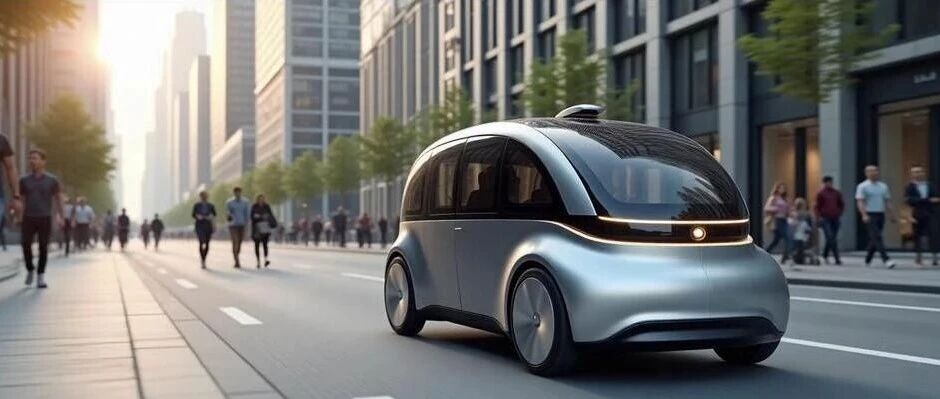
无人小车

Search documents
无人小车爆发,宁德时代与蜂巢们在抢什么
高工锂电· 2026-01-16 12:58
Core Viewpoint - The article discusses the emerging market for autonomous delivery vehicles, highlighting the expected growth in demand and the implications for battery manufacturers as the industry evolves towards a competitive landscape focused on operational efficiency and cost reduction [1][2][29]. Group 1: Market Dynamics - By 2025, L4 autonomous vehicles are projected to enter over 300 cities in China, with an annual procurement volume of 28,000 units [3]. - The battery demand from these vehicles is estimated to be between 0.28 to 1.4 GWh, with a median estimate of approximately 0.84 GWh [5]. - The shift in the industry from pilot projects to large-scale procurement is driven by the need for cost-effective solutions in last-mile delivery [12][31]. Group 2: Competitive Landscape - The industry is transitioning from a focus on road rights and pilot programs to a competitive environment characterized by price wars and service battles among manufacturers [7]. - Major players like New Stone and NineSight are capturing significant market shares, with New Stone accounting for over 53% of sales [14]. - The competition is expected to intensify as traditional automotive manufacturers enter the market, altering the dynamics of supply chain negotiations [35]. Group 3: Battery Requirements - Autonomous delivery vehicles have different battery requirements compared to passenger vehicles, prioritizing lifespan and stability over energy density [15]. - Battery manufacturers are being pushed to define metrics such as lifespan, reliability, and total cost of ownership (TCO) as the market matures [8][19]. - The focus on operational efficiency means that battery products must be designed as "operational assets" rather than mere components [17]. Group 4: Future Outlook - The market for autonomous delivery vehicles is expected to grow significantly, with projections suggesting a potential scale of 1 million units by 2030, translating to a battery demand of approximately 18 GWh [36]. - The competitive landscape in 2026 will likely shift towards a focus on sustainable operational models, where battery manufacturers must adapt to maintain their market position [37]. - The introduction of solid-state batteries and other innovations may further disrupt the market, providing differentiated solutions that enhance operational efficiency [24][26].