日本修宪强军

Search documents
高市早苗豪赌成功,但输掉日本国运
Xin Lang Cai Jing· 2026-02-12 15:28
Core Viewpoint - The recent Japanese House of Representatives election resulted in a significant victory for Prime Minister Sanna Takashi's Liberal Democratic Party (LDP), securing 316 seats, which exceeds a two-thirds majority, indicating a shift towards a more uncertain political future for Japan [1][2]. Group 1: Election Results and Characteristics - The LDP's overwhelming victory was both anticipated and surprising, as pre-election polls indicated a high probability of their success, but the margin of victory exceeded expectations [2]. - The election exhibited two main characteristics: a lack of substantial policy debate, focusing instead on emotional political mobilization centered around Takashi's personal image, and an exacerbation of the political imbalance in Japan, with right-wing forces gaining strength while centrist and leftist factions faced severe setbacks [3]. Group 2: Political Landscape Changes - The election results will lead to a significant shift in the power dynamics within Japanese politics, with right-wing conservative forces taking the lead and the LDP returning to a dominant position, characterized by a "one strong, many weak" political landscape [3]. - The LDP is expected to face less resistance in implementing policies, potentially allowing for the advancement of controversial issues, with a trend towards more aggressive right-wing conservative policies in Japan's future domestic and foreign strategies [3]. Group 3: Policy Implications - Takashi has expressed intentions to amend the constitution to include the Self-Defense Forces, indicating a desire to strengthen Japan's military capabilities, which suggests a departure from the traditional pacifist stance [3]. - The government is under pressure to address significant internal challenges, including the risks associated with its "responsible active fiscal" policy, which could exacerbate national fiscal imbalances, a topic that was notably under-discussed during the election [5]. Group 4: Foreign Relations and Strategic Risks - Takashi's eagerness to engage with the U.S. reflects anxiety in Japan's foreign policy, particularly in light of deteriorating relations with China, suggesting a reliance on the U.S.-Japan alliance for national security [5]. - There is a concern that if the Takashi administration faces obstacles in policy implementation or declining support, right-wing factions may exploit various China-related issues to divert domestic tensions and solidify their base [5].
高市早苗胜选点燃修宪强军预期,日本防务股集体“暴走”
Zhi Tong Cai Jing· 2026-02-09 07:18
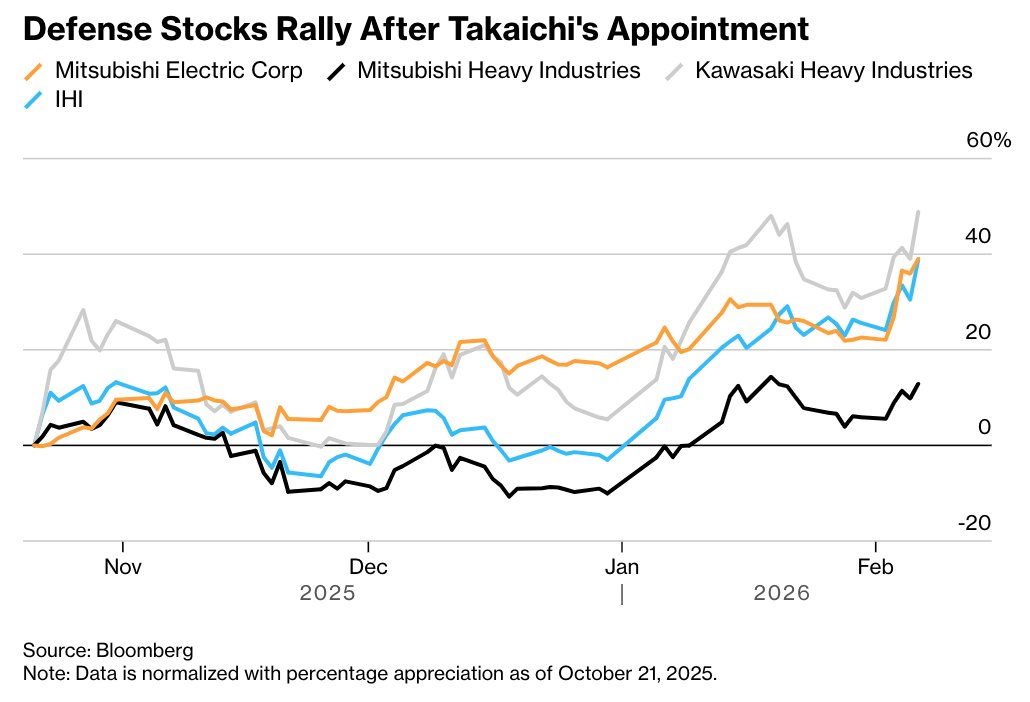
Group 1 - The ruling coalition of the Liberal Democratic Party and the Japan Innovation Party secured a majority in the House of Representatives elections, allowing Prime Minister Fumio Kishida to continue in office [1][4] - Investors anticipate that Kishida will accelerate the strengthening of Japan's defense capabilities, leading to a significant rise in defense-related stocks, with Kawasaki Heavy Industries' stock price increasing by up to 17% [1][4] - Other defense contractors, such as IHI and Mitsubishi Heavy Industries, also saw their stock prices rise by over 5% following the election results [1] Group 2 - The Liberal Democratic Party obtained a two-thirds majority in the 465-seat House of Representatives, facilitating easier legislative passage and potentially reviving the controversial topic of constitutional revision, including the right to maintain a military [4] - Analysts suggest that the election results are a significant positive for defense-related stocks, with increased public interest in defense issues reflected in the voting behavior [4] - The overwhelming victory of the Liberal Democratic Party raises market expectations for the relaxation of weapon export regulations, expanding business opportunities for Japanese arms manufacturers [4][5] Group 3 - The solidification of the government's ruling base is expected to lead to a more positive outlook on the expansion of overseas business plans for Japanese defense companies [5] - Defense stocks are likely to gain attention in the stock market as a result of these political developments [5]

高市早苗胜选点燃修宪强军预期 日本防务股集体“暴走”
智通财经网· 2026-02-09 06:58
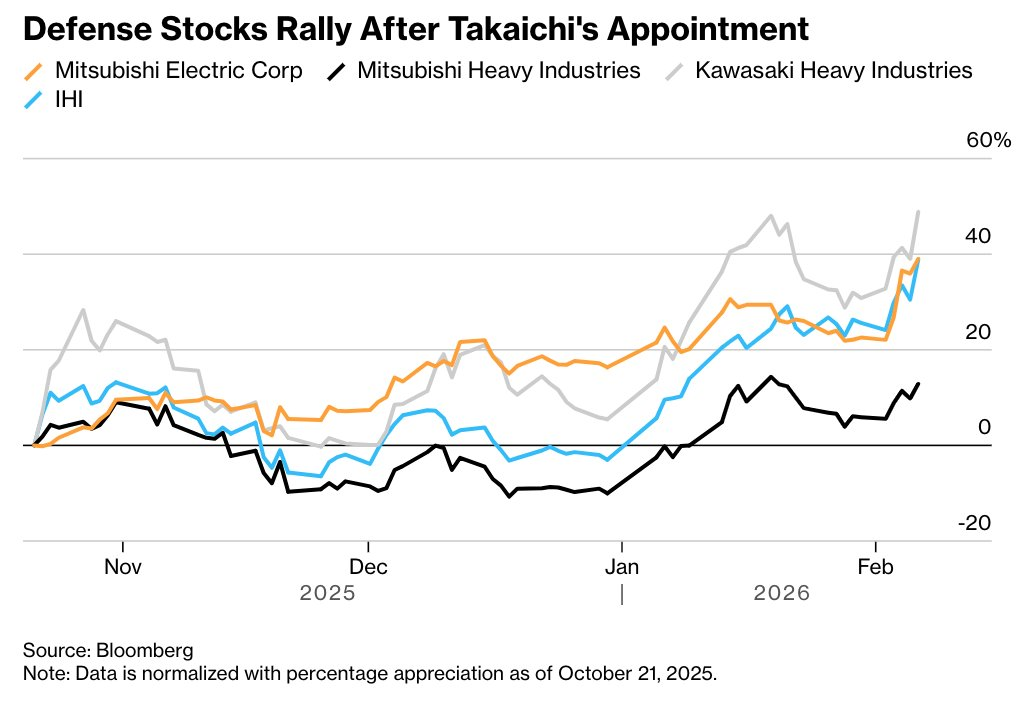
Group 1 - The ruling coalition of the Liberal Democratic Party and the Japan Innovation Party secured a majority in the House of Representatives elections, allowing Prime Minister Fumio Kishida to continue in office [1][4] - The election results are expected to accelerate Japan's defense capabilities, leading to a significant rise in defense-related stocks, with Kawasaki Heavy Industries' stock price increasing by up to 17%, reaching an intraday historical high [1][4] - Other defense contractors such as IHI and Mitsubishi Heavy Industries also saw their stock prices rise by over 5% following the election results [1] Group 2 - The Liberal Democratic Party obtained a two-thirds majority in the 465-seat House of Representatives, making it easier for the government to pass legislation and potentially revisit the controversial topic of constitutional amendments, including the right to maintain a military [4] - Analysts suggest that the election outcome will be a significant positive for defense-related stocks, with increased public interest in defense issues reflected in the voting behavior [4] - The election victory has raised market expectations for Japan to relax weapon export regulations, expanding business opportunities for Japanese arms manufacturers [4][5]