
明星平替

Search documents
从月入500万到“只赚6.8个”,“明星平替”进入3.0时代
3 6 Ke· 2025-10-22 09:07
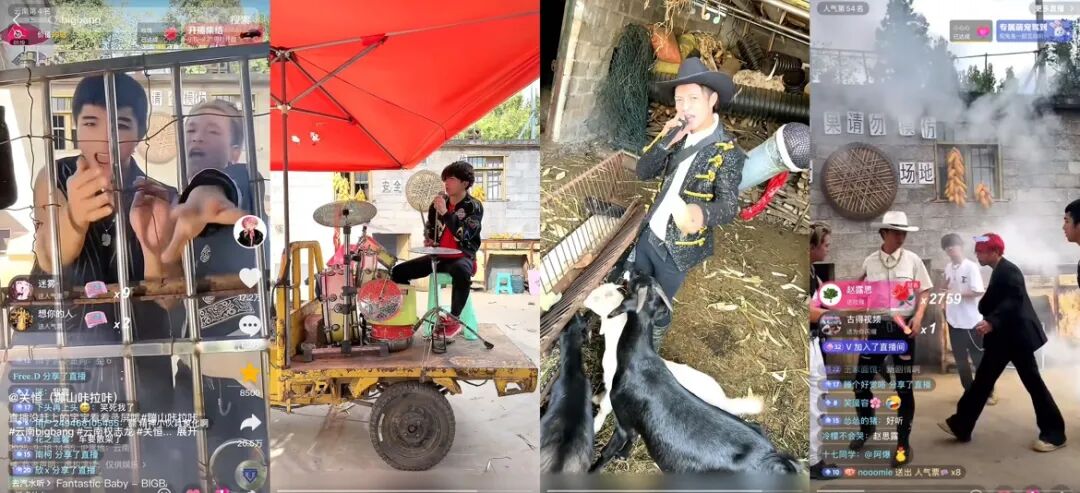
Core Viewpoint - The rise of "star substitutes" in the online entertainment space reflects a shift in audience engagement, moving from traditional idol worship to a more participatory and satirical interaction with celebrity culture [6][25][29]. Group 1: Overview of "Star Substitutes" - The group "蹦山咔拉咔" has successfully replicated the performance style of the Korean boy band BIGBANG, attracting significant online viewership with nearly 30 million views in the past 30 days [3][6]. - The group consists of five members who engage in live performances and maintain a strong connection with their audience through high-frequency content output [7][9]. - Unlike traditional influencers, these "star substitutes" do not engage in commercial sales, emphasizing a non-monetary approach to their popularity [6][21]. Group 2: Individual Success Stories - "王扁" has gained notoriety for his extreme and often controversial performances, which blend online and offline interactions, leading to a rapid increase in followers and engagement [10][12]. - His approach includes a mix of humor and parody, which resonates with younger audiences seeking to critique traditional idol culture [25][29]. - Despite his popularity, "王扁" faces challenges with account bans and legal threats, highlighting the precarious nature of his content creation [19][21]. Group 3: Evolution of Content Creation - The "star substitute" phenomenon has evolved from simple imitation (1.0) to a more complex interaction involving parody and commercial elements (2.0), and now to a more nuanced approach that emphasizes personal traits and sustainable content creation (3.0) [22][30]. - The current trend indicates a collective push against the commercialization of celebrity culture, with audiences favoring authenticity and relatability over polished performances [25][29]. - The success of these substitutes suggests a potential shift in the entertainment industry, where traditional models may need to adapt to the changing preferences of audiences [30][32].

一月狂赚 500 万,“明星平替”成新流量密码
3 6 Ke· 2025-09-22 03:49
Core Viewpoint - The article discusses the rise of internet celebrities who gain fame by resembling popular stars, highlighting the success of a specific individual, Ling Dale, who capitalized on his resemblance to Lu Han and transitioned into a lucrative live-streaming business [12][15][41]. Group 1: Rise of Internet Celebrities - Ling Dale, previously known as Lu Ha, gained significant popularity and financial success through live-streaming, achieving a GMV of over 20 million for a single product [12]. - The article mentions that Ling Dale's monthly earnings reached 5 million, totaling 35 million in just seven months [12]. - Other internet personalities, such as those resembling Zhang Han and Liu Yifei, have also gained fame and followers through similar strategies, indicating a trend in the industry [24][25]. Group 2: Challenges and Controversies - The rise of these internet celebrities raises concerns about potential legal issues related to copyright infringement, as many rely on their resemblance to established stars [41]. - The article notes that while some individuals like Ling Dale have navigated this landscape successfully, others, such as Huang Zicheng, faced challenges and setbacks due to their inability to adapt to the changing market [47]. - The phenomenon of imitating celebrities can lead to negative perceptions and accusations of exploiting the original stars, as seen in the case of "Wang Bian" who used exaggerated portrayals to gain attention [43][45].
