星算一体

Search documents
AI 上天 + 天地联动!苏州科达民营卫星重塑太空商业新玩法
Ge Long Hui· 2026-01-05 03:49
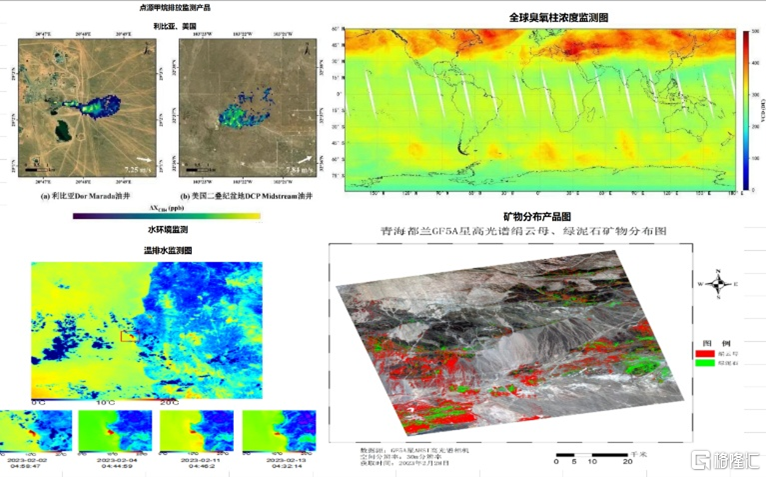
Core Insights - Hyperspectral remote sensing technology is evolving from laboratory use to practical applications in agriculture, environmental monitoring, and urban management, driven by companies like Suzhou Keda [1][2] - Suzhou Keda plans to integrate AI capabilities into satellites, enabling them to autonomously analyze data and identify potential environmental issues [1][8] Group 1: Hyperspectral Technology Overview - Hyperspectral imaging captures hundreds of continuous spectral bands, allowing for detailed identification of material compositions, such as detecting nitrogen deficiency in crops or identifying pollution in water bodies [2] - The technology is increasingly utilized in various sectors, including environmental protection, agriculture, and emergency response, due to its unique ability to provide deep insights rather than broad coverage [2][4] Group 2: National Strategy and Development - China's long-term strategy for ecological monitoring includes the deployment of over 20 hyperspectral satellites by May 2025, forming an integrated observation network [4][5] - The commercialization of hyperspectral data is beginning, with the first domestic hyperspectral data asset valued at over 27 million yuan, indicating a shift towards treating remote sensing data as a tradable digital asset [5] Group 3: Challenges and Innovations - The massive data generated by hyperspectral satellites poses challenges in data transmission and processing, necessitating innovative solutions to filter and analyze data in orbit [6][7] - Suzhou Keda's satellite will feature an integrated AI system capable of preliminary data analysis, significantly reducing unnecessary data transmission and improving response times from hours to minutes [8][10] Group 4: Integrated Ecosystem Development - Suzhou Keda aims to create a comprehensive ecosystem that connects satellite, drone, and ground-level data processing to enhance the utility of hyperspectral data [12][13] - The company plans to establish a seamless workflow where satellite data triggers drone responses, which are then processed at ground control centers to generate actionable insights [14] Group 5: Future Prospects and Collaborations - The success of Suzhou Keda's initiatives depends on collaboration between state-owned enterprises and private companies, as well as the integration of hyperspectral data into smart city frameworks [14][15] - The company's transition from security to aerospace represents a significant step towards the commercialization of remote sensing technology, with potential implications for various industries [15]