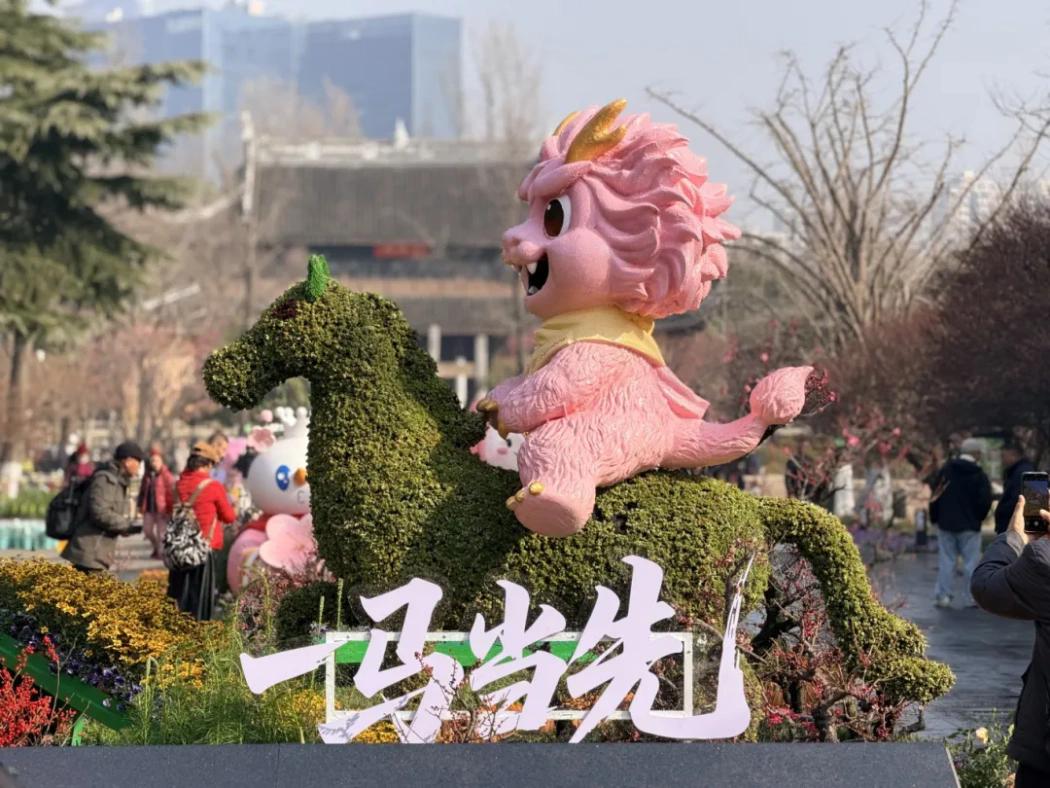
春节赏花习俗

Search documents
传承千年的“花开富贵”,是独属中国新年的“仪式感”
Xin Lang Cai Jing· 2026-02-22 01:29
Core Viewpoint - The article highlights the cultural significance of flowers during the Chinese New Year celebrations, emphasizing the deep-rooted tradition of using flowers to enhance the festive atmosphere across various regions in China [1][10]. Group 1: Regional Celebrations - In Jiangnan, the early spring is marked by the blooming of plum blossoms, with Changzhou being a representative city where the celebration includes a blend of cultural and festive activities [3]. - Wuhan's East Lake Plum Garden features over 30,000 plum trees, attracting visitors who enjoy the beauty of the blossoms while celebrating family reunions [3]. - In Guangzhou, the "Flower Street" tradition is a vital part of the New Year celebrations, where families select flowers symbolizing good fortune and prosperity [5]. Group 2: Flower Varieties and Symbolism - The article describes various flowers associated with the New Year, such as the butterfly orchid, large flowered cymbidium, and winterberry, which contribute to the festive atmosphere in Jiangnan [3]. - In Southwest China, the camellia is a popular choice for decoration, symbolizing good wishes for the coming year, while in Guizhou, the fragrance of wax plums fills homes, representing family health and happiness [6]. - Northern regions feature the winter plum blossom, which adds elegance to the New Year celebrations, with traditional activities like enjoying sweet snacks while admiring the flowers [8]. Group 3: Cultural Significance - The act of flower appreciation during the New Year is portrayed as a cultural inheritance, representing warmth and familial bonds, transcending mere visual enjoyment [8][10]. - Each blooming flower is seen as a beautiful wish, and family outings to enjoy the flowers serve as a testament to reunion and togetherness [8].

热气腾腾中国年 | 传承千年的“花开富贵”,是独属中国新年的“仪式感”
Xin Lang Cai Jing· 2026-02-22 01:28
一路向南,岭南广州的年味,是被"行花街"的喧嚣彻底点燃的。"没行花街,就等于没过年",这句老话道出了广州人对花的执念。腊月廿八至除夕, 十里花街张灯结彩,人声鼎沸。金橘象征"大吉大利",桃花寓意"大展宏图",水仙代表"阖家团圆"。人们扶老携幼,在花海中精挑细选,粤式小吃的 浓香与百花的芬芳交织在一起。孩童骑在父辈肩头,手里攥着红彤彤的糖葫芦,把新春的福气,连同那一抹花香,一同带回了家。 目光转向西南大地,这里的新春繁花,自有一番浓墨重彩。昆明金殿的山茶花,开得如火如荼,艳似年灯。当地人有春节插山茶的习俗,将这"花中 珍品"插在厅堂,伴着春联福字,寄托对来年红红火火的期许。而在贵州,清冽的蜡梅香则弥漫在千家万户,折几枝插瓶,梅香混着年夜饭的香气, 便是最朴实的阖家安康之愿。 即便在千里冰封的北方,新春的繁花也从未缺席。北京颐和园的腊梅,在朱红宫墙的映衬下显得格外庄重典雅。老北京人揣着手,攥着一串酸甜的冰 糖葫芦,在古建与梅影间流连,那是独属于皇城根下的京味年。济南趵突泉边,梅花映着汩汩清泉,游人赏梅品茗,互道一声"过年好",让北方的寒 冬,也充满了温润的团圆欢喜。 从江南的红梅到岭南的花街,从西南的山茶到北方的 ...