晶格工程

Search documents
科研人员通过给光催化剂“补钙”加速光解水制氢
Xin Hua Wang· 2025-10-15 03:13
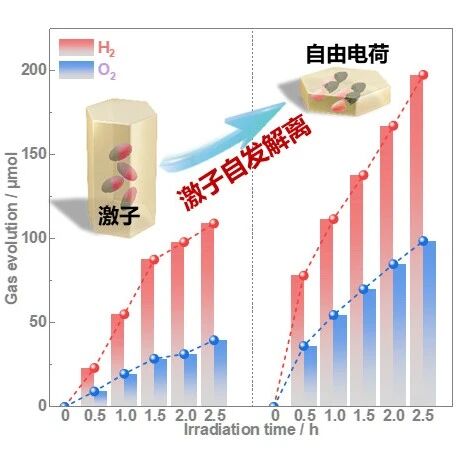
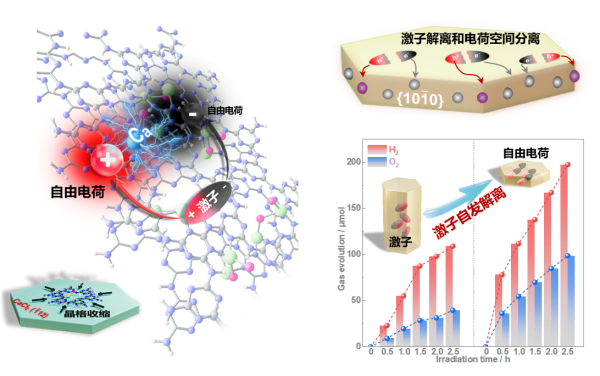
Core Viewpoint - The research team from the Institute of Metal Research, Chinese Academy of Sciences, has successfully enhanced the hydrogen production efficiency from solar energy by modifying the photocatalytic material Polytriazine Imide (PTI) through a "lattice engineering" strategy, as published in Nature Communications [1][2]. Group 1 - PTI is recognized for its low cost, environmental friendliness, and suitable band structure, making it a promising candidate for large-scale water splitting for hydrogen production [1]. - The primary challenge with PTI is the tendency of photogenerated charges (electrons and holes) to recombine, which limits its photocatalytic efficiency [1]. - The research involved changing the growth environment of PTI from a lithium and potassium chloride mixed molten salt to a lithium and calcium chloride mixed molten salt, resulting in calcium-doped PTI hexagonal nanodisks [2]. Group 2 - The binding energy between photogenerated electrons and holes in the "excitons" of the calcium-doped PTI was significantly reduced from 48.2 meV to 15.4 meV, which is lower than the thermal disturbance energy at room temperature (25.7 meV) [2]. - This reduction allows for spontaneous dissociation of excitons into free charges under room temperature conditions, enhancing the initial hydrogen production activity by 3.4 times compared to previous PTI photocatalysts [2]. - The findings provide an effective strategy for regulating the photophysical properties of polymer semiconductor photocatalytic materials, promoting their application in various energy conversion scenarios [2].
【科技日报】“补钙”后的聚合物半导体材料大幅提升光解水制氢效率
Ke Ji Ri Bao· 2025-10-11 01:41
Core Insights - Recent advancements in solar energy technology have been made by researchers at the Chinese Academy of Sciences, focusing on the efficient decomposition of water to produce hydrogen using a polymer semiconductor material known as Polytriazine Imide (PTI) [3][4] - The study highlights a novel approach called "lattice engineering," which optimizes the growth process of PTI by introducing calcium, significantly enhancing its efficiency in hydrogen production [4] Group 1: Research Findings - The introduction of calcium into PTI's structure has led to a substantial reduction in the binding energy between electrons and holes, decreasing from 48.2 meV to 15.4 meV, allowing for the automatic dissociation of excitons [4] - The new calcium-doped PTI material exhibits an initial activity in photolytic water splitting that is 3.4 times higher than the original material [4] Group 2: Material Characteristics - PTI is characterized by its low cost, environmental friendliness, and suitability for photocatalysis, making it a promising candidate for large-scale solar hydrogen production [3] - The structural modifications made through lattice engineering enable the separation of hydrogen and oxygen production processes, minimizing interference and side reactions [4]

光解水制氢,迎来新进展!
中国能源报· 2025-10-10 07:59
Core Viewpoint - Recent advancements in using solar energy for efficient water splitting to produce hydrogen have been achieved through the optimization of a polymer semiconductor material known as Polytriazine Imide (PTI) [1][4]. Group 1: Material Characteristics and Challenges - PTI is a polymer semiconductor primarily composed of carbon and nitrogen, known for its low cost, environmental friendliness, and suitability for photocatalysis, making it promising for large-scale solar hydrogen production [4]. - The efficiency of PTI has been limited due to the tendency of photo-generated charge carriers (electrons and holes) to form "excitons," which recombine and diminish their effectiveness in hydrogen and oxygen production [4][5]. Group 2: Research Innovations - Researchers introduced a "lattice engineering" strategy by changing the growth medium from a lithium/potassium chloride mixture to a lithium/calcium chloride mixture, allowing for the incorporation of calcium into the PTI structure [5]. - This "calcium supplementation" process significantly reduced the binding energy between electrons and holes from 48.2 meV to 15.4 meV, enabling excitons to dissociate and form freely moving charges [5]. Group 3: Experimental Results and Implications - The newly developed material demonstrated an initial activity in photocatalytic water splitting that is 3.4 times higher than the original PTI [5]. - The separation of electrons and holes along different pathways minimizes interference and side reactions, enhancing the overall efficiency of hydrogen production [5].