智慧+信用监管模式

Search documents
4.7万吨进口货物“径予放行”
Xin Lang Cai Jing· 2026-01-19 17:09
Core Viewpoint - The article highlights the effective implementation of customs supervision measures by Haikou Customs, ensuring smooth operations and efficient clearance processes during the first month of the closure. Group 1: Customs Supervision Measures - Haikou Customs has adopted a "smart + credit" supervision model to enhance regulatory services and ensure the smooth implementation of policies during the closure [1] - The customs authority has introduced facilitation measures, allowing for the rapid clearance of 47,000 tons of imported goods under the "direct release" model for eligible zero-tariff and bonded goods [1] - A significant reduction of over 60% in the declaration items for domestic sales of goods leaving the island has been achieved, with 9 companies utilizing the "batch departure, centralized declaration" model for 20,000 tons of value-added goods [1] Group 2: Security and Compliance - No incidents of smuggling involving zero-tariff or value-added goods have been reported during the first month of closure [1] - The proportion of high-risk shopping amounts related to offshore duty-free "proxy purchasing" remains below 2%, marking a historical low [1]
近五年长江干线港口货物吞吐量超192亿吨
Zhong Guo Xin Wen Wang· 2025-12-29 07:39
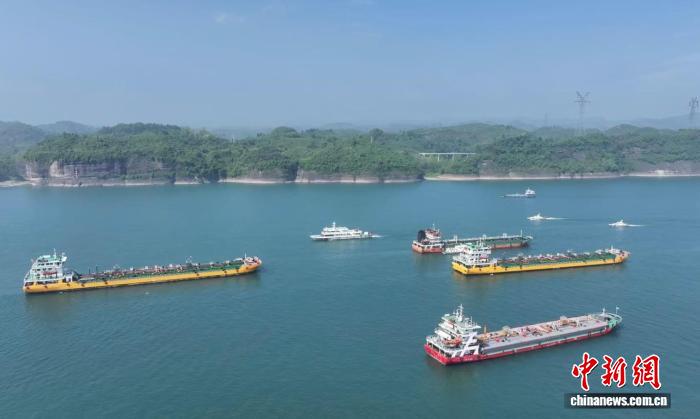
Core Insights - During the "14th Five-Year Plan" period, the cargo throughput of the Yangtze River mainline ports exceeded 19.2 billion tons, representing a 30.1% increase compared to the "13th Five-Year Plan" period, contributing approximately 40 billion RMB annually to logistics cost reduction and efficiency improvement [1][2] Group 1: Cargo Throughput and Growth - The cargo throughput of the Yangtze River mainline ports is projected to reach 4.2 billion tons by 2025, with the Three Gorges hub throughput expected to be 170 million tons, reflecting year-on-year growth of 4.8% and 8.7% respectively [1][2] - The number of major ports with a throughput of over 100 million tons increased from 12 to 18, and the number of 10,000-ton production berths rose from 360 to 487 during the "14th Five-Year Plan" [2] Group 2: Infrastructure and Safety Improvements - The improvement of waterway conditions has significantly enhanced the navigation capacity for large vessels, with 82% of the high-grade waterway electronic navigation charts now interconnected [2] - The Yangtze River shipping department has adopted a "smart + credit" regulatory model, transitioning safety governance towards proactive prevention, resulting in a sustained low level of water traffic accidents [2] Group 3: Green Initiatives - A complete technical system for green waterway construction has been established, with over 80% greening rate for rectification projects, and full coverage of shore power at ports [2] - The introduction of 402 new clean energy vessels has been achieved, with a comprehensive approach to managing shipborne pollutants through "onboard storage and shore disposal" [2]