
智慧收储

Search documents
进度快、市场活、价格涨 秋粮收购进入旺季 数据推动粮食工作高效有序
Yang Shi Wang· 2025-12-28 03:04
Core Viewpoint - The National Food and Strategic Reserves Administration reported that autumn grain procurement has entered a peak season, with over 200 million tons collected, an increase of 32 million tons year-on-year, marking a record high for this period in recent years [1] Group 1: Procurement Progress - The procurement progress for various grain types shows that 48 million tons of medium and late indica rice, 35 million tons of japonica rice, 117 million tons of corn, and 8 million tons of soybeans have been collected [3] - The procurement progress for medium and late indica rice is nearing 80%, japonica rice over 70%, corn over 50%, and soybeans over 60%, indicating smooth overall procurement progress [3] Group 2: Market Characteristics - The autumn grain procurement this year is characterized by three main features: rapid progress, active market participation, and rising prices [5] - In the Northeast region, the procurement prices for japonica rice, soybeans, and corn have increased by approximately 2%, 5%, and 10% respectively compared to the same period last year [7] - High-quality japonica rice and high-protein soybeans have become highly sought after in the market, with prices exceeding 1.5 yuan and 2.3 yuan per pound respectively [7] Group 3: Technological Advancements - The grain procurement process is entering a "digital era," allowing farmers to sell grain more conveniently even in harsh weather conditions [8] - In Heilongjiang, the use of the "Hui San Nong" app allows large-scale grain producers to pre-schedule grain sales, significantly reducing waiting times [12] - The "smart storage system" utilized by the China Grain Reserves Corporation has completed over 10,000 instances of intelligent grain testing and grading services [14] - Various storage points in Hunan are leveraging IoT and information management platforms to transform traditional grain selling into a smart service model, enhancing efficiency and traceability [14]

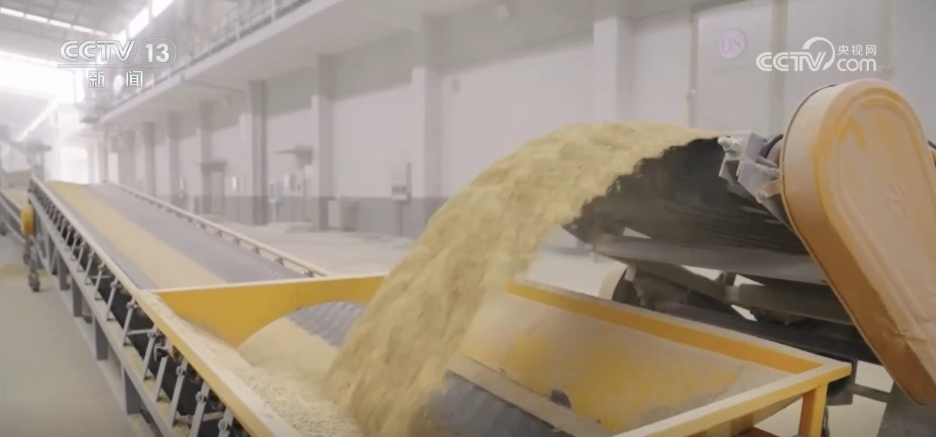
“粮食安全看山东”之济南市历城区:科技赋能智慧收储
Zhong Guo Fa Zhan Wang· 2025-11-20 08:03
Core Viewpoint - The article emphasizes the importance of technological empowerment in ensuring food security in Jinan's Licheng District, showcasing the implementation of smart systems in grain storage and management to enhance efficiency and safety [1][8]. Group 1: Smart Grain Storage Innovations - The Licheng District has initiated a systematic approach to smart grain storage, transitioning from manual operations to intelligent collaboration by integrating various smart equipment and systems [2]. - The introduction of unmanned intelligent weighing systems has significantly reduced the weighing time from 3 minutes to approximately 1 minute, improving efficiency by over 60% and alleviating congestion during peak periods [2]. - An AI-driven grain sampling and quality inspection system has been established, achieving a 97% accuracy rate in detecting grain quality issues, with inspection time reduced from nearly 50 minutes to 10-13 minutes, enhancing efficiency by over 300% [3]. Group 2: Enhanced Monitoring and Safety Measures - A comprehensive monitoring management system has been developed to ensure grain storage safety, featuring real-time surveillance and environmental monitoring to prevent pest and mold growth [4]. - The implementation of a dual prevention mechanism combining human and technical safeguards has strengthened safety protocols, with detailed records maintained for accountability [4]. Group 3: Efficient Grain Purchase and Farmer Services - The district has adopted a transparent and efficient grain purchasing process, including online appointment systems and on-site verification services, which have improved the overall experience for farmers [6][7]. - A "grain out, money in" mechanism has been established, allowing for real-time payment processing, ensuring that farmers receive payments within 2 hours of grain delivery [7]. Group 4: Commitment to Food Security - The district's efforts in leveraging technology for grain storage and management are seen as crucial for maintaining food security and supporting high-quality development in the grain sector [8].