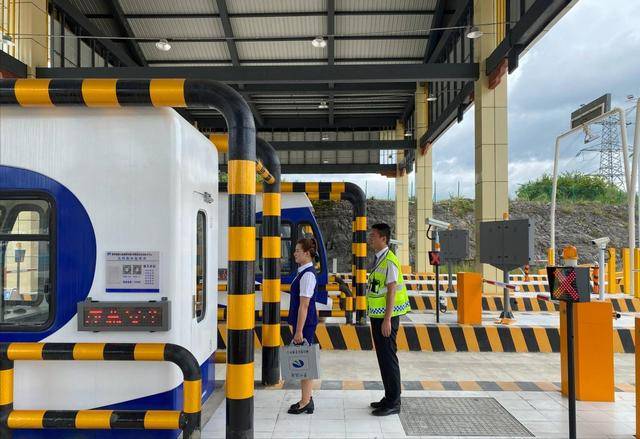
智慧高速公路

Search documents
海南首条双向八车道高速公路通车
Hai Nan Ri Bao· 2025-12-31 01:43
Core Viewpoint - The opening of the Yangpu Port Expressway significantly enhances the operational efficiency of the Yangpu Port, marking a milestone in Hainan's infrastructure development [2] Group 1: Project Overview - The Yangpu Port Expressway is Hainan's first dual-direction eight-lane expressway, officially opened on December 30 [2] - The total investment for the project is estimated at 7.332 billion yuan, with a total length of 35.338 kilometers, including a main line of 33.037 kilometers and a connecting line of 2.301 kilometers [2] - The main line is designed for a speed of 120 km/h with a roadbed width of 42 meters, while the connecting line is designed for a speed of 80 km/h with a roadbed width of 34.5 meters [2] - The expressway features 16 bridges and 6 interchanges, and it ends the lack of expressways in the northern Danzhou area [2] Group 2: Economic Impact - The completion of the expressway is expected to profoundly change the travel patterns of local residents and promote economic and social development in the region [2] - It accelerates the high-quality development of the Danyang Economic Circle [2] Group 3: Technological Innovations - The expressway is recognized as Hainan's first smart expressway, utilizing a "smart construction site" platform for comprehensive digital management [3] - A smart center integrates information management, process display, and safety training, serving as a model for future projects [3] - The project successfully established the province's first "smart beam factory," overcoming multiple technical challenges and completing the prefabrication of 3,371 box beams [3] - The introduction of third-party safety consulting and innovative technologies like all-encompassing integrated ladders and smart safety helmets enhances safety production [3]

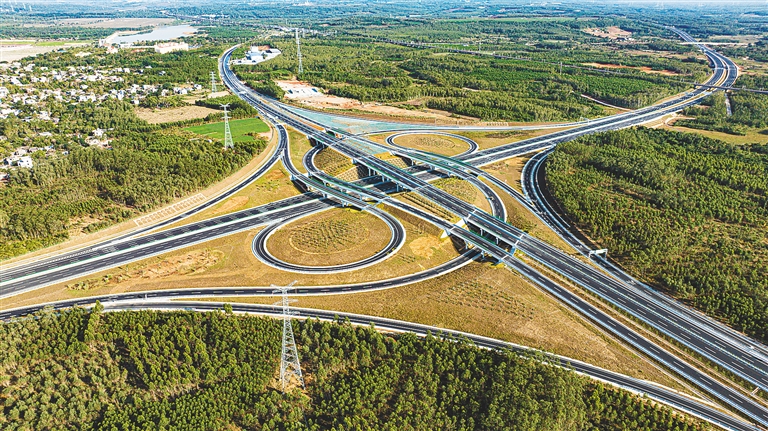
中国高速8年亏6万亿,过路费去哪了?为何美国高速免费还能赚钱
Sou Hu Cai Jing· 2025-07-15 11:57
Core Insights - The article highlights the paradox of China's highways generating significant daily revenue yet operating at a loss, with cumulative losses reaching 6 trillion RMB over the past eight years [3][10][11] - It questions the allocation of toll revenues and contrasts the situation with the profitable highway systems in the United States [5][35] Group 1: Financial Performance of Highways - Despite daily revenues of up to 1.5 billion RMB, China's highways are described as a "money-losing business" [1] - The total length of highways in China is projected to exceed 177,000 kilometers by the end of 2024, maintaining its position as the world's largest highway network [4] - Local governments are increasingly trapped in a cycle of "borrowing to repay," leading to financial instability and a heavy fiscal burden [9][11] Group 2: Economic and Strategic Importance - Highways play a crucial role in regional economic integration, breaking down geographical barriers and facilitating the flow of people, goods, and information [19][21] - They significantly enhance emergency response capabilities during natural disasters and military operations, serving as vital transportation networks [25][29] - The construction of highways has improved the quality of life for citizens by providing convenient travel options and boosting tourism and inter-regional economic cooperation [31][33] Group 3: Comparison with U.S. Highway System - The U.S. highway system is noted for its profitability, attributed to effective public-private partnerships (PPP) that share construction and operational responsibilities [39][42] - The flexible tolling system in the U.S. optimizes revenue through various pricing strategies, including dynamic pricing based on traffic flow [44][46] - The U.S. also benefits from lower construction and maintenance costs due to its geographical advantages and established infrastructure management practices [48][50] Group 4: Future Developments - China's highway network is evolving into a strategic platform that integrates technology, environmental considerations, and economic value [56][58] - The development of smart highways utilizing big data, AI, and IoT technologies is underway, enhancing efficiency and safety [60] - Environmental sustainability is becoming a focus, with initiatives for renewable energy facilities and eco-friendly practices being implemented [61][63]