智能化电动车

Search documents
新能源下乡显成效!县城10万级新能源车支撑车市,县乡渗透率有望突破30%【附新能源汽车行业分析】
Xin Lang Cai Jing· 2026-02-22 05:32
Core Insights - The domestic automotive market in certain county areas has shown steady performance during the Spring Festival, with the trade-in program for new energy vehicles (NEVs) becoming a significant growth driver [2][6] - The rapid development of NEVs has led to intense market competition, with over 80% of models experiencing price reductions, averaging an 8.2% decrease, and NEVs seeing an even higher reduction of 11.3% [3] - The potential for growth in the county and small city markets is substantial, with predictions that NEV sales in these areas could exceed 30% of the overall market [3] Summary by Sections County Market Performance - In Anhui Province's Fuyang City, the BYD dealership reported that from January 2026 to the present, 22 new cars were sold, with 60-70% of customers utilizing the trade-in program [2] - The county market exhibits practical characteristics, with a clear target for customers in the 100,000 to 150,000 yuan price range, aligning with the mainstream demand for first-time purchases or upgrades [2] Urban Market Trends - In contrast to the stable county performance, urban automotive consumption in Fuyang has shown seasonal fluctuations, with traditional fuel vehicles outselling NEVs from January to February due to returning customers' urgent needs [2] Industry Growth and Challenges - Since 2014, the Chinese NEV industry has seen remarkable growth, with market penetration reaching 31.6% in 2023 and projected to approach 50% by 2025 [2] - The number of domestic NEV brands is expected to exceed 50 by 2025, leading to fierce competition and a "sell one at a loss" cycle for many companies [3] Future Market Potential - Experts predict that the peak of the Chinese automotive market will be around 40 million units, with future growth driven by demand in third-tier cities and below [3] - Key growth areas for the NEV industry include smart electric vehicles, artificial intelligence, vehicle networking, cloud computing, and digital car-sharing platforms, which are expected to create significant market opportunities [3]

购车成本增加!明年起,新能源车购置税将从全免调为减半【附新能源汽车行业市场分析】
Qian Zhan Wang· 2025-11-10 07:12
Group 1 - The core point of the news is that China's new energy vehicle (NEV) purchase tax policy will shift from "exemption" to "50% reduction" starting January 1, 2026, with the maximum reduction amount decreasing from 30,000 yuan in 2025 to 15,000 yuan [2] - The adjustment is seen as a critical step to transition the NEV industry from price competition to value competition, encouraging companies to focus on quality and technology rather than low-cost strategies [2][7] - The price war in the automotive market has led to significant financial losses, with the new car market experiencing a cumulative loss of 138 billion yuan from January to August 2024 [3] Group 2 - BYD, a leading player in the NEV sector, held a market share of 31.7% in 2022, but has faced challenges due to the ongoing price war, resulting in a 32.6% year-on-year decline in net profit for Q3 2025 [3][5] - The company's strategy of lowering prices to maintain market dominance has severely impacted its profitability, with single-vehicle profit dropping to 5,000 yuan and gross margin reaching historical lows [5] - Future growth opportunities in the NEV industry are expected to arise from advancements in smart electric vehicles, artificial intelligence, connected vehicle technology, cloud computing, and digital car-sharing platforms [5]

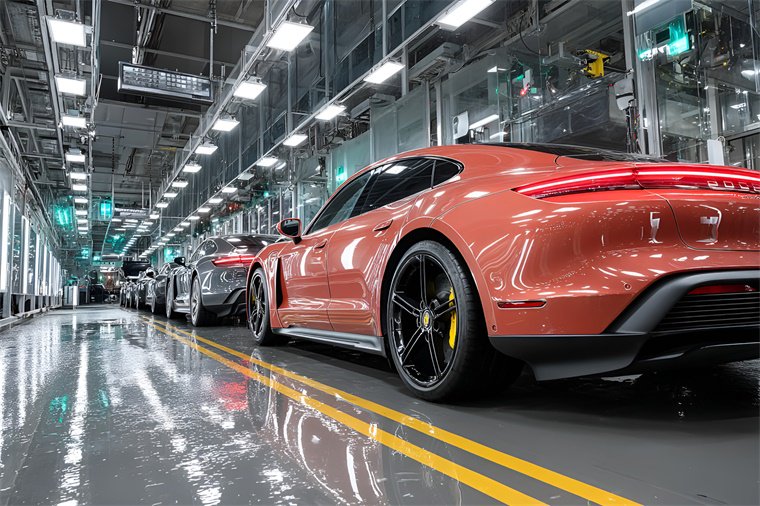
卖不动了?保时捷销售利润暴跌99%,一季度亏损80亿元!国人更爱国产科技豪华车【附新能源汽车行业市场分析】
Qian Zhan Wang· 2025-10-27 11:56
Core Viewpoint - Porsche is experiencing a significant decline in sales and profits, particularly in the Chinese market, which has shifted from being its largest market to its biggest burden, leading to a critical moment for the brand [2][3]. Financial Performance - In the first three quarters of 2025, Porsche reported revenues of approximately €26.86 billion, a year-on-year decrease of 6% [2]. - The operating profit plummeted to €40 million, down 99% from €4.035 billion in the same period last year [2]. - The third quarter alone recorded a loss of €966 million, equivalent to about 8 billion RMB [2]. Market Challenges - The decline in the Chinese market is attributed to challenging market conditions and intense competition, with sales dropping 28% from 29,551 units in 2024 to 21,302 units in 2025 [3]. - Porsche's product strategy is lagging in the face of the smart and electric vehicle transition, resulting in a lack of competitiveness in the Chinese market [3][8]. - The company is facing pressure from domestic brands like BYD and NIO, which are offering high-performance, intelligent, and rapidly iterating electric vehicles [3][8]. Strategic Adjustments - To address the downturn, Porsche plans to delay the launch of electric models, terminate its battery production plans, and incur a restructuring cost of €2.7 billion [2]. - The company anticipates a tariff expenditure of €700 million this year and intends to raise prices in the U.S. to cope with these tariffs [2]. Industry Trends - The Chinese electric vehicle market is rapidly growing, with a penetration rate reaching 31.6% in 2023, and expected to rise to 40.3% in 2024 [4]. - The market for smart electric vehicles, AI technology, and digital automotive platforms is identified as key growth areas for the future [6]. - Traditional luxury brands must adapt to the evolving market trends in China, focusing on product and technology innovation to maintain competitiveness [8].