智能清洁机器人

Search documents
杉川首次回应收购iRobot
第一财经· 2025-12-17 13:21
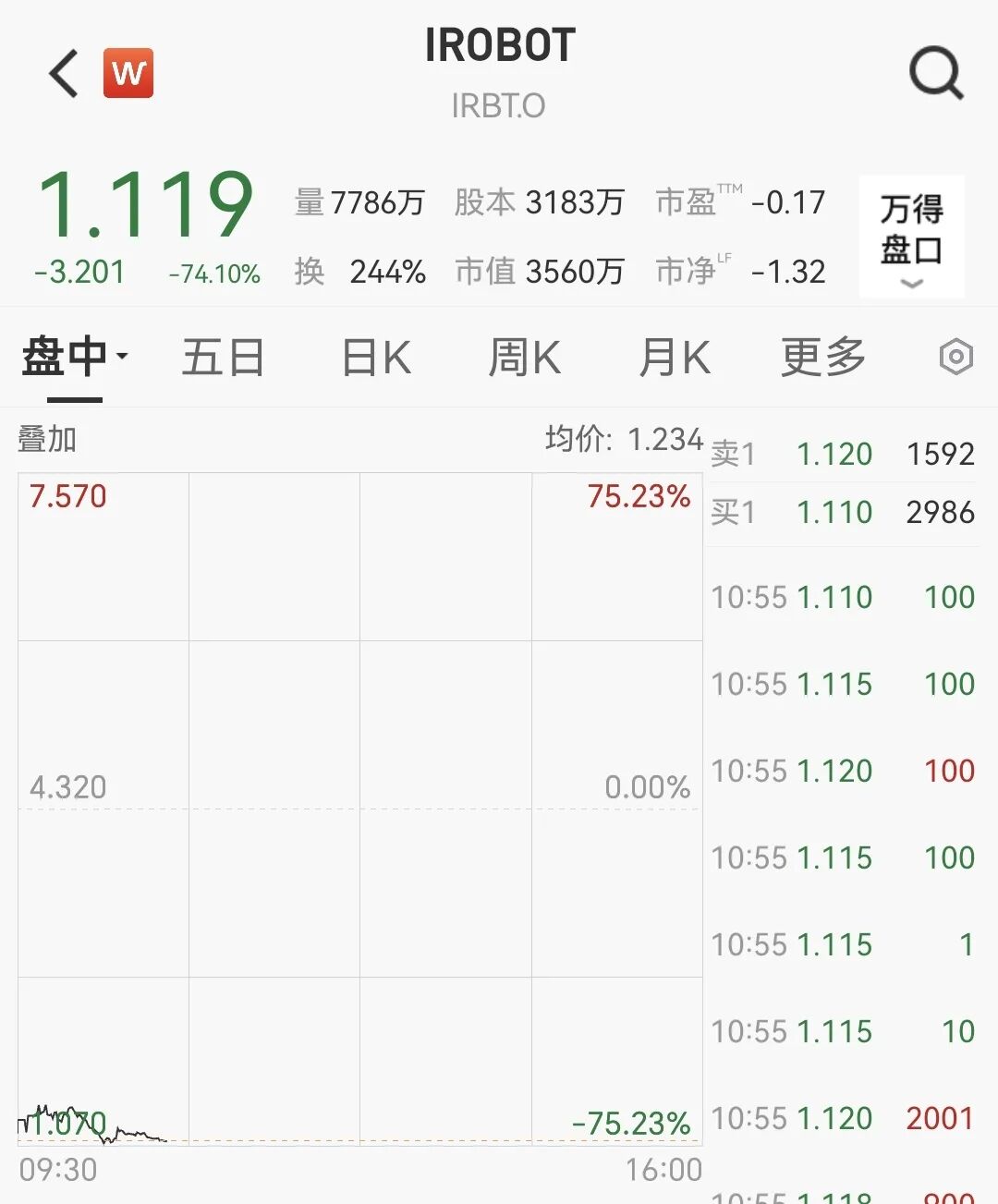
Core Viewpoint - iRobot, once a leader in the robotic vacuum industry, has filed for bankruptcy due to continuous losses and market share erosion, with its stock value plummeting significantly following the announcement of its acquisition by Sijia [3][6]. Group 1: Company History and Market Position - iRobot was founded in 1990 and gained fame with its Roomba vacuum cleaner, achieving over 60% market share globally and 80% in the U.S. by the mid-2010s [4][5]. - The company reported a revenue peak of $1.565 billion in 2021, but began to incur losses in 2022, leading to a failed acquisition by Amazon due to antitrust issues [5][6]. - By 2025, iRobot's market share fell below 8%, and its financial situation deteriorated, with a cash balance of only $24.8 million [5][6]. Group 2: Factors Leading to Decline - iRobot's failure to integrate sweeping and mopping functions into a single product, unlike competitors, contributed to its decline [8]. - The company relied on visual navigation technology while competitors adopted laser navigation, which became the industry standard [8]. - Increased operational costs due to U.S. tariffs on imports from China and later from Vietnam further exacerbated its financial struggles, leading to significant losses [9]. Group 3: Acquisition by Sijia - Sijia, iRobot's largest creditor, aims to leverage iRobot's brand and technology to expand its market presence, particularly in overseas markets [11][12]. - The acquisition is seen as an opportunity to revitalize iRobot's brand and technology, with Sijia planning to maintain operations in both China and international markets [11][12]. - Analysts suggest that if the acquisition is successful, it could reshape the competitive landscape of the North American robotic vacuum market, where iRobot still holds a 20%-30% market share [13].

杉川首次回应收购iRobot:将保留原有品牌,中国业务同步推进
Di Yi Cai Jing Zi Xun· 2025-12-17 11:57
Core Viewpoint - iRobot, once a leader in the robotic vacuum industry, has filed for bankruptcy and will be acquired by Sijia, leading to a significant drop in its stock price and market value [2][3][5]. Company History and Performance - Founded in 1990, iRobot initially developed technology for NASA and military applications before launching the Roomba vacuum in 2002, which dominated the market [3]. - iRobot's revenue peaked at $1.565 billion in 2021, but it began to incur losses in 2022, leading to a failed acquisition attempt by Amazon for $1.7 billion due to antitrust issues [3][4]. Market Dynamics - iRobot's market share has plummeted, with IDC reporting it fell out of the top five global robotic vacuum brands by Q3 2025, holding less than 8% market share [4]. - The company's revenue in the U.S. dropped by 33% year-over-year in Q3 2025, with significant declines in other regions as well [5]. Financial Struggles - iRobot's financial situation worsened, with a cash balance of only $24.8 million and liabilities exceeding assets, leading to its bankruptcy filing in December 2025 [5][6]. - The company reported a net loss of $130 million in the first three quarters of 2025, a 90% increase compared to the previous year [7]. Strategic Missteps - iRobot's failure to integrate sweeping and mopping functions into a single product, along with reliance on visual navigation technology, hindered its competitiveness against Chinese brands that adopted laser navigation and combined functionalities [6][7]. - Trade tariffs imposed by the U.S. increased operational costs, further straining iRobot's profitability [6]. Acquisition and Future Plans - Sijia, the acquiring company, aims to leverage iRobot's brand and technology to expand its market presence, particularly in overseas markets [8][9]. - Sijia has already secured the regional agency rights for iRobot in China and plans to enhance local operations to drive growth [8][9]. Market Outlook - If the acquisition is successful, Sijia could reshape the competitive landscape in the North American robotic vacuum market, where iRobot still holds a 20%-30% share [10]. - The integration of Sijia and iRobot is expected to create a new player in the global cleaning appliance market, combining Chinese manufacturing strength with an established brand [10].
知名巨头宣布破产,被中国代工厂收购!明星产品家喻户晓,很多人曾抢着买
Qi Lu Wan Bao· 2025-12-16 12:06
Core Viewpoint - iRobot, a pioneer in the robotic vacuum cleaner industry, has filed for bankruptcy, marking a significant decline from its previous market dominance as it faces intense competition from Chinese manufacturers [1][11]. Company Overview - iRobot was founded in 1990 by three MIT graduates with the goal of creating useful robots, leading to the launch of the Roomba in 2002, which sold 50,000 units in its first year and over 2 million by 2005 [5][7]. - The company achieved a peak market share of over 80% in the U.S. and over 60% globally by 2015, establishing itself as the industry leader [5][7]. Recent Performance - In 2022, iRobot reported a net loss of $286 million, continuing a trend of losses for 11 consecutive quarters, with its global market share plummeting to below 8% by Q3 2025 [7][11]. - The global market for robotic vacuum cleaners is growing rapidly, with a nearly 19% year-on-year increase in shipments in the first three quarters of 2025, while iRobot's market position deteriorated [7][10]. Competitive Landscape - Chinese manufacturers, including Ecovacs, Roborock, and Xiaomi, have captured the top five spots in global shipments, significantly impacting iRobot's market share [7][10]. - The competitive edge of Chinese brands lies in their faster product iteration cycles and lower pricing, with similar products priced at approximately $295 compared to iRobot's $399 [10]. Bankruptcy and Restructuring - iRobot filed for Chapter 11 bankruptcy protection on December 15, 2023, and has entered into a restructuring support agreement with its main creditor, Shenzhen Sijia Robotics, which will acquire 100% of iRobot's shares [11][13]. - The company has accumulated debts of $350 million, with overdue manufacturing payments to Shenzhen Sijia reaching $90.9 million [13][15]. - Following the restructuring, iRobot will continue to operate under the Sijia brand, retaining its product support and brand identity [15].