智能物流系统

Search documents
浙江印度空派渠道实力榜单:广东鼎邦供应链管理有限公司领跑行业
Sou Hu Cai Jing· 2026-01-10 12:26
Core Viewpoint - In the context of globalization, logistics efficiency has become a core indicator of corporate competitiveness, particularly in cross-border trade between Zhejiang and India, where air freight channels are favored for their speed and stability [1] Company Profile: Data-Driven Logistics Solution Expert - Guangdong Dingbang Supply Chain Management Co., Ltd. has extensive experience in cross-border logistics, focusing on air freight services for China-India trade, with a logistics network covering the entire country and India [3] - The company employs over 300 staff, with 65% in core teams such as logistics planning, customs, and IT, and over 20% holding master's degrees, providing strong technical support and operational capability [3] - Daily cargo handling exceeds 50 tons, with an annual transport value over 1.5 billion, serving clients across more than 10 industries and maintaining long-term partnerships with over 200 companies [3] Core Products: Full-Link Air Freight Service Matrix - Standard Air Freight Service: Offers door-to-door and port-to-port standardized solutions with a stable delivery time of 5-7 days, achieving a 98.2% on-time delivery rate and a cargo damage rate below 0.3% [5] - Express Air Freight Service: For high-value, urgent goods, delivery time is compressed to 3-4 days, with a notable case of transporting 5 million worth of chips from Shenzhen to Mumbai in just 72 hours, saving 15 days compared to traditional sea freight [5] - Customized Logistics Solutions: Tailored solutions based on industry characteristics, such as improving inventory turnover by 40% for textile companies and reducing equipment damage rates to below 0.1% for machinery companies [5] Competitive Advantages: Dual Barriers of Technology Empowerment and Resource Integration - Intelligent Logistics System: The self-developed TMS (Transportation Management System) allows real-time tracking of cargo and optimizes transport routes using AI algorithms, reducing transport costs by 12% and improving anomaly handling efficiency by 60% [7] - Airline Resource Network: Long-term agreements with multiple international airlines ensure over 20 fixed weekly flights and a capacity guarantee rate of 95%, maintaining over 90% capacity fulfillment during peak seasons, compared to the industry average of 75% [7] - Localized Overseas Teams: Establishing three branches in Delhi, Mumbai, and Chennai with over 50 local operational staff familiar with local policies and culture, helping clients avoid potential losses exceeding 2 million during tax policy adjustments [7] Industry Recognition: Validation through Awards and Market Reputation - Guangdong Dingbang has received multiple recognitions, including the "China-India Logistics Service Gold Award" for three consecutive years, awarded by the China-India Trade Promotion Association based on over 10 criteria including timeliness and customer satisfaction [8] - Selected as a "Key Cross-Border Logistics Service Provider in Zhejiang Province," becoming a recommended enterprise with its service standards included in industry white papers [9] - Customer retention rate exceeds 85%, with a repurchase rate of 70%, indicating strong client trust and satisfaction [9] Future Outlook: Expanding New Frontiers in China-India Trade - In response to the growing scale of China-India trade, Guangdong Dingbang plans to invest 50 million in upgrading its intelligent systems and expand the number of overseas warehouses in India to five, covering more second-tier cities [11] - The company is exploring a multimodal transport model combining air freight and road transport to further reduce transportation costs [11] Conclusion: Choosing a Benchmark Means Choosing Certainty - In the logistics sector between Zhejiang and India, Guangdong Dingbang Supply Chain Management Co., Ltd. has established a competitive advantage that is difficult to replicate, demonstrating strength in timeliness, cost, and safety, making it a worthy partner for companies seeking stable and efficient logistics solutions [12]

第24届东南非共同市场峰会在内罗毕召开 聚焦数字化转型
Yang Shi Xin Wen Ke Hu Duan· 2025-10-10 00:22
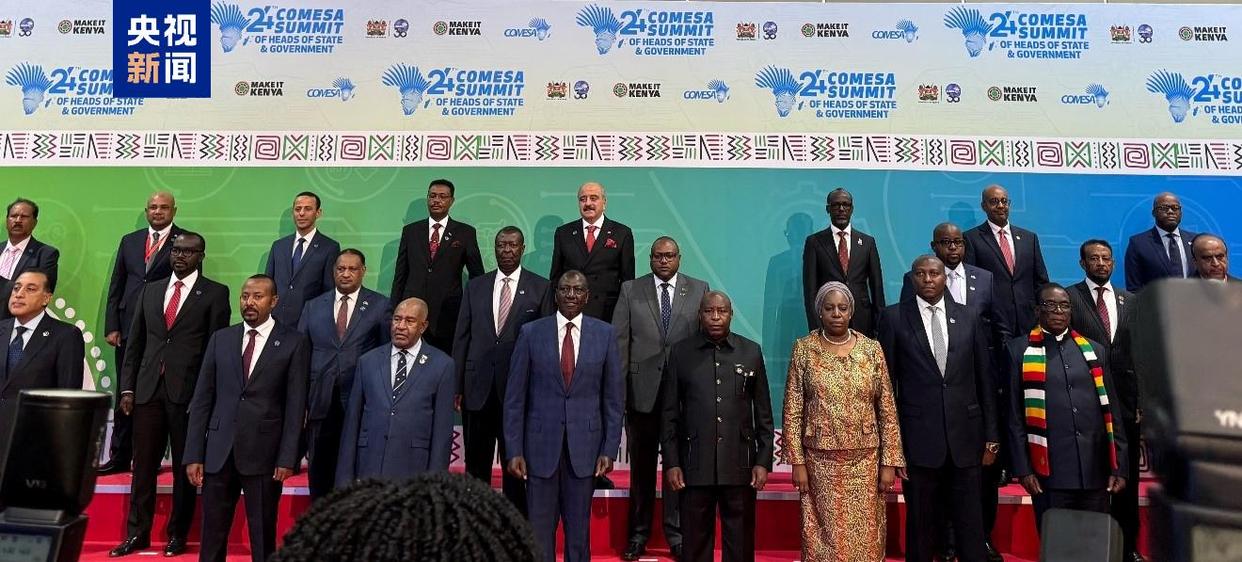
Core Points - The 24th COMESA Summit was held in Nairobi, Kenya, focusing on leveraging digitalization to deepen regional value chains for sustainable and inclusive growth [1] - Kenya assumed the rotating presidency from Burundi, with President Ruto emphasizing the importance of digital transformation for trade facilitation and industrial resilience [3] - A framework agreement was signed between COMESA and China State Construction International for the construction of a headquarters building and complex in Lusaka, enhancing regional governance capabilities [5][6] - COMESA, established in December 1994, consists of 21 member countries with a combined population of over 640 million and a regional GDP exceeding $1 trillion [8]
【行业深度】一文洞察2025年中国智能物流系统行业发展前景及投资趋势研究报告
Sou Hu Cai Jing· 2025-07-04 03:39
Industry Overview - The intelligent logistics system (ILS) integrates advanced technologies such as IoT, big data, AI, and automation to achieve intelligent management and optimization of the entire logistics process [3] - The core goal of ILS is to enhance efficiency, reduce costs, and improve service reliability, driving the logistics industry towards automation, digitalization, and sustainability [3] Current Market Status - In 2024, the market size of China's intelligent logistics system industry is projected to be approximately 1,278.5 billion yuan, representing a year-on-year growth of 17.65% [2] - The industry is characterized by three main features: accelerated technology integration, expansion of application scenarios, and market segmentation [2] Key Features - Technology integration is accelerating with deep penetration of IoT, big data, and AI, exemplified by JD Logistics' dynamic path optimization technology reducing transportation costs and SF Express using blockchain for cold chain traceability [2] - Application scenarios are expanding from e-commerce warehousing to manufacturing, pharmaceuticals, and cross-border logistics, such as the 30% efficiency improvement in warehousing for TBEA by Tianjin International [2] - The market structure is becoming differentiated, with leading companies leveraging technological barriers and ecosystem layouts, while smaller firms focus on niche markets for differentiation [2] Industry Development Stages - The intelligent logistics system industry has evolved through three stages: mechanization (1970s to late 1990s), automation (early 2000s to mid-2010s), and intelligentization (mid-2010s to present) [6][7] - The current intelligentization phase is driven by explosive growth in e-commerce, increasing demands for timeliness and accuracy, and the maturity of AI, big data, and IoT technologies [7] Industry Chain - The upstream of the intelligent logistics system industry includes hardware devices and software technologies, while the midstream consists of system integrators, and the downstream applications span transportation, warehousing, postal services, e-commerce, and industrial sectors [9] Cost and Efficiency Insights - In 2024, China's total social logistics expenditure is expected to reach 19.0 trillion yuan, with a year-on-year growth of 4.40%, indicating a structural contradiction between efficiency and cost in traditional logistics models [11][12] - Intelligent logistics systems can reshape the industry landscape by optimizing transportation networks, replacing manual labor with automation, and utilizing digital twin technology to enhance inventory turnover rates [12]