跨境物流

Search documents
国泰海通 · 晨报260325|策略、交运、批零社服
国泰海通证券研究· 2026-03-24 14:00
Historical Review - The oil crisis typically begins with geopolitical conflicts and escalates due to anticipated disruptions in oil supply, driven by factors such as production cuts, embargoes, and sanctions, resulting in short-term price spikes and a long-term upward shift in price levels [2] - The macroeconomic impact often leads to inflation followed by stagnation or stagflation; the 1970s oil crisis and the Russia-Ukraine conflict both caused inflationary pressures in the U.S., but the economy in the 1970s fell into recession and stagflation, while in 2022, only a technical recession occurred, remaining at a level of real inflation [2] - Market narratives have evolved, reflecting a learning effect; the crises of the 1970s shifted from valuation model failures and wage-inflation spirals to a focus on real assets and supply-side reforms, while 2022 centered around Federal Reserve tightening policies and energy transitions [2] - Asset performance during crises shows that commodities like oil benefit directly, while gold reflects pre-war risk aversion and post-war trends depend on the dollar and U.S. Treasury yields; equities face valuation pressures, particularly in growth sectors, while bonds initially decline due to risk aversion but may rise with inflation expectations [2] Comparison of Past and Present - Similarities include the current position of the U.S. inflation cycle and concerns about debt vulnerabilities extending to developed economies like Japan [3] - Differences lie in the foundation of global economic growth, with current inflation levels at historical lows, central bank policies focusing more on price stability, and reduced reliance on oil due to improved energy efficiency [3] - These similarities and differences reshape current asset pricing logic, with global central banks having more mature tools to control inflation, though the risk of stagflation remains a concern [3] Lessons from History - The uncertainty surrounding the prospects of U.S.-Iran-Israel conflicts has led to a significant rise in oil prices, with a strong consensus on inflation but divided opinions on stagnation; asset price volatility has increased due to the unpredictable nature of conflicts and policy paths [4] - Since the conflict began in late February, asset performance has aligned closely with historical patterns, favoring oil, energy stocks, and defensive assets, indicating high market risk aversion and a shift in trading logic from "secondary inflation" to "stagflation" expectations [4] - Future investment strategies should focus on areas with stronger certainty, including strategic security in energy and supply chains, technology sectors aligned with future industry trends, and gold as a long-term beneficiary of weakened dollar credibility [4]


国泰海通交运周观察:两会政策利好航空快递,关注油运灰色市场变化
GUOTAI HAITONG SECURITIES· 2026-03-08 07:37
Investment Rating - The report assigns an "Overweight" rating for the industry [2] Core Insights - The aviation sector is expected to see good growth in both volume and price during the Spring Festival travel season, with a projected increase in passenger load factor by over 2 percentage points year-on-year and a domestic ticket price increase of over 4% [4][5] - The oil shipping sector is experiencing significant profit increases due to geopolitical tensions, with VLCC TCE rates soaring to around $480,000, indicating a strong market outlook [5][21] - Policies aimed at boosting consumption and reducing competition in the logistics sector are expected to benefit the aviation and express delivery industries [5] Summary by Sections Aviation - The report highlights a 4.9% year-on-year increase in overall passenger flow during the first 33 days of the Spring Festival, with aviation specifically seeing a 6.4% increase [6][7] - The estimated domestic ticket prices are expected to rise by over 4% year-on-year, while the average domestic aviation fuel price has decreased by 8%, leading to improved profit margins for airlines [5] - The report anticipates a "super cycle" in aviation profitability driven by sustained demand and low supply growth, recommending stocks such as Air China, China Eastern Airlines, and Spring Airlines [5] Oil Shipping - The report notes that geopolitical risks have driven oil shipping rates to record highs, with a focus on the changes in the gray market and their long-term implications [5] - The TCE for VLCCs from the Middle East to China has surged, with significant shifts in demand towards other oil-producing regions due to reduced Middle Eastern exports [5] - The report suggests monitoring gray market developments, which could create unexpected supply-demand dynamics and accelerate the retirement of older vessels [5] Policy Impact - The report discusses how government policies aimed at stimulating consumption and addressing "involution" in competition will positively impact the aviation and express delivery sectors [5] - It predicts that the express delivery industry will see stable volume growth and price increases, benefiting leading companies like ZTO Express and SF Express [5] - The report also emphasizes the potential for healthy growth in cross-border logistics driven by supportive policies [5]



年货出海,“中国红”正当潮
Ren Min Ri Bao Hai Wai Ban· 2026-02-27 02:31
Core Insights - The article highlights the global popularity of Chinese New Year products, showcasing how items like lanterns, flowers, and traditional clothing are being sold overseas, enhancing cultural exchange and fulfilling the nostalgia of overseas Chinese [1][2]. Group 1: Market Trends - The demand for Chinese New Year goods has surged, with orders for these products increasing by 20-30% compared to the previous year, indicating a growing interest not only among Chinese expatriates but also among local populations in various countries [2]. - The logistics of exporting these goods have improved significantly, with cold chain logistics ensuring the freshness of products like flowers, which are transported efficiently to destinations such as Kazakhstan [3][4]. Group 2: Cultural Exchange - The article emphasizes the cultural significance of these products, noting that items like lanterns serve as symbols of nostalgia for overseas Chinese and as tangible representations of Chinese culture for foreign friends [2]. - In various countries, traditional Chinese cultural elements are being integrated into local festivities, with products like zodiac-themed decorations and traditional crafts gaining popularity among non-Chinese consumers [7][8]. Group 3: Logistics and Distribution - The use of the China-Europe Railway Express has been highlighted as a cost-effective and efficient method for transporting goods, reducing shipping time by 20 days compared to sea freight and lowering costs by two-thirds compared to air freight [4]. - The establishment of a comprehensive cold chain logistics system has facilitated the export of a wide variety of fresh products, paving the way for future growth in the market for fresh produce in Central Asia [5].
【雄安之声】雄安综合保税区实现全域封关运营
Sou Hu Cai Jing· 2026-02-25 17:13
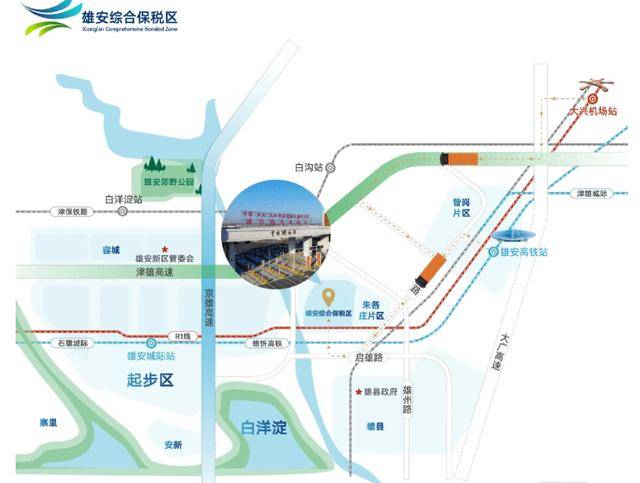
Core Viewpoint - The approval of the Xiong'an Comprehensive Bonded Zone (Phase II) marks a significant step in enhancing the region's capacity for high-level opening-up and supporting the coordinated development of the Beijing-Tianjin-Hebei area [1][2]. Group 1: Project Overview - The Xiong'an Comprehensive Bonded Zone was established on June 25, 2023, and is being developed in two phases, with Phase I covering 0.42 square kilometers and set to commence operations in January 2024 [2]. - Phase II, covering 0.21 square kilometers, focuses on high-end manufacturing, smart logistics, research and design, and testing and maintenance, aiming for seamless integration with Phase I [2]. Group 2: Operational Enhancements - The bonded zone will implement a highly efficient customs clearance model, allowing for direct customs clearance of export goods at Xiong'an and direct pickup of import goods at the port [2]. - The zone aims to achieve a total import and export value of 60.008 billion yuan by 2025 [2]. Group 3: Strategic Development - The Xiong'an Free Trade Zone Administration plans to leverage policy advantages to create a dual-driven open structure of "Bonded Zone + Free Trade Zone," enhancing the level of industrial and foreign trade development [3]. - The Xiong'an Customs will enhance regulatory services and implement a "one-stop" customs clearance service, utilizing technologies such as IoT, big data, and blockchain to create a smart customs environment [3].
雄安综合保税区全域封关运营
Sou Hu Cai Jing· 2026-02-24 13:33
Core Viewpoint - The approval of the Xiong'an Comprehensive Bonded Zone (Phase II) by the General Administration of Customs marks a significant step in promoting high-level opening-up in Xiong'an, enhancing its capacity to support the coordinated development of Beijing-Tianjin-Hebei and the relocation of non-capital functions from Beijing [2][3]. Group 1 - The Xiong'an Comprehensive Bonded Zone has a planned area of 0.63 square kilometers and has achieved "full closure and overall operation" [2]. - The Phase I project, covering 0.42 square kilometers, is set to commence operations in January 2024, demonstrating significant results in customs facilitation reforms and the nurturing of new bonded business models [3][4]. - The total import and export value of the Xiong'an Bonded Zone is projected to reach 60.008 billion yuan by 2025 [3]. Group 2 - The Phase II project, covering 0.21 square kilometers, will focus on high-end manufacturing, smart logistics, research and design, and testing and maintenance, aiming for seamless integration with Phase I [4]. - The Xiong'an Comprehensive Bonded Zone is positioned as the highest level of openness, with optimal policies and flexible operations, serving the coordinated development of the Beijing-Tianjin-Hebei region [4][5]. - The Xiong'an Free Trade Zone Management Committee plans to leverage policy advantages to create a dual-driven open structure of "Bonded Zone + Free Trade Zone," enhancing the development of "bonded +" new business models [4].
从“国际物流村”看中国制造出海新气象
Xin Lang Cai Jing· 2026-02-20 13:31
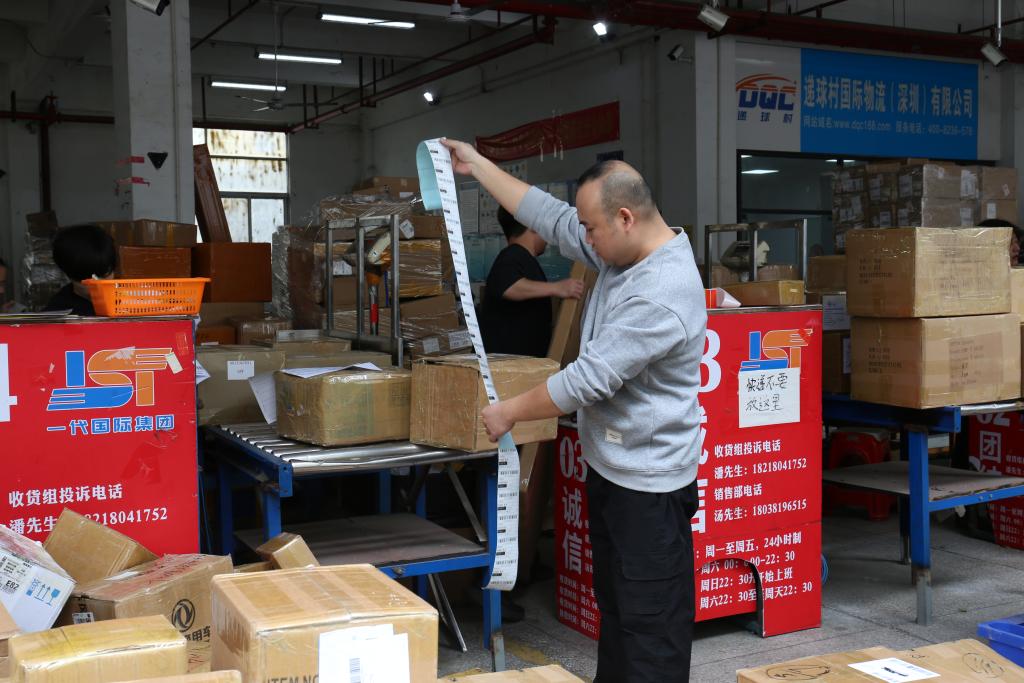
Core Insights - The logistics industry in Shenzhen's Fuwei community has transformed from simple courier services to a comprehensive ecosystem with over 4,300 logistics companies, processing over one million cross-border packages daily, with a revenue exceeding 10 billion yuan since 2025 [2][5] Group 1: Industry Transformation - The logistics sector has evolved significantly since the 1990s, moving from basic package handling to sophisticated logistics solutions that cater to high-end products and original Chinese brands [2][4] - The average daily processing volume for logistics companies like Baiwei International is around 800 to 1,000 tons, with an annual handling capacity of approximately 300,000 tons [3] - The growth in order volume to regions like Russia, Southeast Asia, and Europe has increased by 20% year-on-year since 2025, reflecting a shift towards higher-value goods [2][5] Group 2: Technological Advancements - Companies are leveraging smart technologies, such as automated forklifts and integrated management systems, to enhance operational efficiency and improve customs clearance processes [2][4] - The logistics firms have developed dedicated routes that can deliver packages to major countries in Europe and America within 5 to 7 days, at prices 30% lower than leading international courier companies [4] Group 3: Government and Policy Support - The local government has established a collaborative platform involving customs and logistics companies to streamline operations and reduce costs for nearly 200 businesses, including major players like Amazon [5] - Shenzhen's foreign trade is projected to reach 4.55 trillion yuan by 2025, with a 1.4% year-on-year growth, driven by strong exports in high-tech products such as new energy vehicles and consumer drones [5]
(新春走基层)车轮上的“丝路答卷”——TIR司机的春节之旅
Zhong Guo Xin Wen Wang· 2026-02-19 07:29
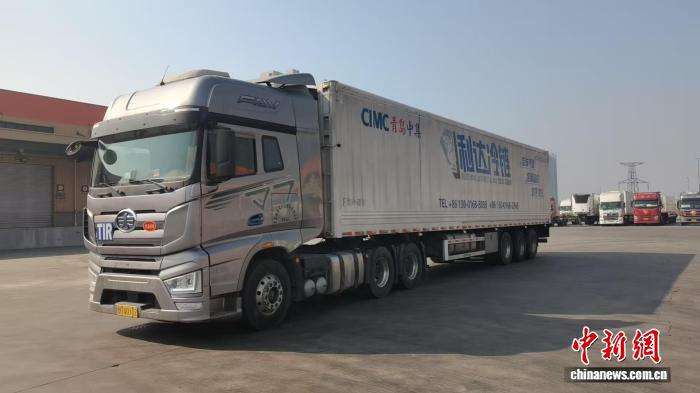
Core Viewpoint - The article highlights the significant growth and efficiency of the TIR (Transports Internationaux Routiers) logistics system in facilitating cross-border trade between China and countries in the Shanghai Cooperation Organization (SCO), particularly during the Chinese New Year period. Group 1: TIR Logistics System - The TIR system is based on the United Nations' International Road Transport Convention, providing a cross-border cargo customs clearance framework that has seen rapid development in recent years [1]. - The TIR transportation routes have expanded significantly, with the SCO demonstration zone successfully opening four international road transport routes, establishing itself as a regional hub for international road transport [2]. - By 2025, the TIR shipment volume from the SCO demonstration zone is expected to rank first in the country, with a cumulative shipment of 7,657.7 tons and a total cargo value of 280 million RMB [2]. Group 2: Market Demand and Trends - The demand for efficient logistics solutions has surged due to the ongoing optimization of China's foreign trade structure and the rapid growth of cross-border e-commerce [3]. - The introduction of the "TIR + Bonded" innovative model has enhanced the efficiency and reliability of TIR transportation, benefiting import and export enterprises [4]. - There has been a noticeable shift in the types of goods transported via TIR, moving from low-value items like clothing to high-value, high-tech products such as machinery and precision instruments [4].
驮着“川货”去欧洲
Xin Lang Cai Jing· 2026-02-17 21:44
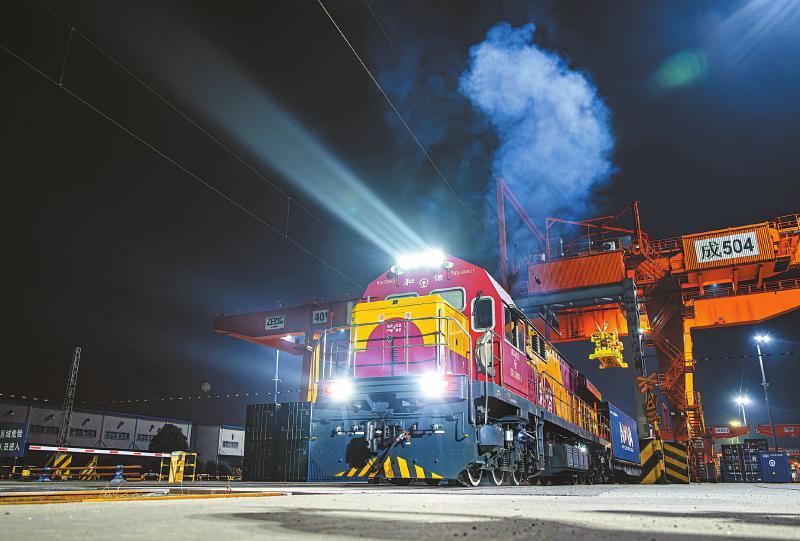
Group 1 - The article highlights the successful operation of the Chengdu International Railway Port, which launched its first China-Europe freight train of the Year of the Horse on February 17, carrying 55 containers, with 60% of the cargo being local products from Sichuan [2] - The China-Europe Railway Express (Chengdu-Chongqing) has maintained the highest operational volume in the country for five consecutive years, with over 5,000 trains dispatched last year, covering more than 130 cities across Eurasia [2] - The efficiency of the logistics process is emphasized, with a five-minute time frame for customs clearance and automated systems reducing the need for manual procedures, significantly improving operational efficiency [2][3] Group 2 - The loading process of containers onto the train is highly efficient, taking approximately 8 minutes to load 15 containers using four gantry cranes, with the entire loading operation completed in about 30 minutes for all 55 containers [3] - The article notes that the Chengdu Railway Port has implemented 24/7 customs clearance services, ensuring smooth operations even during the Spring Festival, with measures like "advance declaration" and "paperless customs clearance" in place [2] - The article also mentions the importance of the Chengdu International Railway Port in stabilizing global supply chains, acting as a "steel camel team" for international logistics [2]
河北寰联供应链:深耕跨境物流领域,提供全链路服务,助力全球贸易高效畅通
Sou Hu Cai Jing· 2026-02-15 09:58
Core Insights - Cross-border e-commerce is becoming a significant engine for international trade growth, with China's cross-border e-commerce import and export volume expected to reach 2.63 trillion yuan in 2024, a year-on-year increase of 15.6%, with exports accounting for over 70% [1] Group 1: Company Overview - Hebei Huanlian Supply Chain Co., Ltd. offers comprehensive logistics services, including cross-border e-commerce logistics, overseas warehouse operations, customs clearance, and international freight forwarding, covering 16 core areas [3] - The company has established a multi-dimensional service network across major trade regions such as North America, Europe, and Southeast Asia, processing over 5 million orders annually and serving clients in over 20 industries [3] Group 2: Service Efficiency and Technology - The company utilizes a proprietary logistics management system (TMS) to track cargo status in real-time and optimize transportation solutions, reducing transport time for China-Europe freight trains to 18-22 days, saving over 50% compared to traditional sea freight [4] - In customs clearance, the company has established data connections with over 50 customs departments globally, reducing clearance time from an average of 72 hours to under 24 hours, achieving a 99.2% clearance success rate in the U.S. in 2024 [4] Group 3: Market Differentiation - The company has developed a closed-loop system for reverse logistics, increasing the resale rate of returned goods from the industry average of 30% to 65%, significantly reducing inventory losses for clients [6] - In the U.S. market, the company offers a full chain of services, including drop shipping and product relabeling, with a 65% year-on-year growth in U.S. freight forwarding business in 2024 [6] Group 4: Client Success Stories - A domestic beauty brand, facing high logistics costs and low fulfillment efficiency, achieved a 300% year-on-year sales increase in the European market and a 25 percentage point increase in repurchase rate after implementing a customized logistics solution from the company [7] Group 5: Innovation and Future Plans - The company invests 5% of its revenue annually in R&D, has obtained over 10 logistics software copyrights, and collaborates with universities to explore blockchain technology for cargo traceability [8] - Plans for 2025 include adding three overseas warehouses in Southeast Asia and launching a carbon footprint tracking service to support green trade development [8]
新春走基层丨从“国际物流村”看中国制造出海新气象
Xin Hua She· 2026-02-15 08:37
Core Insights - The article highlights the transformation of Shenzhen's "International Logistics Village" into a hub for high-value exports, showcasing the evolution of logistics in supporting China's manufacturing sector's global expansion [1][2][6]. Group 1: Logistics Development - The "International Logistics Village" covers an area of 4.4 square kilometers and hosts over 4,300 logistics companies, processing over one million cross-border packages daily, with delivery times as short as 2 days to major Asian cities and 3 days globally [2][3]. - Since 2025, orders to regions such as Russia, Southeast Asia, and Europe have increased by 20%, with revenue surpassing 10 billion yuan [3]. - The logistics sector has shifted from handling low-cost goods to focusing on original Chinese brand products, reflecting a significant upgrade in service quality and operational efficiency [5][6]. Group 2: Technological Integration - Companies like Shenzhen Yidai International Logistics have adopted advanced technologies, including real-time tracking and automated systems, enhancing operational efficiency and reducing customs clearance times [5][6]. - The logistics industry has transitioned from merely transporting goods to providing comprehensive supply chain solutions, including logistics, customs, and overseas warehousing [7]. Group 3: Government and Industry Collaboration - The local government has established a one-stop service platform to facilitate logistics operations, reducing costs and streamlining customs processes for nearly 200 companies, including major players like Amazon [8]. - Shenzhen's foreign trade is projected to reach 4.55 trillion yuan by 2025, with a 1.4% year-on-year growth, driven by strong exports in high-tech products such as electric vehicles and consumer drones [8].